Activity
Mon
Wed
Fri
Sun
Apr
May
Jun
Jul
Aug
Sep
Oct
Nov
Dec
Jan
Feb
Mar
What is this?
Less
More
Owned by Michael
Passion Projects—a place where creativity, kindness, and passion can come together to spark something bigger than ourselves.
Memberships
AAA Wealth Builders
25 members • $97/m
Shopify Growth Collective🥂
639 members • Free
Doing What You Know
42 members • $10/month
Skoolers
190k members • Free
The Inclusive Music Guild
33 members • Free
WD
We don't give up here!
3 members • Free
Squiggle Skool
91 members • Free
Art Skool (Free)
37 members • Free
Evolve Now Social
1.7k members • Free
59 contributions to Evolve Now Social

11h •
Its loads of pressure on me, however it will blow up because of this...
Imagine a platform that you could join, not be interested, do absolutely nothing, then check your balance in a few months' time to find you have loads of $$$$$ ready for withdrawal. . Impossible right? Wrong . We built it, but when this happens, some should wake up and say to themselves. This could be so much more if I did something... . When it does, it runs all that traffic to our skool communities . The sooner you create the account, the faster your earnings grow... those current inactive members are making bank just because they created an account, and because they made it so soon their earnings is increasing. . I would love for all our active evolve members, and active admins community members to set up a free account even if can't do any before the world clicks on . https://aaafairbenefit.com/


2 likes • 7h
@Shawn Ziem EXACTLY 🔥🔥🔥
7h •
Celebrating paperwork and genuine human connection
📜 Back to Paper? How Some Companies Are Re-thinking Information Protection in an AI Era Lately there’s been an interesting shift in how some organizations think about protecting their info — and no, this isn’t just about old-school nostalgia. With digital threats accelerating (especially ransomware and AI-driven attacks that can sniff out online backups), many companies and even national security organizations are doubling down on offline, physical, or air-gapped data strategies — including the simplest one of all: paper or truly offline storage. 🔐 Why this is happening A recent industry survey found over half of national security organizations still depend on manual processes and offline methods to transfer sensitive information securely — precisely because threats targeting digital systems are so pervasive online. • Offline backups — like magnetic tape archives that sit completely off the network — are being used as a deliberate “air-gap” defense against cyberattacks that exploit AI tools and connected systems. • Governments have even encouraged firms to keep physical copies of their cyberattack response plans so teams can act even if systems are compromised. This isn’t about fear-mongering — it’s about adaptation. Think of it as diversification in security: digital for everyday agility, physical or offline for when you need a lifeline that attackers simply can’t reach because it’s not connected. 🤖 “Offline” as a security mindset (not just paper) Even tech insiders talk about air-gapped networks — systems that are physically isolated from the internet — precisely so the most sensitive data stays unreachable by remote AI-based attacks. The concept is the same whether it’s a USB drive in a vault or printed contracts in a locked filing cabinet. It’s a little ironic: as AI gets better at analyzing digital systems, analog approaches become strategic again. Not because physical media is perfect, but because it offers a layer no AI (or hacker) can snack on remotely.

23h •
My Dear Friend
We've lost two people close to us. One who was close to my oldest sister and one dear friend that was close to me. I'll be attending their memorial/funeral on Friday.

1 like • 20h
@Marama Rawenata I'm sorry for your loss 💔
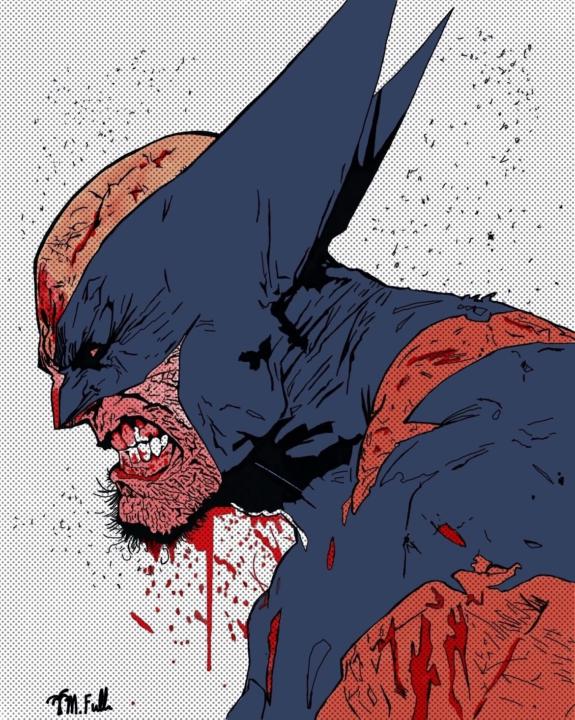

🔥
1d •
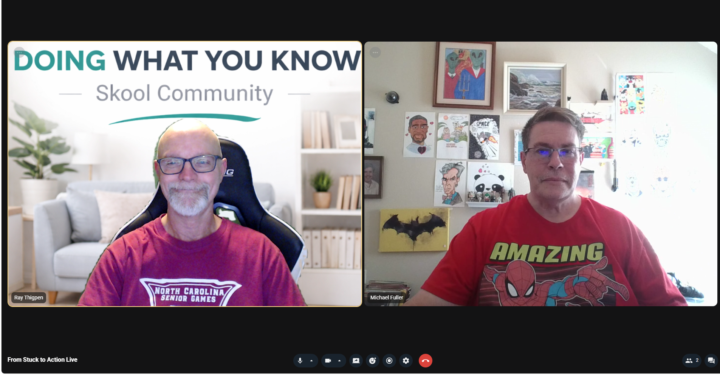
Today's "From Stuck to Action" Meetup
Had a good meeting with @Michael Fuller today. It wasn't recorded, and many of these may not be. It's difficult to interact live via recording.
1 like • 1d
One of my favorite jokes when someone missed a meeting or comes in at the last minute: “And that’s how you make 20 million in 20 minutes on the internet” 😂
1 like • 1d
Great conversation! 🔥
1-10 of 59

@michael-fuller-2659
Freelance illustrator, cartoonist, and caricature artist
Active 23m ago
Joined Aug 21, 2025
Rosenberg, TX
Powered by