Activity
Mon
Wed
Fri
Sun
Feb
Mar
Apr
May
Jun
Jul
Aug
Sep
Oct
Nov
Dec
Jan
What is this?
Less
More
Memberships
Ruth Performance Lab
121 members • Free
1 contribution to Ruth Performance Lab

Dec '25 •
The Four Primary Purposes of Using Intervals in CrossFit Training
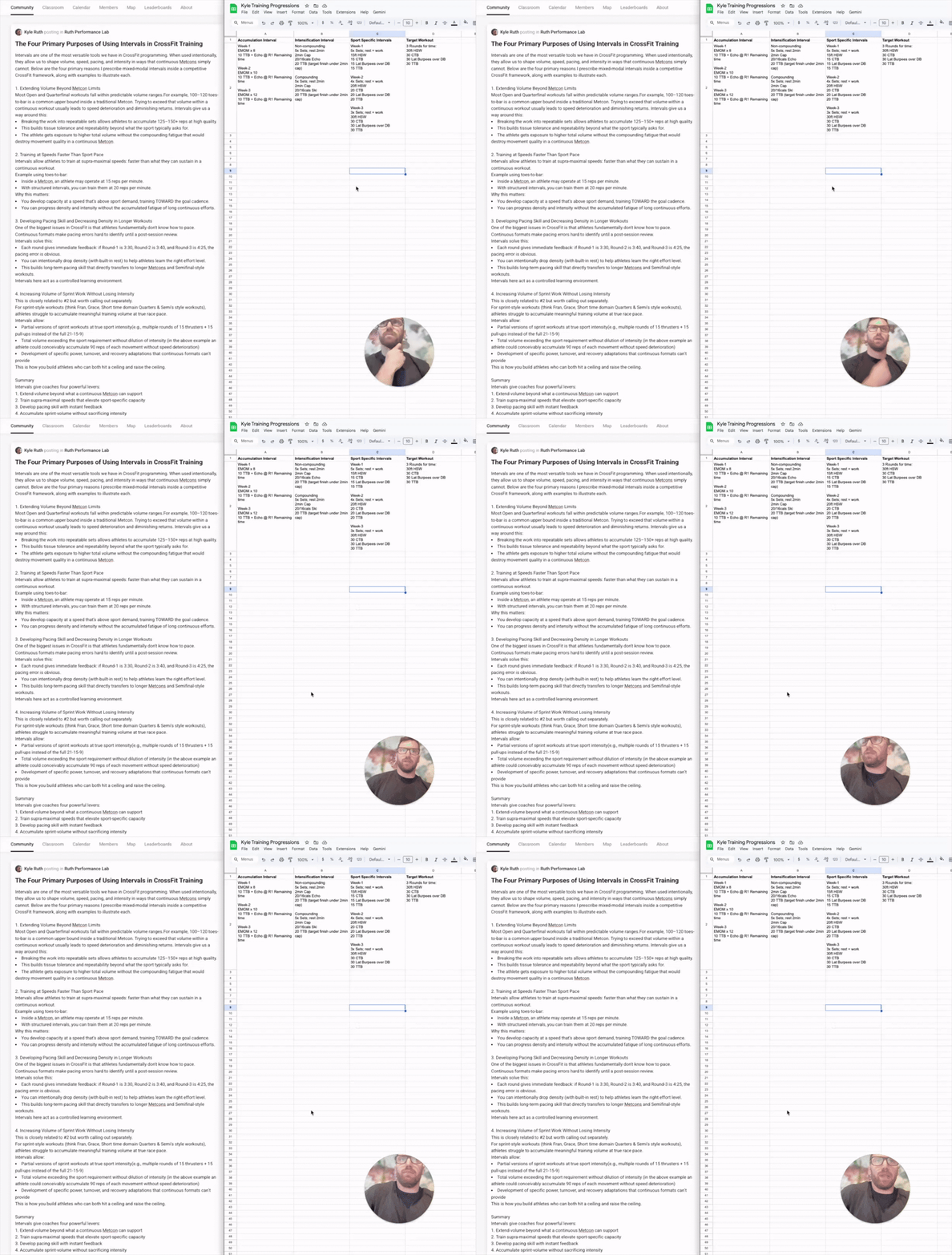
Intervals are one of the most versatile tools we have in CrossFit programming. When used intentionally, they allow us to shape volume, speed, pacing, and intensity in ways that continuous Metcons simply cannot. Below are the four primary reasons I prescribe mixed-modal intervals inside a competitive CrossFit framework, along with examples to illustrate each. 1. Extending Volume Beyond Metcon Limits Most Open and Quarterfinal workouts fall within predictable volume ranges.For example, 100–120 toes-to-bar is a common upper bound inside a traditional Metcon. Trying to exceed that volume within a continuous workout usually leads to speed deterioration and diminishing returns. Intervals give us a way around this: - Breaking the work into repeatable sets allows athletes to accumulate 125–150+ reps at high quality. - This builds tissue tolerance and repeatability beyond what the sport typically asks for. - The athlete gets exposure to higher total volume without the compounding fatigue that would destroy movement quality in a continuous Metcon. 2. Training at Speeds Faster Than Sport Pace Intervals allow athletes to train at supra-maximal speeds: faster than what they can sustain in a continuous workout. Example using toes-to-bar: - Inside a Metcon, an athlete may operate at 15 reps per minute. - With structured intervals, you can train them at 20 reps per minute. Why this matters: - You develop capacity at a speed that’s above sport demand, training TOWARD the goal cadence. - You can progress density and intensity without the accumulated fatigue of long continuous efforts. 3. Developing Pacing Skill and Decreasing Density in Longer Workouts One of the biggest issues in CrossFit is that athletes fundamentally don't know how to pace. Continuous formats make pacing errors hard to identify until a post-session review. Intervals solve this: - Each round gives immediate feedback: if Round-1 is 3:30, Round-2 is 3:40, and Round-3 is 4:25, the pacing error is obvious. - You can intentionally drop density (with built-in rest) to help athletes learn the right effort level. - This builds long-term pacing skill that directly transfers to longer Metcons and Semifinal-style workouts.

0 likes • Dec '25
Incredible content. I have a question, coach: When you design training volumes in these types of intervals, do you design them based on the specific test or taking into account the athlete's capabilities? Thanks!
1-1 of 1

Active 1d ago
Joined Dec 17, 2025
Powered by