Activity
Mon
Wed
Fri
Sun
Jun
Jul
Aug
Sep
Oct
Nov
Dec
Jan
Feb
Mar
Apr
What is this?
Less
More
Owned by Oddysey
A community for parents with kids being kids 🫶🏻
Memberships
The RE-AWAKENING PORTAL
66 members • Free
Differently Created
3 members • Free
The Tarot Circle!
248 members • Free
LPR: The Business of Audio
158 members • Free
The Watercolor Journey
304 members • Free
🇺🇸 Skool IRL: Las Vegas
37 members • Free
The Voice-Over Advantage
61 members • Free
Stress-Free Sobriety
712 members • Free
Zen Den Mind - Signal Clarity
112 members • Free
198 contributions to Grounded Roots Parenting 🌿

5d •
Monthly Shoutout 🌿
I want to take a moment to recognise the people who’ve really shown up in here this month. 💕 Not just posting for points — but contributing, supporting, sharing and helping others feel less alone in it all. So here’s our Top 10: ✨ @Nova Maree-Prophet ✨ @Oddysey Campbell ✨ @Merrie B ✨ @Elena Maren ✨ @Chad Noorman ✨ @Shelly Richards ✨ @Sylv Davies ✨ @Devin Trent ✨ @Tim Tindle ✨ @Jason Dobbie A special shout out to the winners of our competitions this past month @Nova Maree-Prophet and @Merrie B !! I hope you have had a chance to use and enjoy the resources! This space works because of people like all of you. The comments, the encouragement, the honesty — it all adds up. And to everyone else here… even if you’ve been quieter, reading, taking things in, trying things at home — that matters too. If you’ve taken something from this space this month, this is your little nudge to give something back. A comment, a thought, a “same here”… it all counts. That’s how this grows 🌱


🔥
6 likes • 5d
I feel like I’ve been slacking too 😮💨😅
🔥
2 likes • 5d
@Devin Trent I’m not able to show up everywhere but I have multiple somewheres I’ve been holding on to.
11d •
MANIC MONDAY 😅🌿
I’m going to start doing this every Monday… A space to pause for a second and look back before the week runs away with us. This week’s question: What happened last week that actually helped calm the chaos… even a little? It could be something small Something you almost didn’t notice Or something you want to try again this week Share it on the main feed #Manic Monday You might remind someone else of something they needed or could do/try!! 💕

🔥
3 likes • 10d
Ooh this is fun 😆🌈
11d •
Challenges!! 🎲
I don’t know about you… but after the Easter challenge… I’m wondering… are we ready for another one? 😅🌿 But I don’t want to guess what you need — so I’m putting this to you… What would actually feel helpful right now? 👇 Vote below: 🌿 Calm Parent, Calm Home (simple ways to regulate yourself first — because everything starts there) 🧠 What’s Underneath? (understanding behaviour — patterns, triggers, capacity) 🎒 Real-Life Regulation Toolkit (go-to strategies for those everyday moments that catch you off guard) 💛 Connection First (rebuilding connection without dropping boundaries) 🌳 Rooted in Real Life (little daily shifts in the messy, in-between moments) 😅 I Need a Breather First No pressure either way — I just want this to actually support you, not add more to your plate. So… are we in? 👀
Poll
5 members have voted

🔥
4 likes • 11d
Let’s say I’m doing field work this weekend and into the week. 😂🌱
🔥
4 likes • 11d
@Nova Maree-Prophet
13d •
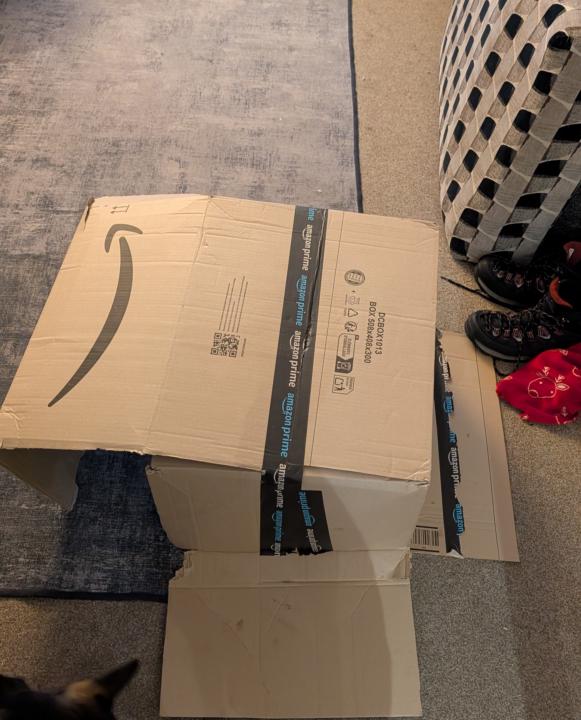
🌿 She regulated herself in a cardboard box today. 📦🌿
And it was one of the most beautiful things I've watched her do. She was sad. She found the box. She climbed in with her blanket. Over the course of thirty minutes she self regulated - began playing with the box for a while and came out — calm, playing, herself again. No prompting from me. No reward. No strategy. Just her, doing exactly what her nervous system needed. Here's what I've learned about small, enclosed spaces for kids like mine: They reduce input — less visual noise, less to process Create clear edges — the world feels held instead of huge Restore control — she chose to go there, she controls who comes near They let her feel without having to explain or perform For PDA profiles especially, that self-chosen retreat is everything. It's regulation without demand. It's safe without being prescribed. The fact she moved from sadness → playing for half an hour? That's not withdrawal. That's processing. That cardboard box is basically doing the job of a £200 sensory pod. If your child does something similar, here's what seems to help: Keep it theirs — no entering, no commenting too much Add soft things they already love (blanket, dim light, cushion) Make it available, not prescribed — not "go there when you're upset" Let them leave on their own terms, always She chose it. She stayed regulated. She came out on her own. That's the whole win. Does your child have a go-to space like this? I'd love to hear what it looks like for you. 🌿
🔥
3 likes • 13d
@Ellie Hayes it’s always something trying to trip you up 😮💨😂 for us it’s our cat! Little to no regard for her own safety either 🐈⬛
🔥
2 likes • 13d
@Ellie Hayes gotta love those cats. I wish I catch Shadow on camera more. She’d go viral 😂
13d •
✨Daily Trait – Arguments That Have No End 🔄
Trait: Gets locked into a disagreement and cannot find the exit. What it can look like: Going in circles long after the original point is lost Needing the last word even when they know it's over Escalating instead of de-escalating when given an out Feeling genuinely unable to let it drop This isn't winning for the sake of winning. The nervous system is still activated — and until it comes down, the argument feels unresolved at a biological level, not just a logical one. Gentle guidance: Don't try to end it with logic — regulation comes before reason Give them a face-saving exit rather than a corner Drop your own voice and pace right down Sometimes a pause and a change of scene is the only off-ramp You can't talk someone out of a feeling they're still inside. 🌿

🔥
3 likes • 13d
i like to hit mine with the element of surprise 😅🌈🎉 The worst place to suffer a meltdown is while driving. So when we notice the arguing start, we find something outside to distract. “Oh wooow do you see that?” Definitely got find that off ramp with as little trauma for everyone involved as possible. Logic has left the building 😂🧘🏻♀️
1-10 of 198
🔥
@ashlee-smith-8150
Graphic Designer, Voice Actor, Mom of 3 little weirdos, and a surprisingly social hermit 😊
Active 3h ago
Joined Jan 25, 2026