Activity
Mon
Wed
Fri
Sun
Apr
May
Jun
Jul
Aug
Sep
Oct
Nov
Dec
Jan
Feb
Mar
What is this?
Less
More
Owned by Ardit
Learn how to build any app from scratch. We guide you how to build, launch, and sell Python apps with AI tools such as Claude Code and Cursor.
Memberships
9 contributions to Inspired Life, Empowered Being
🔥
Jan 24 •
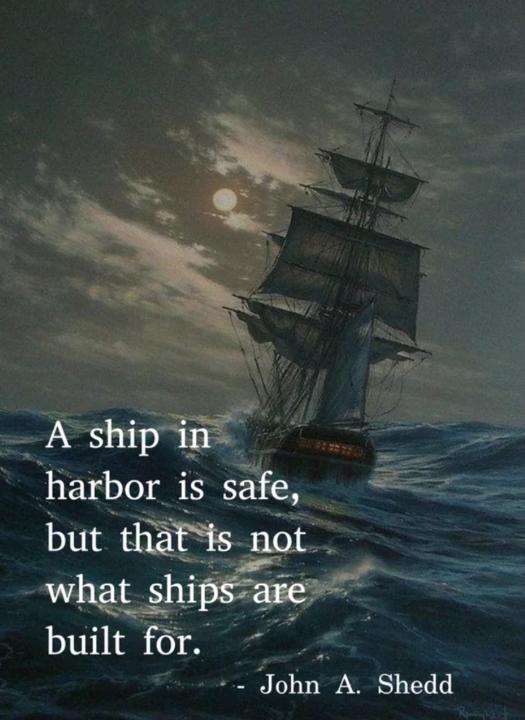
🛥️What are you built for?
Ships are most safe in harbors but that's not what they're built for. In the harbors they are still open to elements that can affect them, but they were built to go out... I've had a few conversations this week about positive risk taking. Then, on the same day I had a conversation about this I received a gift with a note from my dad reminding me of this with this exact quote. Funny how things come together all at once. I needed to hear it. (Thank you) So my question to you is, what does it look like for you to step out of the harbor and where are you right now?
Poll
20 members have voted
4 likes • Jan 24
One of the beauties of a species is diversity within the species for the sake of group survival. Some people are made to take care of the tribe with day to day routine tasks and social caring and cheering up, while others thrive in more risky situations. The second group were the ones were more efficient with adversity situations (which were plenty before civilization). The Andes survival story/book is a great human experiment/example of that. Our DNA is still wired the same as it was in prehistory, but our habitat has changed and that's why some of us look for risks because we have an inherit need for that.
🔥
Dec '25 •
🧠Avoiding Hard Things is How We Stay the Same
I tell myself that I love a good challenge--and this is true if it's in an area where I feel either competent or excited about or both! But is it less true if those factors don't exist? Maybe. How much of a challenge is it really if it's still kind of in my comfort zone? Many people wait to feel ready before they take on something difficult. But readiness is usually the reward we get after doing the hard thing, not before. Challenges stretch our minds, expand our emotional bandwidth, and reshape our brains for the better. 🧠 Here comes the nerdy stuff!! I love it so much though: What's at work? 1. Prefrontal Cortex: This part of the brain supports planning, decision making and emotional regulation. Hard tasks strengthen this region, improving self control and long term thinking. Executive functioning skills here we come! 2. Anterior mid Cingulate Cortex: This region is activated when we face conflict, discomfort or uncertainty. It helps ups with building cognitive flexibility and grit. It helps us survive! 3. Hippocampus: Challenges promote neuroplasticity which supports learning, memory and resilience. Pushing your limits in manageable doses helps this area 4. Dopamine System: Completing difficult tasks triggers reward pathways. This builds confidence, motivation and a sense of mastery. It reinforces the message that you can do hard things and survive. And who doesn't want a little dopamine hit here and there? Taking on challenges creates internal shifts like learning we can handle discomfort, our ability to tolerate uncertainty increases, we build a sense of self trust, we start believing that we are capable, we become less reactive under pressure and stress becomes more like information rather than danger. ⚡ Why It Matters A life without challenge feels safe, but it also keeps us small and not growing. A life with challenge feels uncomfortable but we end up growing and helping ourselves down the line. We do not grow by staying within the edges of what you already know, but rather by stepping into a level of difficulty that activates your brain, stretches your identity and builds capacity you did not know you had. :) Pretty cool stuff, right? :) :)
6 likes • Dec '25
True! As far as these challenges are short lived they are very beneficial. The same works body-wise -short term stressors like exercise, cold/hot exposure, fasting help the body becomes stronger.
5 likes • Dec '25
@Georgiana D I have several challenging projects/ideas I am trying to implement currently. I think these are naturally challenging me and learn new things. Not sure if these are qualify.
🔥
Nov '25 •
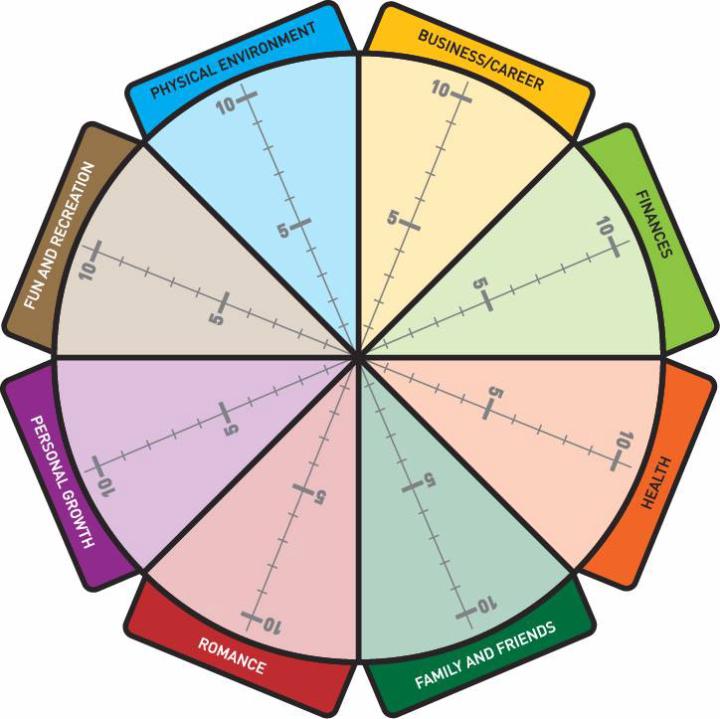
November--all of the challenges or none of the challenges???
November is one of my favorite months of the year. I get a burst of motivation and focus and I get more reflective. I don't doubt that a lot of it has to do with my more intentional focus on gratitude. (you can find my approach here: https://www.skool.com/inspired-life-empowered-being-7894/gratitude-beyond-the-list?p=4adc8ad8 --not sure why I can't hyperlink this...) Since you're all likely part of groups that are doing challenges (e.g. gratitude, no sugar, journaling , finances, etc), I don't know if I'll add another one to your plates... My focus this month will definitely be on gratitude, journaling, getting more/better sleep!, decreasing sugar, and being intentional with my spending and how I use time. :) ********BUT, I'm curious about what type of challenges/areas of focus that you guys have for this month?? Please do share below! :) *****(Also, I'm considering doing a little leaderboard competition for the month---this may be a separate post, but I'm also wondering what you guys think would be a reasonable gift for top participation?...while I never started this group with the thought of ranks and things like that, I've been so so thankful for the gift of community. It's been a blessing and such a lovely unexpected surprise and would like to gift the community back in some way). Okay!!! All the love to you guys!
Poll
17 members have voted
5 likes • Nov '25
I also like November weather wise.
🔥
Oct '25 •
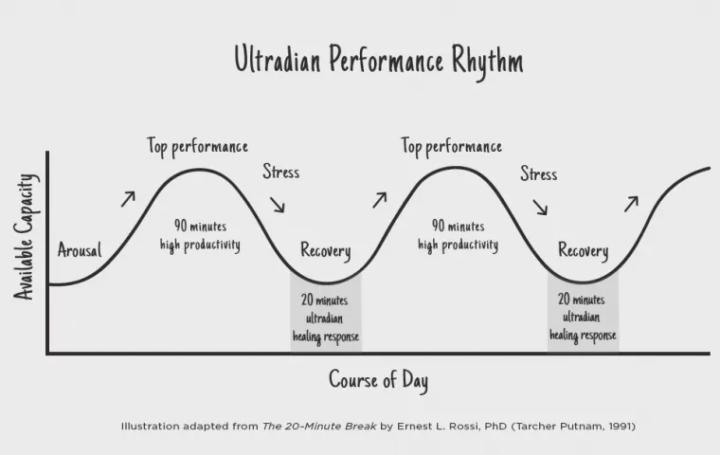
⏱️ The Ultradian Rhythm: Your Body’s Natural Energy Cycles
This post was inspired by @Christa Lovas 's post about taking a 3 minute wellness pause found here: https://www.skool.com/inspired-life-empowered-being-7894/your-3-minute-wellness-pause?p=018b47d0 Her post reminded me of the ebbs and flows of our energy throughout the day which reminded me of a cool piece of information that I learned while completing an Integrative Nutrition Certification a few years ago (humble brag I guess, but what good is learning something if it's not being used? ha, a post for another day). Anyways.... Have you ever noticed that you can focus deeply for a while, then suddenly your energy dips and you feel the need to pause or shift gears (or take a nap)? That pattern is not random but rather it's a part of your body’s ULTRADIAN rhythm-a built-in cycle of peaks and troughs of alertness, focus, and recovery. ❓What is it The ultradian rhythm refers to biological cycles that repeat multiple times during a 24-hour period (not just once). These rhythms often last between about 90 to 120 minutes for full cycles of high activity followed by lower-activity or rest phases. They influence our brainwave activity, hormone secretion, digestion, and sleep stages and some other things (but don't ask me because I don't remember). 🧠 Why It Matters for Your Daily Life When we ignore our ultradian rhythm and try to push through when we’re naturally in a trough, we risk fatigue, burnout, loss of focus, and emotional stress. Many of us have been encouraged to "power through" the slumps. We end up having caffeine (guilty!), junk food (also guilty) and try to force the focus which just causes inner friction. When we align with these rhythms (working during peaks and resting during troughs) we can boost productivity, enhance well-being, and support nervous system regulation. For people in therapy or recovery, tuning into ultradian rhythms can help regulate body and mind , increasing self-awareness, reducing overwhelm, and improving rest.
6 likes • Oct '25
We disrupt that rhythm daily with caffeine though.
🔥
Oct '25 •
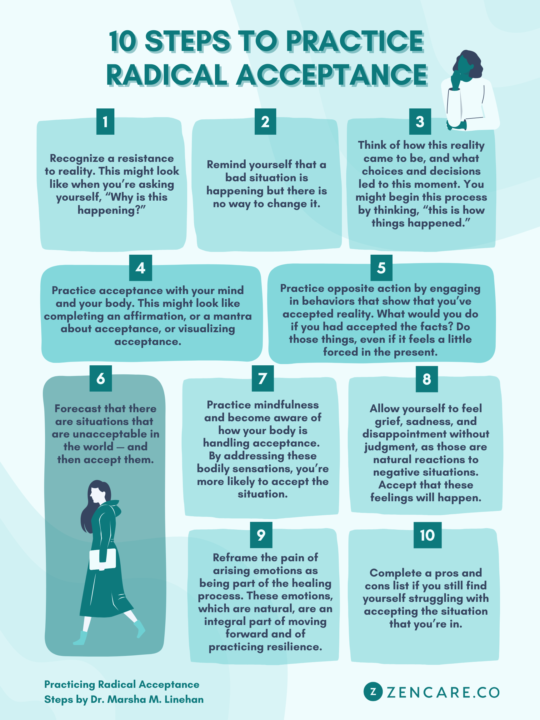
🌸 DBT Skill Spotlight: Radical Acceptance
I'll be honest, this one has been a tough one for me at times. There were times when I thought that accepting something meant that I was okay or resigned to it. Over time with repeated experiences and also with some intentional work, I've recognized that this is not the case. I can accept the reality of something but not necessarily be resigned to it or think that it's okay. This has allowed me to have more power and mobility in situations. (There are still some things where the "shoulds" creep in, but progress is being made and that counts for something, right?) So... What is Radical Acceptance? Radical acceptance means fully accepting reality as it is in this moment, even if we do not like it or agree with it. It sounds like: “This is what is happening. I may not approve of it, but I can accept that it is real.” **Acceptance does not mean approval or giving up. It means letting go of the suffering that comes from resisting what already exists.** 🧠 Why It Matters When we resist reality, we add more pain on top of pain.Thoughts like:“I shouldn’t have to deal with this.”“This is not fair.”“This can’t be happening.”All of these increase emotional suffering because we're pushing against something that IS happening, something that we ARE dealing with" Acceptance creates space for calm, clarity, and healing. It also leaves room for empowerment and movement---breathing space to see where one CAN take action. Examples of Radical Acceptance -“I cannot change what happened, but I can choose how I respond.” - “This situation is painful, and it is part of my current reality and this is how I'm going to engage it" - “I wish things were different, and I accept that right now they are not.” - “I do not have control over others, only my own choices.” 🧘♀️ How to Practice 1.Notice when you are mentally fighting reality--pause and observe (is there mental or physical tension?) 2.Pause and take a deep breath. (the pause gives us enough space to become more intentional rather than reactive)
Poll
5 members have voted
3 likes • Oct '25
Accepting it and stressing on trying to find a solution if the problem is solvable.
1-9 of 9
@ardit-sulce-1803
Bringing people together helping them change their lives.
Active 1h ago
Joined Sep 20, 2025