Activity
Mon
Wed
Fri
Sun
Nov
Dec
Jan
Feb
Mar
Apr
May
Jun
Jul
Aug
Sep
Oct
What is this?
Less
More
Bedrock Nation
177
Free
30 contributions to Bedrock Nation

17d •
🍂 12 Ancestral Fall Comfort Foods
🍂 Paleo, Keto & Carnivore-Leaning There is something about the first cooler mornings that makes me immediately want to trade salads and cold plates for roasts, soups, browned butter, herbs, bone broth and something simmering on the stove. And fortunately, “comfort food” does not have to mean pasta, bread, sugar and a carb coma. Traditional fall food was actually pretty simple: 🥩 Meat 🥕 Root vegetables 🧈 Animal fats 🥚 Eggs 🥣 Broth 🌿 Herbs and spices 🍎 Seasonal produce In other words… real food. So here are 12 cozy fall meals that stay ancestral, protein-forward and easily adaptable for Paleo, keto or carnivore households. 🍖 1. Mississippi-Style Pot Roast Chuck roast slow-cooked until it falls apart with: - beef broth - butter or ghee - pepperoncini - garlic - onion - salt + pepper Skip the conventional seasoning packets—they usually contain fillers, sugar, maltodextrin and questionable oils. Serve over mashed cauliflower, roasted vegetables, or just eat the beef and broth in a bowl. Keto ✔️ | Carnivore-ish ✔️ | Paleo with ghee ✔️ 🥣 2. Creamy Chicken & “Wild Rice” Soup Make the traditional fall soup without the rice. Use: - shredded chicken - chicken bone broth - celery - carrots - mushrooms - onion - garlic - thyme - heavy cream or coconut cream For extra texture, add finely chopped cauliflower. This is one of those meals that tastes even better the next day. Paleo adaptable ✔️ | Keto ✔️ 🥩 3. Cottage Pie With Cauliflower Mash Brown ground beef with onion, mushrooms, carrots and herbs, then cover it with buttery mashed cauliflower and bake until golden. You can also add: - Worcestershire - beef broth - peas if your carb tolerance allows - shredded cheddar on top for keto Basically shepherd’s pie without the potato mountain. Paleo adaptable ✔️ | Keto ✔️ 🍗 4. Garlic Butter Chicken Thighs With Mushrooms Chicken thighs are one of the cheapest, easiest comfort-food proteins. Brown them in butter, ghee or tallow and add: - mushrooms - garlic - thyme - rosemary - a splash of broth


1 like • 16d
@Leanna Cappucci I’m so excited to try some of these out ! Thank you !!! Do you have an ancestral pizza knockoff that you like? I know there is one in the FB group. Wondered if there was a different/updated version that you prefer or not ?
Aug 4 •
What Are Peptides—and What is the Bedrock Take on Them?
You may have heard the word peptides everywhere lately. They are being discussed in relation to metabolism, tissue repair, muscle development, sleep, cognitive performance, immune function, healthy aging, sexual wellness, and more. But what exactly are they—and where do they fit within the Bedrock approach? What are peptides? Peptides are short chains of amino acids. You can think of amino acids as individual letters and peptides as short words created from those letters. Proteins are the much longer sentences and paragraphs. Your body naturally produces thousands of peptides. Many act as biological messengers, helping cells communicate with one another and coordinating processes such as: • Hormone signaling • Immune activity • Inflammatory responses • Tissue repair • Metabolism • Sleep and circadian rhythms • Cognitive function • Growth and recovery In other words, peptides do not simply “make” the body perform a particular function. They often work by delivering a message. That distinction is important because it aligns with something we have always taught at Bedrock: The body already knows what to do. Our job is to identify what may be interfering with that communication and provide the body with the raw materials, environment, and appropriate signals it needs to do its work. What does “buccal” mean? Buccal refers to the inner lining of the cheek. With buccal delivery, a dissolving strip is placed inside the mouth so its ingredients can potentially pass through the oral mucosa rather than first traveling through the entire digestive tract. This is different from simply swallowing a capsule. Peptides can be difficult to deliver orally because digestive enzymes may break them apart and their larger molecular structures can limit absorption. The oral mucosa provides another possible route, with access to a blood-rich tissue surface and partial avoidance of gastrointestinal degradation and first-pass metabolism. However, absorption can still vary substantially depending on the specific peptide, its molecular properties, the formulation, the dose, the delivery technology, and the individual using it.

0 likes • Sep 20
@Leanna Cappucci I am going to sound ignorant , but I truly don’t understand the meaning ;-). What is/does grey market refer to ? Thx in advance
0 likes • Sep 23
@Leanna Cappucci thx for the clarification ;-)
Apr 21 •
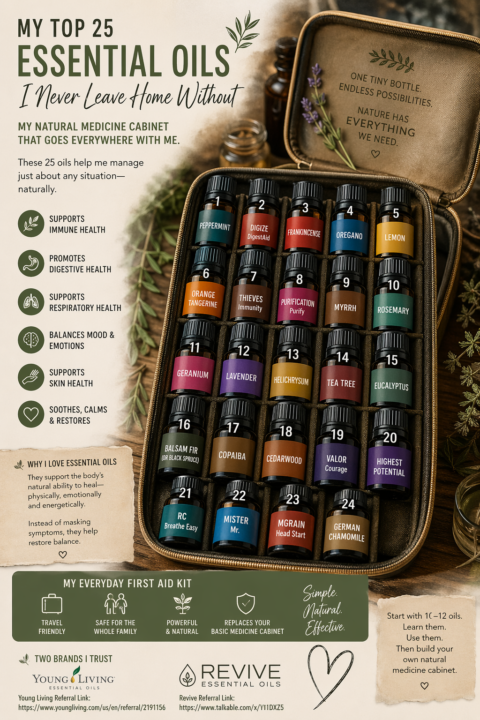
🌿 The Bedrock Natural Medicine Cabinet
My Top 25 Essential Oils I Never Leave Home Without One thing people notice about me pretty quickly is that I rarely reach for conventional medicine first. Because most everyday issues have natural solutions that work beautifully when you understand the terrain of the body. Over the years I’ve built what I call my “Natural Medicine Cabinet.” And it travels with me everywhere. This small kit has helped us handle: • headaches• stomach issues• stress & sleep problems• immune support• minor injuries• respiratory congestion• skin irritations• hormonal balance• emotional regulation …and honestly about 90% of the little things that come up in daily life. Instead of a drawer full of random medications… I carry 25 essential oils. These are my non-negotiables — the oils I never want to be without. 🌿 My Top 25 Essential Oils (Young Living / Revive equivalents) Daily Support • Peppermint • Lemon • Orange or Tangerine • Frankincense • Lavender • Rosemary • Geranium Digestive Support • DiGize / DigestAid Immune Support • Oregano • Thieves / Immunity • Tea Tree • Eucalyptus Respiratory Support • RC / Breathe Easy • Balsam Fir (or Black Spruce) • Cedarwood Skin + Injury Support • Helichrysum • Myrrh • German Chamomile Inflammation + Pain • Copaiba • M-Grain / Head Start Emotional + Nervous System Support • Valor / Courage • Highest Potential Environmental Support • Purification / Purify Why Essential Oils Fit the Bedrock Philosophy Essential oils work because they support the body’s natural signaling systems. They help: • modulate inflammation • support immune response • calm the nervous system • improve circulation • regulate digestion • support detox pathways Instead of suppressing symptoms, they often help restore balance. That’s why they’ve been used for thousands of years across cultures. My Two Favorite Brands These are the brands I trust for purity and consistency. 🌿 Young Living https://www.youngliving.com/us/en/referral/2191156
0 likes • Aug 25
@Leanna Cappucci thank you . It was intermittent - did not last . Change of schedule (nervousness) w travel and eating different food (not as clean) than usual triggered it , I believe.
0 likes • Aug 28
@Leanna Cappucci thank you! The relax part is the challenge as you well know ;-) !
Jul 18 •
11 Summer “low to no-cook” meal options to beat the heat!
☀️ Anyone else NOT enjoy cooking and making the house even hotter when it’s 97° outside? Or is it just me? 😅 Summer is one of those seasons where I want meals that are: ✅ High protein ✅ Ancestral-inspired ✅ Budget-friendly ✅ Low effort ✅ Low (or no) cooking required Here are some of my favorite go-to summer dinners. Use them as inspiration and make them your own! 🥩 1. Steak Bites & Summer Veggies Quick-seared sirloin with zucchini, mushrooms, garlic, butter, and fresh sliced tomatoes. 🍗 2. Rotisserie Chicken Snack Plate Rotisserie chicken with cheese, cucumbers, olives, pickles, hard-boiled or deviled eggs, and fresh fruit for anyone not eating keto. 🥓 3. BLT Protein Bowls Chicken or turkey, crispy bacon, tomato, avocado, a little lettuce for crunch, and homemade ranch or avocado mayo. 🐟 4. Blackened Salmon Pan-seared salmon with buttered green beans and cucumber slices with olive oil, lemon, and sea salt. 🌮 5. Taco Bowls Seasoned ground beef topped with cheese, avocado, salsa, sour cream, jalapeños, olives, and a little shredded lettuce. 🍤 6. Garlic Butter Shrimp Shrimp sautéed in garlic butter with zucchini noodles or ribbons and a sprinkle of Parmesan. 🍳 7. Breakfast for Dinner Eggs, bacon, sausage, avocado, and fresh tomatoes. Simple. Filling. Always a win. 🧀 8. Keto Snack Board Cheese, summer sausage, rotisserie chicken, olives, pickles, raw veggies, hard-boiled eggs, and ranch dip. 🫑 9. Philly Cheesesteak Skillet Thin-sliced beef with peppers, onions, mushrooms, and melted provolone. 🥒 10. Greek Chicken Bowls Rotisserie chicken, cucumber, tomato, feta, olives, olive oil, lemon, and tzatziki. Fresh, light, and packed with flavor. 🥬 11. Burger Bowls Ground beef, bacon, cheese, tomatoes, pickles, avocado, homemade burger sauce, and just enough lettuce for texture—without feeling like another burger night. The best part? These are all just starting points. Swap proteins. Add seasonal vegetables. Change the herbs and spices. Mix and match ingredients based on what’s on sale or already in your refrigerator.

0 likes • Jul 19
Perfect timing for these ideas ! ❤️
Jul 18 •
🍫 High-Protein Chocolate Cottage Cheese Mousse
Looking for a simple, high-protein dessert that satisfies your sweet tooth without all the added sugar? This Chocolate Cottage Cheese Mousse is creamy, rich, incredibly filling, and takes just a few minutes to make. Even if you’re not a fan of cottage cheese, don’t worry—once it’s blended, the texture is silky smooth! Ingredients - 1 cup full-fat cottage cheese (like Good Cultures brand) - 1½ tablespoons unsweetened cocoa powder - 1–2 teaspoons pure monk fruit or allulose sweetener (adjust to taste) - 1 teaspoon vanilla paste (or ½ teaspoon vanilla extract) - Pinch of sea salt Directions 1. Add all ingredients to a blender or food processor. 2. Blend for 60–90 seconds, or until completely smooth. 3. Taste and adjust the sweetness or cocoa if needed. 4. Refrigerate for 30–60 minutes for a thicker, mousse-like texture. Enjoy as is, or top with a little whipped cream, cacao nibs, fresh berries, or chopped nuts. Bedrock Boosts 🌱 Want to increase the nutrition even more? Try adding one of these: - 1–2 tablespoons collagen peptides (IDLife Collagen Plus) for extra protein and connective tissue support. - 1 tablespoon chia seeds for healthy fats & texture (let it sit 15–20 minutes after blending). - ¼ avocado for an ultra-creamy texture and healthy fats. - ¼ teaspoon cinnamon for extra flavor and polyphenols. Flavor Variations 🥜 Chocolate Almond Butter Cup Add 1–2 tablespoons organic almond butter or other nut butter (NO PEANUT). 🍰 Chocolate Cheesecake Blend in 2 ounces softened cream cheese for an indulgent cheesecake flavor. ☕ Mocha Mousse Add ½ teaspoon instant espresso powder (or 1–2 teaspoons strong cooled coffee). 🤎 Brownie Batter Increase the cocoa powder to 2 tablespoons and add an extra splash of vanilla. 🍦 Chocolate Frosty (Healthy Wendy’s Dupe) Blend with ½–1 cup ice and a splash of unsweetened coconut milk (or cashew milk) for a thick, frosty treat. Why We Love It ❤️ At Bedrock, we’re always looking for ways to make healthy eating sustainable—not restrictive.

1 like • Jul 19
Yum! I definitely want to try this one !!!
1-10 of 30

Active 4d ago
Joined Nov 11, 2025