Activity
Mon
Wed
Fri
Sun
Nov
Dec
Jan
Feb
Mar
Apr
May
Jun
Jul
Aug
Sep
What is this?
Less
More
4 contributions to CSCS Accelerator Community

Apr 2 •
CSCS Practice Question #20
An athlete demonstrates chronic hamstring injury risk during lateral change-of-direction movements. Based on biomechanical understanding, which coaching modification is most appropriate? A. Focus on trunk control and adequate pelvic positioning to reduce excessive eccentric lengthening forces during the braking phase B. Eliminate change-of-direction work to prevent injury C. Increase the velocity of training to strengthen the hamstrings through overload Answer in the poll, then explain your rationale below in the comments! I'll follow up with my breakdown of the question after enough people have responded. From Chapter 19: Speed and Agility Training
Poll
31 members have voted

1 like • Apr 2
A- we should not cut the movement unless it is medical necessary? If we can teach the athlete how control there body in space and learn to the proper cutting positions we should be able to reduce the risk..?
Apr 2 •
CSCS Practice Question #19
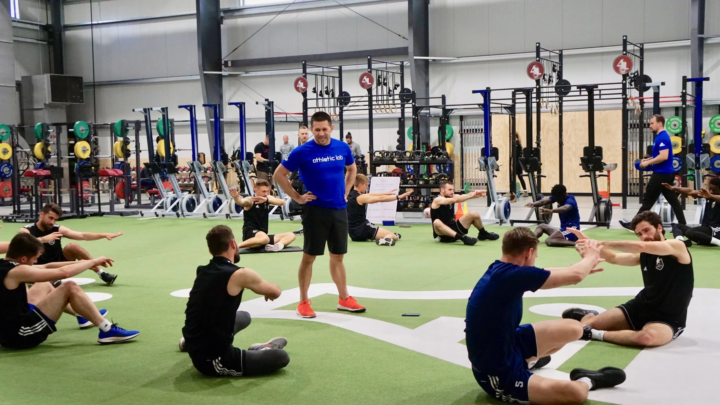
The "performance team concept" refers to: A. Performance staff only, such as strength and conditioning professionals and sport scientists B. Athletic trainers, dieticians, and physicians C. Any individual with specific areas of expertise working toward meeting program objectives Answer in the poll, then explain your rationale below in the comments! I'll follow up with my breakdown of the question after enough people have responded. From Chapter 24: Facility Policies and Procedures
Poll
24 members have voted
0 likes • Apr 2
A- Performance team concepts revolves around the a team of staff that helps athletes "performance" the media team would not fall under this category...?
Apr 2 •
CSCS Practice Question #21
Which statement accurately describes the relationship between intensity and volume in plyometric training? A. Higher intensity drills should be paired with higher total volume to maximize adaptation B. Intensity and volume are independent C. Higher intensity drills should be paired with lower total volume to prevent overtraining Answer in the poll, then explain your rationale below in the comments! I'll follow up with my breakdown of the question after enough people have responded. From Chapter 18: Program Design and Technique for Plyometric Training
Poll
31 members have voted
1 like • Apr 2
Answer (C) - Higher intensity are more fatiguing and harder to recover from so they should be done at lower volumes
Apr 2 •
CSCS Daily Practice Question #22
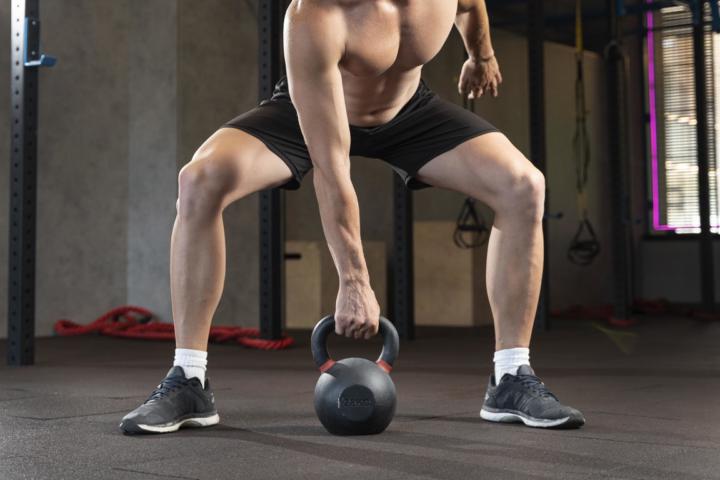
Cast iron kettlebells differ from competition kettlebells primarily in that: A. They have no handle and require two-handed gripping B. They should not be used for explosive training movements because of their increased risk of injury C. They have variable dimensions across different weights and handle diameter changes as weight increases Answer in the poll, then explain your rationale below in the comments! I'll follow up with my breakdown of the question after enough people have responded. From Chapter 16: Exercise Technique for Alternative Modes and Nontraditional Implement Training NOTE: Image is for illustration purposes, not needed to answer the question.
Poll
36 members have voted
2 likes • Apr 2
I choose (C.) not completely sure though it I thought it made the most sense...I will be studying chapter 16
1-4 of 4

@andres-j-4918
I help athletes jump higher, sprint faster and, get stronger without getting injured 🥇🏋🏽
Active 18h ago
Joined Apr 2, 2026
Powered by