Activity
Mon
Wed
Fri
Sun
Oct
Nov
Dec
Jan
Feb
Mar
Apr
May
Jun
Jul
Aug
Sep
What is this?
Less
More
InnerDevelopment@Work
519 members • Free
26 contributions to InnerDevelopment@Work

Jun 11 •
Drawing from ancient wisdom - a new reflective guide
Update June 24th: watch the short conversation @Nadene Canning and I had about the guide and why we think it's so valuable! 👇🎬 watch the video below! *** I like what EMCC (European Mentoring & Coaching Council) shares in their new guide to support members in reflecting more deeply on how they might want to engage in systemic work with clients focused on sustainable models of living and being. Key Wisdom Concepts - Observe and Interact: Derived from permaculture, this principle emphasizes deep listening and embodied observation to support clients in making positive incremental changes. - The More-Than-Human World: Challenges the idea of human superiority by viewing humanity as part of a vast ecological community. This includes the "wisdom of trees" (interconnected support networks) and "deep time" (viewing life through Earth's 4.6-billion-year history). - Ancient Human Wisdom: Incorporates teachings such as Ubuntu (interdependence), Komorebi (noticing subtle beauty), and the "Four Sacred Gifts" (forgiveness, unity, healing, and hope). - Reciprocity and Abundance: Inspired by Robin Wall Kimmerer's work on the serviceberry, this concept shifts from a scarcity mindset to one of gratitude and giving back to the ecosystem. The guide is available for download here


1 like • Jun 25
Thank you, Sarah and Nadene, for your video and sharing this reflective guide. I will dig in when I have a bit more time to explore this.

Jun 16 •
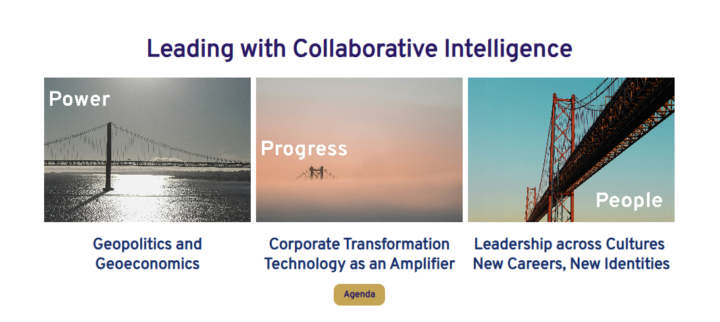
Leading with Collaborative Intelligence - Lisbon June 25-26
The PWN Summit 2026 Summit program is close to our 💖 Leading with Collaborative Intelligence is the theme. Three tracks; Power. Progress. People. All look fabulous! We're wondering whether any members of our community living in the iberian peninsula will be attending the Summit in Lisboa? We'd LOVE it if you would bring some stories from the Summit into our community. Victoria Freire Triep Andreia Carvalho Patrícia Canela Filipa Lopes Diana Osório Susana Filipa Ribeiro Elisa Moreira Estrella Bernal Cuenca Trish Sta. Rosa Anna Alaman Torres
0 likes • Jun 20
I would have loved to attend, but I also have too much on my agenda this summer. Love to hear how it goes.
Mar 6 •
Soil Health, Human Health & Planetary Well-Being: Pathways for Regenerative Economies
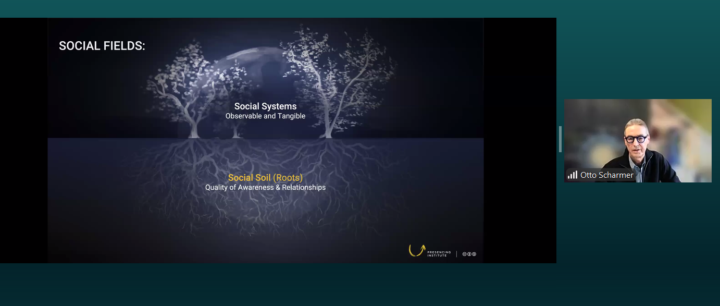
Being a part of the Presencing Institute community since it's very beginning, and have used TheoryU in the design of many gatherings that I have hosted and facilitated. I joined the first of five global gatherings yesterday. They hosted a 90-minute session with over 700 participants weaving together stories, music, breakout conversations, and collective reflection to explore the living connections between regenerative agriculture, human health, and new economic possibilities. I'm sharing a few of the images and phrases that stuck with me: Planting new seeds for new ways From extraction to regeneration Agriculture is culture Native bees are almost extinct Fall in love with the problem Both special guests were touched by a calling and curiosity to do something different with their lives. Despite their fear they allowed themselves to feel into it, to take risks because they had a strong belief in the importance of their ideas, and the impact they could have on people and the planet. They decided to experiment with what they were curious about and each took small steps with purpose, being brave enough to take the next step without having the answers. Christa was activated by soil, farming and community. Zuzanna by creating caring farmer communities. Christa went on to say that she surrendered to the process. Special Guests: Christa Barfield, Zuzanna Zielińska
1 like • Mar 10
@Nadene Canning I also was not aware of your close connections with Otto and TheoryU and with Peter Senge. I was moved by Peter sitting on stage and just chatting with us the last day of the 2025 IDG Summit in Stockholm. I would love to hear him again...he has a special way of making the 'far away and huge' seem possible!
Mar 8 •
What might modern “beguinages” look like today—co-living communities, cooperative economies, digital communities, or something entirely new?
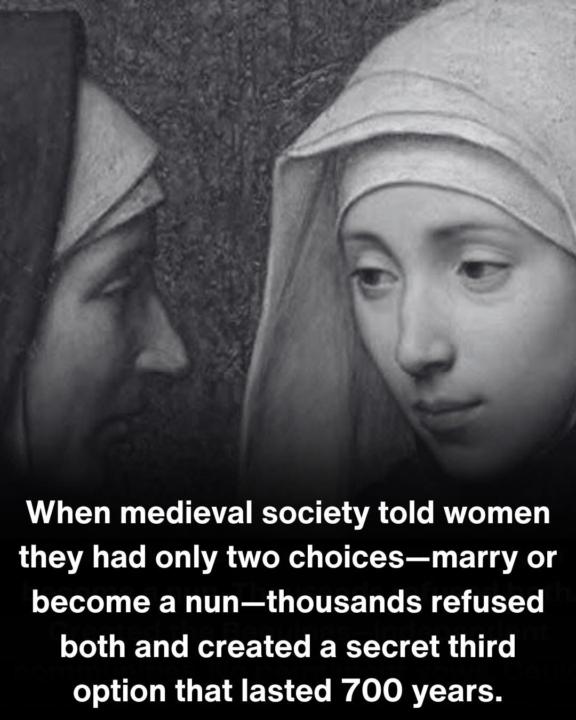
When medieval society told women they had only two choices—marry or become a nun—thousands refused both and created a secret third option that lasted 700 years. Imagine living in a world where your entire future has been decided before you were born. As a woman in 1200s Europe, society offered you exactly two paths: Marry—surrender all legal rights, bear children, obey your husband completely, own nothing in your own name. Or become a nun—take permanent vows, live behind convent walls forever, require a dowry most families couldn't afford. Both demanded the same price: your freedom. Both required lifelong obedience to male authority. But some women looked at these two rigid paths and simply said: "No. We choose neither." They called themselves the Beguines, and they built something revolutionary. Starting in the late 1100s across Belgium, the Netherlands, France, and Germany, women began forming independent communities that fit neither official category. They weren't married. They weren't nuns. They were something entirely new. They built beguinages—small houses arranged around shared courtyards and gardens, like self-contained villages designed by and for women. They prayed together daily, following spiritual practices they created. They worked in skilled trades—weaving intricate cloth, creating lace that wealthy clients paid premium prices for, brewing beer commercially, nursing the sick, teaching children to read. They supported themselves through their own labor. In many regions, they could legally own property and control their own money—something married women absolutely could not do under medieval law. And here's what made them truly revolutionary: they could leave whenever they wanted. No permanent vows. No lifetime commitment. If a Beguine decided to marry, she could leave and marry. If she wanted to return home, she could. Her participation was completely voluntary—a radical concept in medieval Europe where women's choices were almost never voluntary.
2 likes • Mar 9
@Nadene Canning thanks for the reminder of how far women have come. Perhaps a good idea to explore how those courageous women made their own decisions. Something for us to explore and re-learn??
Feb 20 •
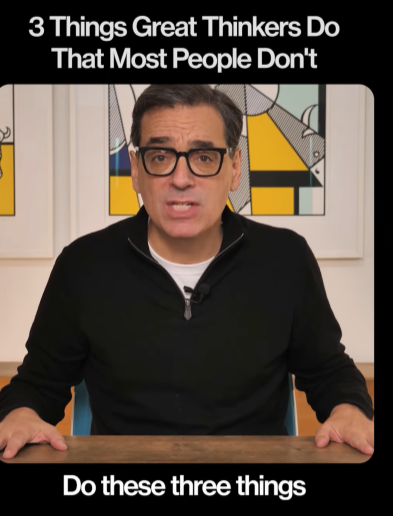
"3 Things that Great Thinkers Do, That Most People Don't"
Daniel Pink first came to my attention many years ago with his book "A Whole New Mind - Why Right Brain-ers Will Rule the Future". He's written seven bestselling nonfiction books on a range of topics, from human motivation to the science of timing to a graphic novel career guide. This 3min video he posted earlier this week on multiple platforms and I shared it on LinkedIn and here with you. Our invitation is to get more curious about it in our THINKING Skill Builder next Tuesday February 24th at 12.30 and we hope you'll be able to join. You can find the link to the call in the calendar. If you aren't able to join us, do let us know your thoughts in the comments 🤓 https://www.instagram.com/reel/DU6EL56jB2b/?utm_source=ig_web_button_share_sheet&igsh=ZDNlZDc0MzIxNw==
0 likes • Feb 26
@Nadene Canning Thank you for sharing the learning from your session. Question 2 really resonates with me. While I often put learning into action, where I am focusing at the moment is noticing patterns and energies that support my inner BEING and moving closer to what supports. This also means moving away from what is not energizing me or supporting my feeling of security. Whenever I get ready for a leap or shift in focus to be more on PURPOSE, I need to be surrounded by those who care for me and support my endeavors. Thank you, Nadene and Sarah and others, for supporting and guiding our community. I am feeling super grateful. 💗
0 likes • Feb 26
@Katarina Halm Thanks for highlighting six right hemisphere aptitudes: 1) Design, 2) Story, 3) Symphony, 4) Empathy, 5) Play, 6) Meaning I am paying more attention to where my thinking goes - left or right or in harmony...
1-10 of 26

Active 23d ago
Joined Nov 7, 2024
Powered by