
🔥
May 7 • 🧩 Discussion
📌 Conspicuous Sameness
Thorstein Veblen, renoun Norwegian-American economist and sociologist who is best known for his 1899 book, The Theory of the Leisure Class, wrote about something he called "conspicuous consumption". At the time, it referred to the visible display of wealth; buying and showing things not just for their usefulness, but for what they signaled to others: status, belonging, success. It was never just about the thing itself. It was about what the thing said.
I have been thinking about that idea recently, and how it might apply in a very different space. Not to what people are buying. But to what they are saying. There is a pattern I have been noticing.
Coaches, creators, professionals; all well-intentioned, all trying to find their footing; beginning to sound… remarkably similar. You know the template: "I help [this group] move from [this problem] to [this result] without [this frustration]." You have seen it. You may have even tried it. It is clean. It is teachable. It is repeatable. And that is precisely the point.
It signals something. Competence. Alignment. "I know the framework." A kind of professional belonging. Not so different, perhaps, from Veblen’s observation. But something else happens along the way. The message becomes less about meaning… and more about matching.
Malvina Reynolds captured a version of this long ago in her song "Little Boxes. "Little boxes on the hillside… and they all look just the same." Different context. Same idea. Uniformity dressed up as individuality.
Now, to be fair, there is value in structure. Frameworks help people begin. They offer clarity when there is none. They reduce friction for those just getting started. But there is a point where structure quietly becomes constraint. Where expression gives way to imitation. Where the desire to "get it right" overrides the desire to be real. And that is where something is lost. Not skill. Not intention. But voice.
The interesting thing is, most people can feel it. They cannot always name it. But they sense when something sounds practiced rather than lived. When it follows a pattern instead of a perspective.
Perhaps what we are seeing is not conspicuous consumption. But something adjacent to it. Conspicuous sameness. A visible signal that says, "I belong here," even if it comes at the cost of sounding like everyone else.
There is a quieter path. Less obvious. Less immediately validated. But more enduring. One where the message does not begin with a template, but with a point of view. It may not be as instantly recognizable. It may not fit neatly into a formula. But it carries something the formula cannot:
A sense that there is a real person behind it.
And in a world that is becoming increasingly uniform in how it presents itself, that may be the one thing that still stands out.
3
3 comments
📌 Conspicuous Sameness
powered by
skool.com/your-pathway-to-growth-5059
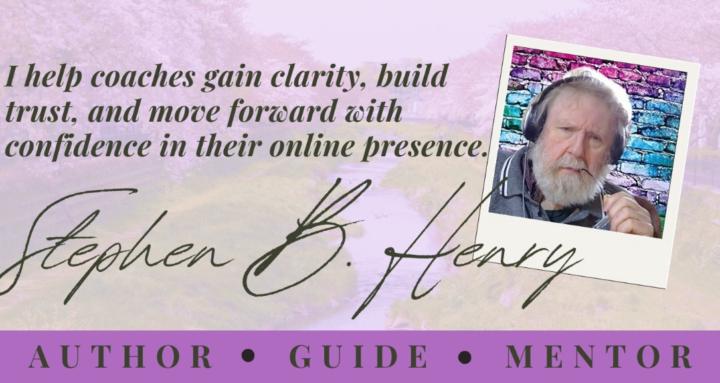
Stephen B. Henry’s "Your Pathway To Growth" community is a calmer, safer place for learning A.I. through natural conversation and guidance.
Suggested communities
Powered by