
Write something

2h •
Case Study 56: Tower Crane Lifting Loose Plywood Then Told to Bring It Back
Incident Overview Loose plywood was lifted without securing and later instructed to be returned mid-lift. What Went Wrong Poor securing and changing decisions mid-lift increased risk. Key Lessons Learned - Once airborne, safest option is to land - Mid-lift changes increase risk Safety Recommendations Loads must be secured and landed safely if lift is already underway. ●LOLER 1998 – Regulation 4 (Stability/secured load); Regulation 8 (Organisation, supervision, communication) ●PUWER 1998 – Regulation 4 (Suitability); Regulation 8 (Information/instructions); Regulation 9 (Training) ●BS 7121-1 – Securing loads; decision-making during live lifts; minimising time under suspended loads ●BS 7121-3 – Tower crane operations, especially where loads are out of view and require structured comms/supervision Wolf Lifting Dynamics Limited – Safety HUB | Case Study 56
0
0
3h •
Case Study 50: Lift Continued Despite Conflicting Instructions
Incident Overview The crane operator received conflicting instructions from two individuals during a lift. What Went Wrong There was no single point of control. Key Lessons Learned - One lift requires one voice Safety Recommendations Lifts must stop immediately if instructions conflict. ●LOLER 1998 – Regulation 8 (Organisation, supervision, and communication) ●PUWER 1998 – Regulation 8 (Information and instructions); Regulation 9 (Training) ●BS 7121-1 – Requirement for a single point of control and clear communication ●Industry best practice – Conflicting instructions are a mandatory stop-work condition Wolf Lifting Dynamics – Safety HUB | Case Study 50
0
0
6d •
Case Study 30: Deteriorating Weather Conditions Not Communicated
Incident Overview During a planned lifting operation, weather conditions gradually deteriorated with increasing wind speeds. Although changes were observed by some site personnel, this information was not communicated to the lifting team or crane operator in a timely manner. What Went Wrong There was no clear process for reporting changing environmental conditions. The lift continued until instability became noticeable. Key Lessons Learned - Weather information must be shared immediately - Communication is critical during live lifts - Early reporting prevents escalation Safety Recommendations Establish clear procedures for monitoring and communicating weather changes during lifting operations. ●LOLER: Reg 4, Reg 8 ●PUWER: Reg 8 (instructions), Reg 9 (training) ●BS 7121: Part 1 (weather monitoring/communication), plus 2/3 depending on crane type Wolf Lifting Dynamics Limited – Safety Hub | Case Study 30
1
0

6d •
Case Study 29: Inadequate Lighting Affecting Crane Signalling
Incident Overview A lifting operation was carried out during low-light conditions inside a partially enclosed structure. Hand signals between the slinger and crane operator became difficult to see, particularly as the load moved deeper into the structure. What Went Wrong Lighting levels were insufficient for safe signalling. The lift continued without additional controls or alternative communication methods. Key Lessons Learned - Visibility is a control measure - Poor lighting increases communication errors - Signalling must be clearly visible at all times Safety Recommendations Provide adequate task lighting or alternative communication systems before lifting in low-light areas. ●LOLER: Reg 8 ●PUWER: Reg 4 (suitability), Reg 8 (information/instructions) ●BS 7121: Part 1 (communications/signalling requirements; visibility control measures) Wolf Lifting Dynamics Limited – Safety Hub | Case Study 29
1
0
6d •
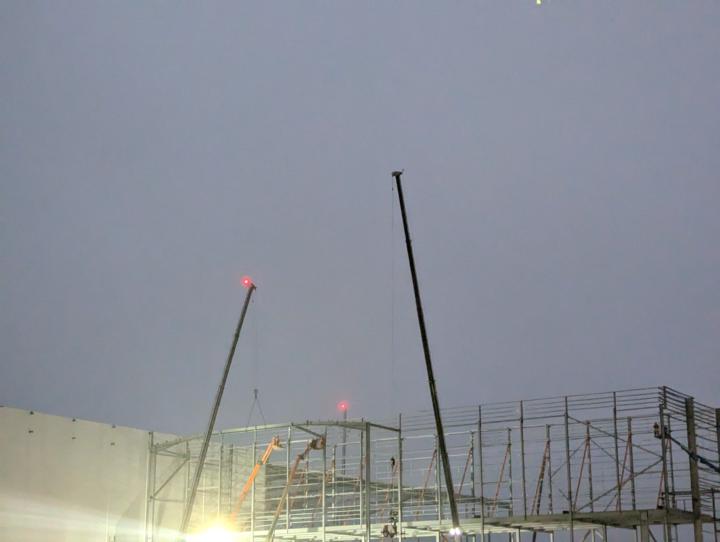
Case Study 25: Poor Radio Communication During Lifting Operations
Incident Overview A lifting operation relied on radio communication between the slinger and crane operator. What Went Wrong Signal interference and unclear messages caused delays and hesitation during load movement. Key Lessons Learned - Communication failures increase suspended load time - Radios must be checked before use - Clear protocols reduce confusion Safety Recommendations Test radios during briefings, establish clear communication protocols, and stop the lift if communication is lost. ●LOLER: Reg 8 ●PUWER: Reg 4 (suitability), Reg 8 (information/instructions), Reg 9 (training) ●BS 7121: Part 1 (communications, single point of control, stop protocols) Wolf Lifting Dynamics Limited – Safety Hub | Case Study 25
1
0
1-6 of 6
powered by
skool.com/wolf-lifting-dynamics-9548
This community shares real lifting case studies, consultancy insights, and site-proven lessons covering cranes, supervision, planning, and execution.
Suggested communities
Powered by