

2d •
Don’t Let Your Emotions Control Your Weight Loss Journey ⚖️🧠
Your emotions are real—but they are not in charge. I’m not sharing this for sympathy, likes, or attention. I’m sharing it because people see consistency, discipline, and progress in health and fitness—and assume life must feel easy. That’s not reality. Even When Life Feels Heavy… You Still Execute 💭 Today was hard. Not surface-level stress—real, sustained pressure. The past few weeks have been filled with chronic stress and very little sleep. Some nights, less than two hours. That takes a toll. And in moments like this, it would be easy to slow down, to justify skipping the habits that move me forward. But that’s exactly the trap. Because if I let my emotions dictate my actions… I don’t just pause progress—I extend the problem. The only way out is through. Why Emotions Can’t Lead (Especially in Weight Loss) ⚖️ This applies directly to weight loss. If your health, nutrition, and fitness habits are driven by emotion, they will always be inconsistent. You’ll eat well when you feel motivated. You’ll skip when you feel tired. You’ll fall off when life gets stressful. And that’s why so many people struggle to lose weight and keep it off. Not because they don’t know what to do—but because they let how they feel determine whether they do it. Emotions Are Data—Not Instructions 📊 That doesn’t mean we ignore emotions. We don’t suppress them. We don’t numb them. We feel them fully. But we also understand what they are: information, not direction. Something to acknowledge… not something to obey. Earlier today, I broke down. Sat with it. Felt it. And then I moved. Not because it magically got better—but because staying there wouldn’t serve me. The Skill That Changes Everything: Emotional Resilience 🧠 Life will test you—often when you’re already stretched. - Poor sleep - High stress - Unexpected challenges And if your habits collapse every time life gets hard, progress becomes impossible. This is where emotional resilience comes in. The ability to say:

2d •
It’s Fun to Have Fun 🎉 But You Have To Know How 🧠
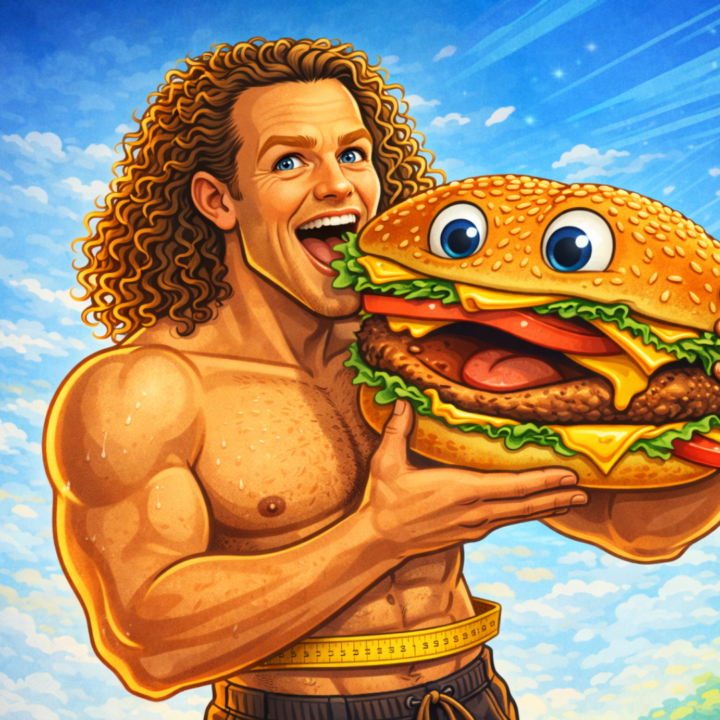
Hey guys!! 🙌 I just did a full overhaul on the outward-facing marketing and branding and I’m honestly FIRED UP about it 🔥🔥 Everything is now built around a consistent theme: 👉 the animated hero version of me 👉 Simple Weight Loss as the brand I made it fully cohesive across everything — cover, about section, classroom, and I also updated the icon (you’ll see it in this post) 🎨✨ Would LOVE your feedback on it 👇👀 — But more importantly… I want to talk about this idea: It’s fun to have fun — but you have to know how 😄 That line has always stuck with me (shoutout Cat in the Hat 🐱🎩😂), but there’s real truth in it—especially when it comes to weight loss and building habits. I say this all the time: 👉 This process has to be enjoyable 👉 If it’s not… you won’t stick with it ❌ But here’s the part most people miss: ✨ Sometimes you have to create the fun ✨ You have to manufacture the joy It doesn’t always just show up. And yeah… sometimes it feels a little silly 🤪 Like when I was a kid — I was GRUMPY 😤😂 My mom would literally make me stand in front of the mirror and laugh… At the time I thought it was ridiculous… …but it worked 🤯 Or how when someone smiles at you 😊 you naturally smile back 😄 That’s what this is about. We’ve got to learn how to: 🎯 Not take everything so seriously 🎯 Tap back into that inner kid 🎯 Create moments that actually feel GOOD Because if this journey feels like punishment… you’re going to quit 🚫 Somewhere along the way, everything got so serious 😐 It’s like brands went from being fun and full of personality… to flat and boring 🥱 We’re doing the opposite 😎👇 🎉 We’re bringing FUN back into the process 🎉 We’re making this enjoyable again Because the truth is… This whole thing works WAY better when you actually enjoy it 💪🔥 And yeah… It’s just a lot more fun to have fun 😄🎉
6d •
⚖️ Harm Reduction: Why the Weekend Keeps Resetting Your Progress
Happy Friday, everyone. 🎉 And ironically, Friday is the perfect day to talk about something that quietly sabotages a lot of progress: the restrict → binge cycle. You see it everywhere. People are locked in Monday through Thursday. Perfect nutrition. No drinks. Gym sessions dialed in. Then Friday night hits and the pendulum swings the other way — hard. 🍻🍕 And by Sunday night they’re wondering why they never seem to move forward. This is where the concept of harm reduction becomes incredibly powerful. --- ⚙️ The Pendulum Always Swings Think of behavior like a pendulum. When you pull it hard in one direction (strict restriction), you're storing energy. Eventually that energy releases and the pendulum swings back the other way. The universe works in balances and trade-offs. Push hard in one direction long enough and momentum builds in the opposite direction. The stricter the restriction, the stronger the rebound tends to be. That’s why someone who hasn’t had a cookie in six months suddenly eats half the box. Or someone who “never drinks” ends up finishing the bottle and ordering shots. It’s not a willpower problem. It’s physics of behavior. --- 😵💫 Restriction Fails When Life Happens The real problem shows up when life throws friction at you. Maybe your kid gets sick and you’re in the ER all night. Maybe work explodes. Maybe you slept four hours. Suddenly your impulse control drops. Now that craving you’ve been suppressing for months shows up at full strength. Instead of one beer with dinner, it becomes five. Instead of a cookie, it becomes a binge. Instead of skipping the gym once, the whole weekend unravels. Restriction strategies only work when life is perfect. And life is rarely perfect. --- 📉 The Goal Isn’t Perfection — It’s Stability This is where harm reduction comes in. Instead of trying to eliminate behaviors completely, you engineer a lifestyle that keeps the pendulum small. Not huge highs and huge lows. Just a steady baseline. Maybe that looks like:

7d •
🔥 Less Is Better: Why Good Enough Actually Wins
Most people think results come from doing more. More workouts. More diet rules. More complicated plans. More optimization. But real progress usually begins when you stop chasing perfection and start focusing on consistent execution. You don’t need perfect discipline. You need high compliance with simple fundamentals. 💪 ⚠️ The Problem With Doing More Most people fail their weight loss journey because they’re constantly starting over. New program. New diet. New strategy. It feels productive, but it’s actually the opposite. They spend more time planning change than actually living the habits that create it. Progress doesn’t come from complexity. It comes from repeating the basics long enough for them to work. 🎯 The Power of Minimum Effective Dose This is where the idea of minimum effective dose becomes powerful. Instead of asking: “What else should I add?” You start asking: “What is the minimum I need to do consistently to move toward my goal?” You reverse engineer from your goal back to where you are now and build the simplest plan that works. Cut the junk food. Lift a few hard lifts. Move your body regularly. Stay consistent. That’s it. If you hit 80% compliance with the fundamentals, you’re already outperforming most people who constantly restart their plan. 📈 Push that to 90% compliance, and the results start compounding fast. 🔁 Why Simplicity Wins Simple plans don’t just work better — they last longer. Complicated systems collapse under pressure. Extreme effort leads to burnout. I saw someone this week who was posting content getting 700,000 views per video… and then disappeared for two months. Why? Burnout. Now they’re starting over again and are further away from their goals than they were before. This is exactly why simplicity matters. Simple is repeatable. Repeatable is sustainable. Sustainability is where results live. 🔥 Results don’t come from doing everything. They come from doing the right things consistently for long enough.
10d •
🧠⚙️ The Importance of Environmental Guardrails: Priming & Associative Thinking
🏋️ Priming in Physical Training 🏋️ One concept I use constantly in coaching is priming. In physical training, priming is a simple way to help the brain activate the right muscles before performing an exercise. For example, sometimes when someone squats, their glutes are underactive. If the issue isn’t muscle development but instead a weak muscle–mind connection, we can use a quick priming strategy. I might have them perform three glute bridges immediately before their set of squats. Just three reps. Then they go straight into the squat set. Those glute bridges remind the brain, “Hey, we want to use the glutes here.” That short primer dramatically increases the likelihood that the glutes actually contribute during the squat. It’s a small intervention—but it changes how the body organizes movement. And interestingly, this same concept exists far beyond the gym. 🎧 Priming & Associative Thinking in the Brain 🎧 While walking this morning, I was listening to Thinking, Fast and Slow by Daniel Kahneman. In the section I listened to, he discusses associative thinking and priming—and one of the key insights is that we cannot stop priming from happening. Our brains are constantly making associations. One famous experiment involved exposing people to a list of words loosely associated with aging (things like Florida, grey, retired, etc.). After the experiment, participants walked down the hallway significantly slower. Even more interesting: when asked about it afterward, they refused to believe the words had influenced their walking speed. This is how powerful priming can be. Much of it happens below conscious awareness. 🌍 Your Environment is Always Priming You 🌍 Priming isn’t just happening in psychology labs. It happens everywhere. Kahneman gives several examples: • Office snack bars receive different donation amounts depending on the images placed next to the jar • Dictators often place their photos everywhere in public spaces • School funding votes are more likely to pass when voting happens in a school rather than a church

1-5 of 5
skool.com/weightloss
Weight loss shouldn't be complicated. Lose weight and keep it off with SIMPLE habits. Extreme dieting sucks, so don't.
Leaderboard (30-day)
1

🔥
+604
2

+114
3

+107
4

+90
5

+53
Powered by