Activity
Mon
Wed
Fri
Sun
Apr
May
Jun
Jul
Aug
Sep
Oct
Nov
Dec
Jan
Feb
Mar
What is this?
Less
More
Memberships
SIMPLE Weight Loss
63 members • Free
294 contributions to SIMPLE Weight Loss

9d •
Watts per Kilogram - Why It Matters? 🧐
Chasing 3 Watts per Kilogram — Why This Metric Matters for Your Fitness, Health, and Longevity 🚴♂️📈💪 For a long time I’ve had a simple performance goal in mind: Sustain 3 watts per kilogram for 20+ minutes. 🎯 It’s one of those numbers that sits right at the edge between “generally fit” and “actually well-conditioned.” Not elite by any means — but a very solid marker of aerobic fitness. 🫀⚡ Today during my 30-minute aerobic session on the Echo Bike, I finally pushed past that target in a big way: 🚴♂️🔥 - Average Power: 272 watts ⚡ - Bodyweight: 182.8 lbs (≈ 82.9 kg) ⚖️ - Output: 3.28 watts per kilogram for 30 minutes 📊 That’s a number I’ve been working toward for a long time. Not just because it’s a cool performance metric — but because watts per kilogram is closely tied to one of the most important markers of long-term health: VO₂ max. 🧠🫀 Let’s talk about why. 👇 --- # What is Watts Per Kilogram (W/kg)? ⚡⚖️ Watts per kilogram is simply a way to measure how much power your body can produce relative to your body weight. The formula is simple: Power Output (Watts) ÷ Bodyweight (kg) = W/kg 🧮 Example from today: 272 watts ÷ 82.9 kg = 3.28 W/kg 📈 Why does this matter? 🤔 Because absolute power alone doesn’t tell the whole story. Two people could both produce 250 watts: - Person A weighs 150 lbs - Person B weighs 250 lbs Even though their watts are identical, the lighter athlete is producing much more power relative to their body mass, which generally reflects a stronger aerobic engine. 🫀⚙️ That’s why W/kg is widely used in endurance sports like cycling, rowing, and skiing — it normalizes performance across different body sizes. 🚴♂️🚣♂️⛷️ --- # General W/kg Ranges for Aerobic Fitness 📊 For sustained efforts (20–30 minutes), rough fitness categories look something like this: | Watts/kg | General Fitness Level | |----------|----------------------| | <2.0 | Low aerobic conditioning | | 2.0–2.5 | Recreational fitness | | 2.5–3.0 | Solid aerobic base |

1 like • 9d
I used to row for just meters and time ..I have rowed well over 25 million meters in my lifetime.I was on a virtual rowing team.We rowed for distance and time.I always watched my ergs and watts but never really used them as a benchmark or aerobic conditioning tool.Until one of my many fabulous young trainers suggested that I row my weight in watts..I thought she was daft! But when I did ..the challenge was alarming and my aerobic conditioning sky rocketed.Ergs and watts make a huge difference.
12d •
🤖 Welcome Ryan! 🔥
Welcome Ryan! 👋 Your bio caught my eye — “Why, What, and then How” for AI literacy. Curious what that actually looks like in practice for leaders? I’ll admit I’m already feeling a little combative haha 😅 I’ve found a lot of value in skipping right over the why sometimes. It can feel like analysis paralysis. A lot of people get stuck over-analyzing when the “why” doesn’t really add practical value. For me it’s more like:What’s the problem?How is it affecting me?What’s a potential solution?And how do we construct a path forward? That framework has often felt more useful than asking why did this happen in the first place? Curious to hear your perspective on it.
3 likes • 12d
Welcome in!
13d •
Daily Audit - 3/7/2026
This is your Daily Audit. Please comment your answers 2x per day: - Morning Audit (comment this in the morning) - Evening Audit (reply again in the evening) Keep it real, keep it simple, and show up daily. Morning Audit ☀️ Comment your answers below: 1. What am I grateful for today? 2. What am I looking forward to in the long term? 3. What challenge am I facing today? 4. What am I doing today that directly moves me toward my goals? Evening Audit 🌙 Reply again tonight with: 1. What was my biggest win today? 2. Where did I fall short in my execution? 3. What adjustment will I make tomorrow? 4. What life problem or obstacle am I currently trying to solve?
1 like • 12d
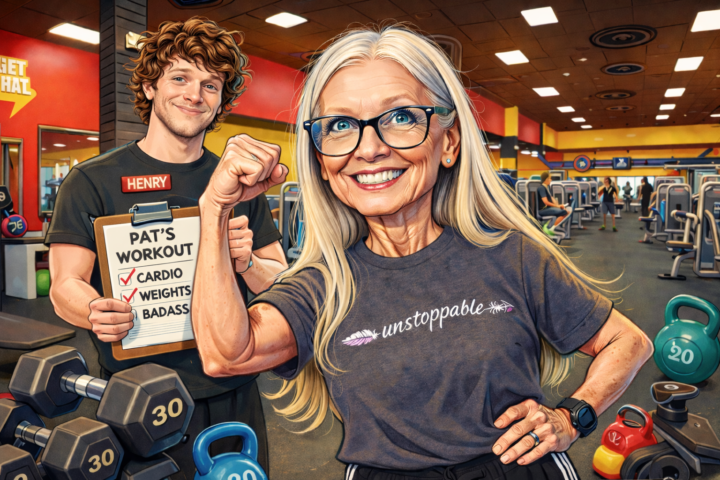
My daily audits seem to be always pretty much the same..so when I fail to respond..I am feeling redundant. I am grateful for who I was bonded with for almost 56 years.It has helped to make me who I am. My long term goals are just to stay healthy, independent and OUT OF ASSISTED LIVING..long term goals are difficult because I have yet to really know who I presently am.My life plans changed abruptly and I am still putting myself back together.At 77 that is really a challenge. My challenge today is to get through the day..I stay consistent and disciplined every day.Without these 2 traits there is no motivation.I am not your average “old” chick! Doing to move forward..resting up up from a week of 2 mile walks every day followed by intense weight lifting sessions with Henry.5 days in a row..not just your average pink weights and “sissy” stuff.I intend to be strong..I am a survivor, warrior and bad ass!! LOLOL.There you have it.Same thing tomorrow and the next day!! Thanks for your ongoing support.
12d •
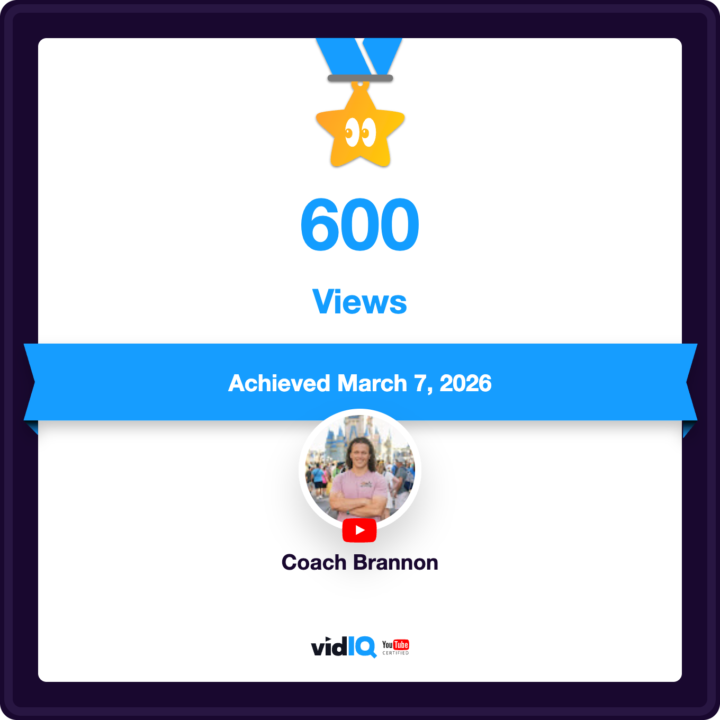
🎉 600 Views and Counting… Celebrating the “Small” Wins 🚀
Another milestone today… 600 total views on my YouTube channel 📈 And honestly, it might feel a little silly posting wins that are this small… especially when they happen back-to-back like this. 50 views here. Another 50 there. Doesn’t seem like much at first glance. But here’s the truth 👇 Learning to celebrate every step of the journey is HUGE. Most people wait until things are “big enough” before they celebrate.But momentum is built in the small moments — the quiet progress that happens before anyone else is paying attention. So yeah… maybe 600 views isn’t massive yet. But it’s proof that progress is happening. Brick by brick 🧱 Step by step 👣 And one day these “small” wins will add up to something really big. On to the next milestone 🚀
2 likes • 12d
Always celebrate the small things..we look back and they were the BIG things!!
1-10 of 294
@pat-mazzei-4052
ACE certified personal trainer..retired RN
Active 18m ago
Joined Nov 24, 2025
Powered by