
Write something
Jan 7 •
🚀 YOU'RE INVITED: Pack AI Beta Tester Program
We're looking for 500 coaches and athletes ready to shape the future of baseball and softball training. Here's what you get: ✅ FREE access to Pack AI swing analysis for a FULL YEAR ✅ Real-time hitting feedback powered by AI technology ✅ Full access to all new products launching throughout 2026 ✅ Direct input on product development (your feedback shapes everything) ✅ Exclusive community access with coaches and athletes pushing the same mission What we need from you: Weekly check-ins in our Skool community (On this thread) Honest feedback to help us perfect the system Commitment to testing and growing with us This is YOUR chance to be part of the Pack AI revolution before it launches to the world. The first 500 to sign up get locked in for a year of free access—no strings attached, just pure development. Ready to level up? Sign up for the beta: https://forms.gle/NMmUpXPGm4paZDj9A The strength of the Pack is in the Pack. Let's build something legendary together. 🐺 #PackAI #BetaTester #SwingAnalysis #AITraining #CoachingCommunity #BaseballTech #SoftballTech #WolfPackRising #EliteTraining #FreeAccess

Mar 5 •
Practice Planning: Foundational Guide for Coaches
Why Practice Planning Matters A well-structured practice plan transforms chaos into progress. It ensures every athlete gets reps, every skill is developed, and your time is maximized. Great plans create buy-in, reduce confusion, and set the tone for your team’s culture. But that is just the beginning, a well-structured practice plan will start to harmonize your team and create more of what most coaches refer to as “Muscle Memory”. This is where real learning and progress starts to take place. Think small bursts of activity that are repeated daily (or as close to daily as you can get) and then you move on to the next skill. Always finish the practice with an activity that promotes competition, brings all the skills you worked on during practice into the game, and then finishes with a mental recap of the day's lessons. I understand that we are all limited by time, we may only have our athletes for an hour, or two hours a day, or maybe a few days a week, that’s ok. Plan your practice accordingly around the time you have. Make sure you take the time to give your athletes something to do at home, when they are not with you. Emphasize that some practice every day makes 10x progress in their development over a few practice sessions with you. (The Mirror drill is a great one they can do anywhere) Core Elements of a Winning Practice - Clear Objectives: Define what you want to accomplish (e.g., improve outfield relays, build hitting confidence). This is for you and your coaching staff. Make sure you have a clear objective that you are all working toward. Also, don’t change this every practice. If you hit on twice a week, for six consecutive weeks, those objectives will be the same. If you field once a week, for 12 consecutive weeks those objectives will be the same. This is a hard concept to wrap your brain around in this fast paced, win now world, but trust me, this will make all the difference in developing your athletes. - Time Blocks: Segment practice (Mental prep, warm-up, skill work, competition, cool-down) and stick to the clock. This is important, I like to get a parent involved here or a volunteer/manager. I give them a stop watch and control of the practice music. Make sure they have a copy of your practice plan to know how long they need to be setting their timer for and when to sound warnings and get players ready to transfer.
2
0
Feb 12 •
Meet TACA Homeschool Baseball.
Texas Alliance of Christian Athletes. 10 years ago, Mike Ostrom started something that seemed unconventional: a homeschool baseball program that combines elite-level competition with faith, academics, and character development. Today, TACA runs 8 teams across middle school and high school levels in the Dallas area, with players coming from across the country—Colorado, Michigan, Iowa, Florida, Arizona—all seeking something different. Here's what makes TACA different: They don't just develop baseball players. They develop young men. 2/3 of their players go on to play college baseball on scholarship. They've had 8 D1 commits in the last 6 years. One player just committed to Ole Miss. But the real story isn't the statistics. It's the philosophy: homeschooling gives families control over their sons' education, their values, and their development—without sacrificing elite baseball competition. "We're looking for kids interested in playing college baseball, and we help families navigate homeschooling so they can focus on what matters most." If you've ever wondered if there's an alternative to the traditional high school path, TACA might be it. 📍 Dallas, Texas | TACA Homeschool Baseball 📱 Text: 214-632-6230 | 🌐 takabaseball.org #HomeschoolBaseball #TACA #AlternativeEducation #BaseballDevelopment
Feb 17 •
🎯 Own Your Recruiting
Last night on Inside the Dugout with Pack, we had an incredible conversation with Coach Jeff about one thing that keeps parents up at night: How do I get my kid into the right college? Here's the truth: Recruiting doesn't have to be complicated, expensive, or stressful. Coach Jeff and his team built All-Star College Recruit to help families take control of their recruiting journey. They've done the painstaking research on metrics from every D1, D2, D3, NAIA, and JUCO program across the country. The result? A platform that shows you exactly where your athlete stands and what it takes to get recruited. And here's the best part: normally $59/month, but for Pack Nation, use code PACK at checkout for $20 off monthly. Click Here to check out what coach is doing for our community: https://www.allstarcollegerecruit.com/ Listen to the full interview on our podcast: Inside the Dugout With Pack (link in comments) #Recruiting #CollegeSports #BaseballFamily #SoftballFamily #PackNation
2
0
Feb 6 •
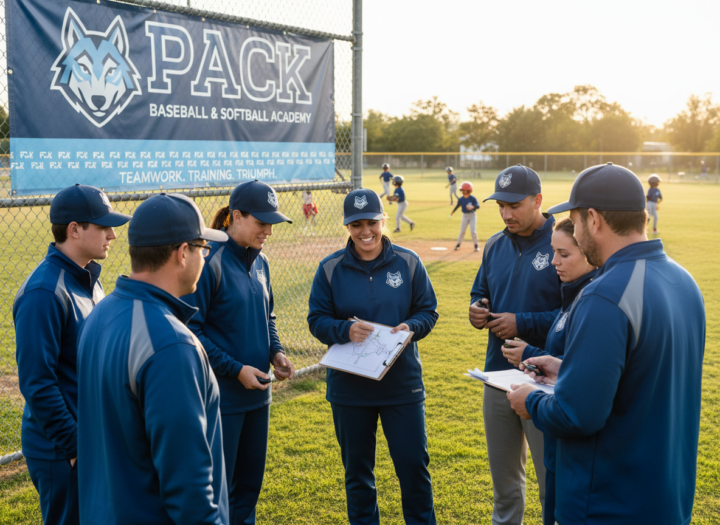
This is my promise to you.
I'm done chasing "phenomenal" for myself. Instead, I'm dedicating my energy to lifting up EVERY coach who's out there doing this work. Whether you're coaching in a big facility or a small field. Whether you're getting paid or volunteering. Whether you're coaching one kid or a hundred. I see you. I respect you. And I'm here to support you. Because the truth is simple: Without you, I'm nothing. Without YOU, this entire sport is nothing. You are the heartbeat of coaching. You are the reason kids fall in love with the game. You are the reason they believe in themselves. So thank you. Thank you for being phenomenal. Thank you for showing up. Thank you for changing lives. The world is better because of you. #CoachingCommunity #TogetherWeRise #GratefulForYou
1-30 of 58
skool.com/trainwithpack
Pack Coaching: Weekly Zooms, personalized & expert guidance. Get one-on-one coaching and insight to build a skilled, united, and competitive team!
Powered by