The Seed That Became a Symbol (And What It Teaches Us About Growth)
There's a shape you've drawn a thousand times without thinking about it, scratched into notebook margins, traced on a foggy window, sent in a text at midnight. The heart. ♥
Most people assume it's an abstraction of the human organ. It isn't. It's a seed.
Specifically, it's the seed of silphium ... an ancient plant from the North African coast that may be the first recorded extinction in human history, and whose story contains one of the most enduring lessons about what it really means to grow something.
The Most Valuable Plant in the Ancient World
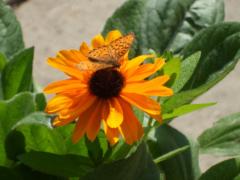
For seven centuries, the Greeks cultivated silphium in the region of Cyrene (present-day Libya) with extraordinary care. It was traded at the price of silver, accepted as currency for tax payment, and kept in Rome's public treasury. Its golden pom-pom blossoms were heralded as a panacea: medicine, aphrodisiac, contraceptive. So beloved was this plant that its heart-shaped seed was stamped onto coins, the ancient equivalent of a brand mark.
But silphium had a secret vulnerability. It couldn't self-pollinate. Its male and female flowers grew on opposite sides of the plant, male blooms above and female blooms hidden beneath the leaves, and needed an insect or a careful human hand to bridge the gap. The Greeks understood this. They passed the knowledge down through generations, tending to silphium's peculiar need with patience and precision.
Then came Rome.
What Happens When You Stop Tending
The Romans did what colonizers do: they dismissed the indigenous knowledge that had kept silphium alive. They scaled extraction without understanding the ecology underneath it. By the first century CE, Pliny the Elder recorded that only a single stem remained. The last known specimen of the ancient world's most prized plant was presented to Nero, a man who burned his own city and called it music.
The heart-shaped seed disappeared from the Earth for two thousand years. Some historians began to wonder if it had ever existed at all.
It had. And it came back.
Growth Requires the Right Conditions
In the early 2020s, Turkish botanist Mahmut Miski identified a rare Anatolian shrub, Ferula drudeana, whose morphology and chemistry closely match every ancient description of silphium. His team then accomplished what the Greeks never could: they successfully cultivated it in a greenhouse using cold stratification, a process of mimicking winter conditions (cold, dark, and moist) to break the seed's dormancy and coax it into life.
Two thousand years after extinction, the heart-shaped seed is growing again.
The lesson isn't just botanical. Growth isn't only about conditions being favorable. Sometimes it requires understanding what something needs at its most vulnerable and providing exactly that, even when it's counterintuitive, even when it looks like dormancy, even when it looks like nothing is happening.
The seed knows what it's doing. It just needs the right tending.
At Grow, we believe the same principle applies to building anything worth building. The most valuable things are rarely the easiest to cultivate, but they're always worth the patience.
3
1 comment

The Seed That Became a Symbol (And What It Teaches Us About Growth)

skool.com/thegrowskool
Welcome to the Grow Skool, where learning becomes cultivation. The soil is ready.
Let’s learn like life depends on it, because it does.
Leaderboard (30-day)
1

+8
2

🔥
+7
3

+7
4
+4
5

+4
Powered by