Activity
Mon
Wed
Fri
Sun
Nov
Dec
Jan
Feb
Mar
Apr
May
Jun
Jul
Aug
Sep
What is this?
Less
More
135 contributions to The Grow Renaissance Skool

Jul 3 •
GROW AMA - July 2, 2026
Thanks to all who joined! A great conversation about farmer's markets, on chain transactions and purple sweet potatoes! Here's the "GROW FOMO Form" - Take actions, get GROW tokens! https://forms.gle/Fnk1KFa41hjmpycm8 Again the challenge this week is: - Go to a Farmer's Market - Talk to a Farmer - Support them - Take a picture - Share it here! Thanks y'all!


0 likes • Jul 6
No farmers markets over July 4th weekend here...
Jun 29 •
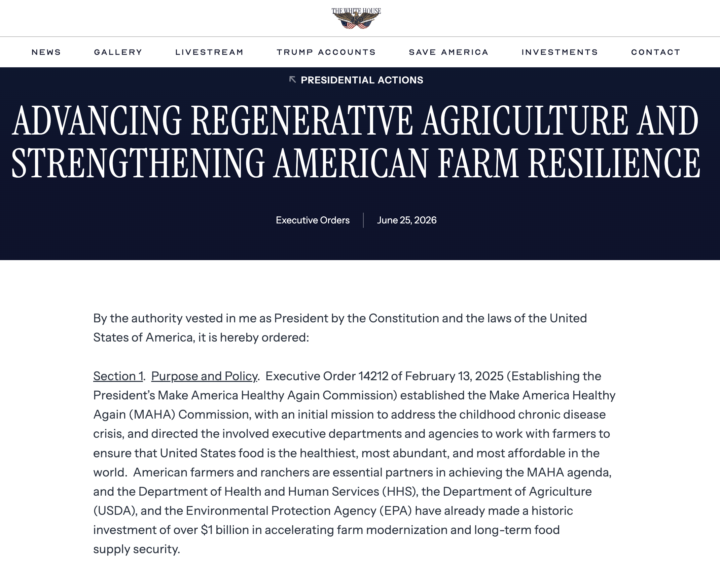
New Presidential Exec Order promoting Regenerative Agriculture
Its exciting to see the things that Grow has been talking about for years start to align and take shape. https://www.whitehouse.gov/presidential-actions/2026/06/advancing-regenerative-agriculture-and-strengthening-american-farm-resilience/?utm_source=chatgpt.com
0 likes • Jul 6
The beginnings of a movement that is essential for overall health for humans, animals and the environment
Jul 1 •
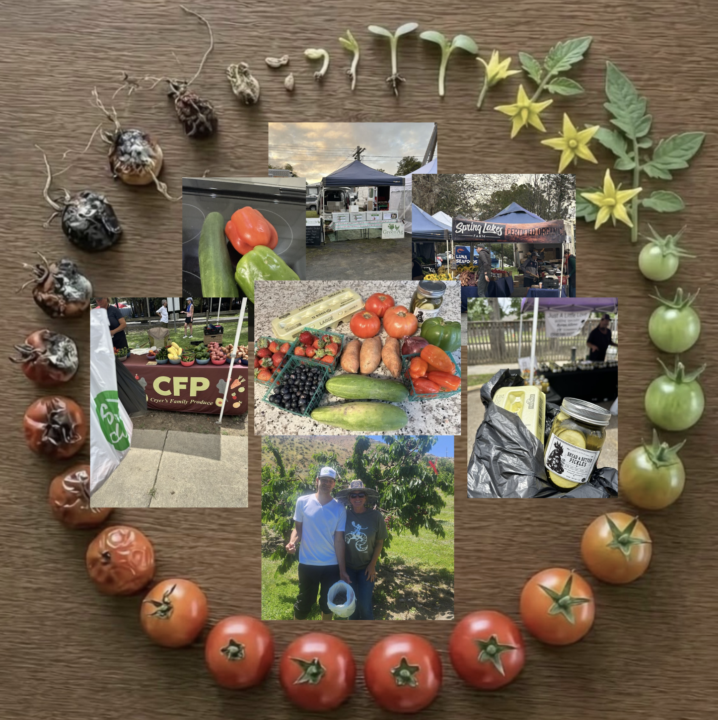
Reconnecting with our Food - via the Farmer's Market
Last week on the AMA we talked about reconnecting with our food and how farmer's markets are great examples of decentralization and we - as a group - did a challenge of going to a farmer's market and/or talking to a farmer! Here are some pictures that have come in. Look forward to seeing everyone tomorrow night for the weekly call!
0 likes • Jul 6
What a difference in quality and flavor when purchasing local and preferably regeneratively! We are blessed to have awesome farmers markets close in all of the locations we live in.

Jul 2 •
The best flavour enhancers in nature is…
It sounds counterintuitive, but one of the best flavour enhancers in nature is… insects. 🐛🌱 When insects nibble on plants, the plant doesn’t just sit there. It fights back. Its natural defence system produces more polyphenols, compounds that help protect the plant. The interesting part? Those same compounds can: • Increase flavour and aroma 🌿 • Boost antioxidant levels 💚 • Enhance anti-inflammatory properties 🌎 Even if you’re not thinking about antioxidants or inflammation, everyone notices better tasting food. Richer flavour. Better aroma. More enjoyable eating. Nature has spent millions of years perfecting these relationships. Sometimes what looks like “damage” is actually part of what creates healthier, more nutrient-dense, and better tasting food. The more we work with natural systems instead of against them, the more we discover that nature already knows what it’s doing. In coming weeks, I’ll be exploring how natural ecosystems don’t just support healthier food. They may also play a powerful role in supporting our mental health.
0 likes • Jul 6
God created the perfect ecosystem! We just have a way of messing it up when we interfere..
Jun 9 •
By Rich Bradbury…A Grow Community Member
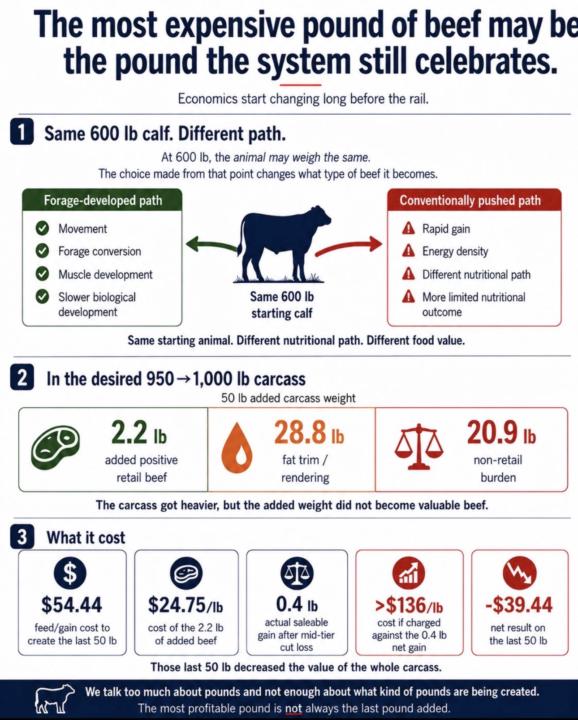
The most expensive pound of beef may be the pound the system still celebrates. We talk about carcass weight like every pound means the same thing. Those pounds are very different. A 600 lb forage-developed calf and a 600 lb conventionally pushed calf may weigh the same on the scale, but their nutritional paths are not the same, nor is their ultimate value to the food supply. One is being built around movement, forage conversion, muscle, and slower biological development. The other is being primed for rapid gain, energy density, and a more limited nutritional outcome. The game becomes about gross pounds—not animal wellbeing. Economics start changing long before the rail. In the desired 950→1,000 lb carcass, the animal added 50 lb of carcass weight. Only about 2.2 lb became added positive retail beef. About 28.8 lb became fat trim/rendering, and 20.9 lb became non-retail burden. That 2.2 lb of added beef cost $54.44 to create, or about $24.75/lb. Net out the mid-tier cut loss, and the actual saleable gain falls to about 0.4 lb, pushing the cost above $136/lb. The carcass got heavier, but those last 50 lb decreased the value of the whole carcass. Packers can avoid the loss by discounting heavy, fat, inefficient carcasses and pushing the burden upstream. They are not just mitigating the problem; they can profit from pounds that create little useful beef. We talk too much about pounds and not enough about what kind of pounds are being created. What rancher really thinks a 1,000 lb carcass is naturally healthy for a calf? We all know there is some evil space monkeys mastermind nonsense going on here— “but that is where the market is moving.” Blah, blah, blah. That is the same dull acceptance that allowed grocery shelves to become dominated by processed and ultra-processed foods. We are going that way with our whole muscle proteins. Garbage in, garbage out. The most profitable pound is not always the last pound added.
0 likes • Jun 23
Good to know
1-10 of 135
Active 15d ago
Joined Oct 11, 2025
Florida
Powered by