
Write something

Feb 23 •
New Challenges
Hi I am happy to join this group I have a love for retail Worked in various Department Stores Every day is different with new challenges l look forward to learn new skills with fresh ideas
2
0

Feb 8 •
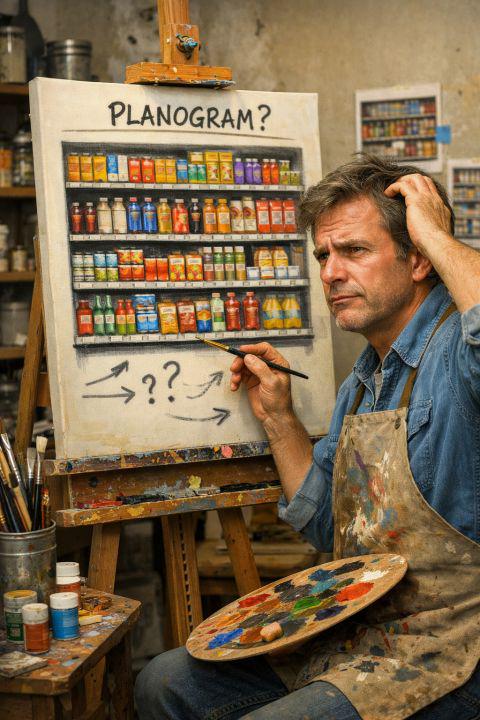
Planogram..
Most people think a planogram is just about fitting products neatly on shelves. It’s not. It’s about how customers actually SEE. One of the most interesting retail studies looked at how shoppers visually scan shelves. Using eye-tracking, the research showed something powerful: 👉 Shoppers don’t look at shelves the way retailers think they do. 👉 Their eyes follow patterns — and many products are simply invisible if placed in the wrong spot. What the study teaches us about planograms: 1️⃣ Eye level really is buy level Products placed in the natural eye path get significantly more attention — and attention is the first step to sales. 2️⃣ More facings = more noticing (not just more stock) When a product has more space on shelf, the brain reads it as more important and trustworthy. 3️⃣ Clutter kills visibility Too many SKUs packed together reduce visual impact. When everything screams, nothing is heard. 4️⃣ Vertical blocking works Customers scan shelves vertically more easily than horizontally. A strong vertical brand block improves recognition and speed of choice. So next time we talk about planograms, let’s not ask: “Does it look full and organized?” Let’s ask: “Is the customer’s eye being guided to the right product?” Because a good planogram is not decoration. It’s silent selling.
2
0
Sep '25 •
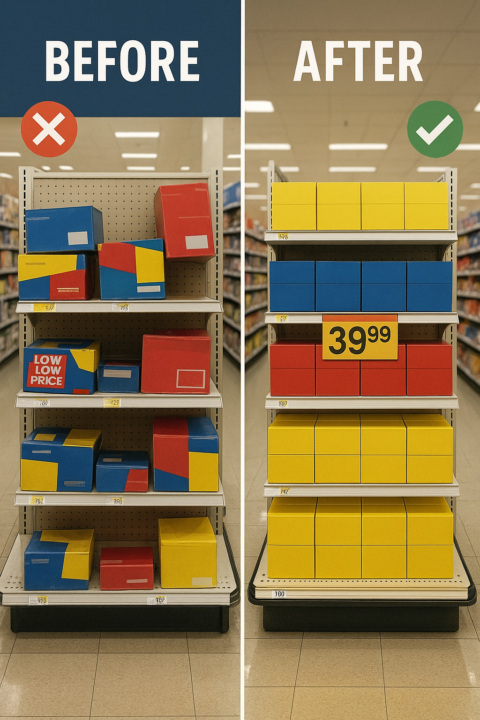
🧱 Merchandising Tetris: Endcap Edition
You + a pallet of random sizes + a half-empty endcap. Can you build a display that makes shoppers stop and say “ooooh”? Pro tip: big → small, eye level heroes, colour blocks, one bold price card. 📸 Post your best “before → after” in the comments and flex that VM magic. #RetailLife #Retail #VisualMerchandising #Endcap #Planogram #RetailDisplay #StoreOps #TheRetailBreakroom #Merchandising
1
0
Aug '25 •
🧨The Harsh Truth About Retail Marketing
Here’s the thing: most retail marketing is boring. Same old posters, same old “SALE” signs, same old social media posts that nobody reads. If you want to stand out, you need to stop playing it safe. Customers don’t remember safe. They remember different. 💡 3 “Edgy” Retail Marketing Moves That Actually Work: Shock Factor Displays – Do something so bold in your store that people take photos. (Think mannequins doing yoga in camping gear, or a giant fishing rod holding up your tent display). Humour Over Hype – Customers scroll past polished marketing, but they share stuff that makes them laugh. Meme your own products. Roast your competitors. Use humor to make your store human. Social Proof Chaos – Instead of “10% off”, try: “This is the shelf that empties every Saturday. Don’t ask why. Just grab it.” Curiosity sells better than discounts. 🎯 The Bottom Line Retail marketing isn’t about being perfect—it’s about being memorable . If people are laughing, snapping pics, or telling their good mates about your display, you’ve already won. So, what’s the boldest marketing move you’ve seen in retail?
2
0
Aug '25 •
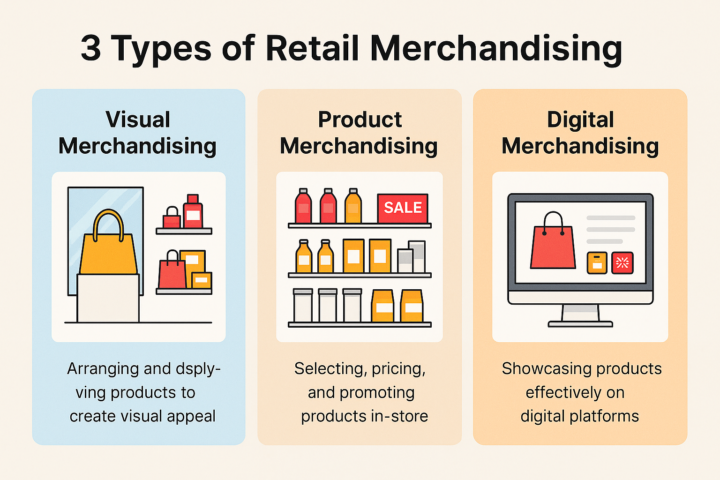
🛒 3 Types of Retail Merchandising
When most people think of merchandising, they picture someone filling shelves or moving stock around. But the truth is, merchandising is much more powerful than that — it’s the art of influencing customer decisions before they even realize it. Here are the 3 main types of retail merchandising every store should master: 1. Visual Merchandising 🎨 This is all about how your products look in-store. Think window displays, mannequins, end caps, and feature tables. Visual merchandising tells a story, grabs attention, and draws people in. 👉 Done right, it makes customers stop, look, and imagine themselves owning the product. Example: A camping store setting up a full tent display with lanterns glowing inside and a camp chair outside — it sells the experience, not just the gear. 2. Product Merchandising 📦 This focuses on how products are grouped, priced, and promoted. It’s the strategy behind what goes on the shelf, where it sits, and how it’s labeled. 👉 It’s not just about putting items out — it’s about guiding the shopper’s eye. Place best-sellers at eye level, upsell with companion products, and rotate features regularly. Example: Putting batteries right next to torches, or bundling fishing lures with tackle boxes. 3. Digital Merchandising 💻 In today’s world, merchandising doesn’t stop at the store doors. Online merchandising is just as important. This includes product photos, descriptions, categories, and how items are promoted on your website or social media. 👉 Digital merchandising is about creating an online version of the in-store experience — guiding customers from browsing to buying. Example: A store website that suggests “Customers also bought…” or runs seasonal homepage banners. 🎯 Final Thought Great merchandising doesn’t just make a store look good — it drives sales, builds customer loyalty, and gives your brand a personality. Master these three types, and you’ll turn browsers into buyers, both in-store and online.
1
0
1-5 of 5
powered by
skool.com/the-retail-breakroom-8730
“Where retail workers, managers & owners come to recharge and grow.”
Suggested communities
Powered by