Do We Actually Want the Truth...or Just the Thrill of the Scandal?
There’s a question I can’t stop circling:
Do we really want the truth or do we just like the adrenaline rush of almost discovering it?
Because going down a rabbit hole sounds romantic until you realize it doesn’t come with a ladder.
At first, it feels empowering. You start questioning systems you were told not to question. Food. Medicine. Beauty. Media. Authority. Control. You begin to notice patterns. Incentives. Who profits and who pays the price.
And then something unsettling happens.
You see too much.
Once you really start pulling threads, you’re forced to confront an uncomfortable possibility:
what if we are far more controlled than we want to believe?
Not in a sci-fi, tinfoil-hat way.
In a banal, bureaucratic, market-tested, perfectly legal way.
We are told what to eat, what to wear, how to age, how to heal, how to behave. Our minds are sponges, and marketing knows this. Our egos crave belonging more than truth. We don’t want what’s good for us. We want what signals that we fit in.
Herd mentality isn’t an insult. It’s a survival instinct that’s been hijacked.
So we eat food stripped of nutrients and preserved for shelf life, not vitality. We live in chemically saturated environments and call it convenience. We inject neurotoxins into our faces to look younger while our bodies quietly accumulate damage.
We trust systems that profit from keeping us dependent while convincing ourselves we’re making “informed choices.”
And even when we know this is absurd, we still participate.
Because doctors approve it.
Because everyone else is doing it.
Because stopping would require admitting we’ve built entire lives on assumptions that no longer hold.
This isn’t stupidity. It’s cognitive dissonance on a mass scale.
And yet, for me, this realization didn’t begin with food or beauty or medicine.
It began with religion.
_____________________________________
The Magdalene Thread
In usual Sandi fashion, I have nearly exhausted my “conspiracy theories” about the development of Christianity and the Catholic Church. Not casually. Not emotionally. But methodically, across philosophy, archaeology, theology, mysticism, science, and art history.
And to what end?
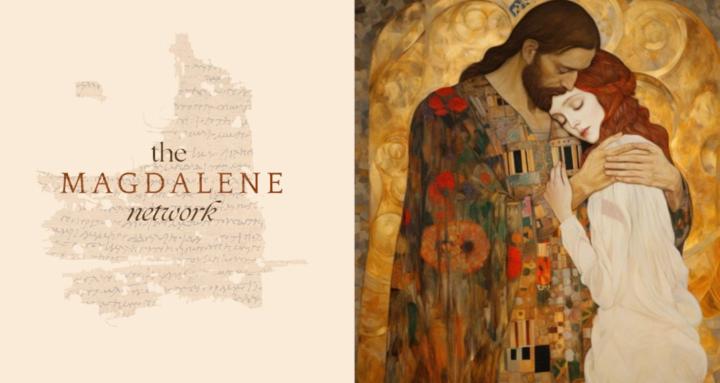
I’ve built a solid foundation for the argument that Jesus was not the sanitized figure we were handed. That he was a revolutionary mystic. That he studied Egyptian spiritual traditions. That he believed love, embodiment, and consciousness were the path to enlightenment and eternal life. That he likely used plant medicines common to the region and time. That he blurred gender norms. That he rejected hierarchy.
And that Mary Magdalene was not a footnote.
She was likely his partner. Possibly wealthy. A supporter of his mission. A teacher in her own right. Someone who continued the work after his death.
The removal of the feminine from Christianity was not accidental. It aligned with the political and cultural agenda of the time, especially as the religion was absorbed into empire. When Constantine institutionalized Christianity, the Church made choices that preserved power, not balance. They couldn’t erase Mary entirely without losing credibility, so they diminished her. Reframed her. Neutralized her.
I don’t believe anyone involved could have predicted the repercussions that would echo seventeen centuries later. But once doctrine hardens, institutions don’t reverse course. They protect themselves. Admitting error would unravel authority.
And yet, throughout history, people knew.
Mystics. Artists. Writers. Scholars. Those who encoded truth into paintings, architecture, poetry, and symbolism. Those who defended Magdalene. Those who whispered instead of preached. Those who died for it, like Joan of Arc.
The evidence is there. The texts exist. The art speaks. The archaeology aligns.
And still.
Nothing has changed.
____________________________________
The Cost of Knowing
We still live in fear of the unknown. Fear of being wrong. Fear of hell. Fear of stepping outside the approved narrative. Fear of standing alone.
And even if we aren’t wrong… who would believe us? And what would actually change?
Nothing.
The Church doesn’t collapse.
The story doesn’t correct itself.
The world doesn’t suddenly wake up.
Instead, the one who sees too much begins to fracture.
I’ve been sitting with this for weeks now. Not searching. Not researching. Just sitting.
A strange paralysis.
Not because I don’t know what I believe, but because I know enough to see that knowledge alone doesn’t liberate. It doesn’t automatically heal. It doesn’t dismantle systems. And it doesn’t save you from the emotional aftermath of seeing behind the curtain.
I wrestle with whether all the threads I’ve tied together will amount to anything more than being labeled “another Magdalene conspiracy theorist.”
And I feel the pull toward states I recognize as dangerous:
Depression.
Anger.
Suspicion.
Fear.
The very states Jesus taught people to overcome.
Which leaves me asking the question that no research paper answers:
When do we stop digging?
And what do we do once we know?
Because truth, when it has nowhere to land, doesn’t feel like freedom. It feels like exile.
I don’t want to go back to sleep.
But I don’t want to keep burning alive on this hill either.
So I’m standing here.
Not teaching.
Not convincing.
Not exposing.
Just standing in the weight of it all, wondering if this moment, this pause, this unresolved tension, is the real threshold.
Not awakening.
Not revolution.
Not answers.
Just the place where truth stops being interesting and starts costing something.
I don’t know what comes next.
I only know that I’m no longer interested in answers that bypass the cost of knowing.
And for now, that has to be enough.
9
30 comments

Do We Actually Want the Truth...or Just the Thrill of the Scandal?
skool.com/the-magdalene-network
A gentle sanctuary for awakening women to explore Magdalene’s hidden teachings, deepen clarity, and find soul-led support in sisterhood.
Leaderboard (30-day)
1

+34
2

+22
3
+9
4

+9
5

+6
Powered by