
Write something

5d •
How Do You Describe Sound?
One of the goals of this community is to make audio conversations clearer. Many of the words used in audio discussions — warm, detailed, musical, bright, smooth — can mean different things to different people. So here is a simple question to start the conversation. When you listen to a system and something stands out to you, how do you usually describe what you hear? Do you use common audio terms? Do you compare it to other systems you’ve heard? Do you think about things like tone, balance, clarity, or dynamics? Or do you struggle to find the right words at all? There is no right answer here. The interesting part is seeing how different listeners think about and describe the same experience. Share a few words or phrases you often use when describing sound.
5d •
The Room Is Part of the System
When people talk about improving an audio system, the conversation usually focuses on equipment. A new DAC. A different amplifier. Better speakers. But one of the most powerful influences on what we hear is something many people overlook. The room. Sound does not travel directly from your speakers to your ears without interacting with the space around it. It reflects off walls, floors, ceilings, furniture, and other surfaces before reaching you. Those reflections can reinforce some frequencies, reduce others, and change the overall character of what you hear. In some rooms, bass can become boomy or uneven. In others, certain frequencies may disappear or feel weak. This means two people can listen to the same system in different rooms and hear very different results. Understanding this changes how we think about upgrades. Sometimes the biggest improvement does not come from changing equipment at all. It can come from adjusting speaker placement, listening position, or the way sound interacts with the room. The goal is not to make every room perfect. The goal is to recognize that the room is part of the listening chain. When we include the room in our thinking, audio decisions become clearer and often much more effective.
1
0
5d •
Preference vs Physics
One of the most common sources of disagreement in audio discussions comes from mixing two different things together: preference and physics. Physics describes how sound and systems behave. It includes things like frequency response, distortion, noise, dynamic range, and how sound interacts with a room. These things can be measured and studied because they follow the laws of acoustics and electronics. Preference is different. Preference describes what a listener personally enjoys. Two people can listen to the same system and prefer different tonal balances, presentation styles, or listening levels. Neither person is necessarily wrong about what they like. Problems usually appear when preference is presented as universal truth. For example, someone might say a system is “better” because it matches their personal taste. Another listener may prefer something else entirely. Both listeners may be responding honestly to what they hear, but they are describing different goals. Understanding the difference between preference and physics helps conversations stay clearer and calmer. Physics can tell us how a system behaves. Preference determines whether we enjoy that behaviour. A system can measure extremely well and still not suit someone’s taste. A system can measure imperfectly and still be enjoyable to a listener. The goal of this community is not to force everyone toward the same preferences. The goal is to understand the behaviour of systems more clearly, and then allow listeners to decide what they enjoy. When we separate preference from physics, discussions become less argumentative and much more useful.
0
0
5d •
The Listening Chain Explained Properly
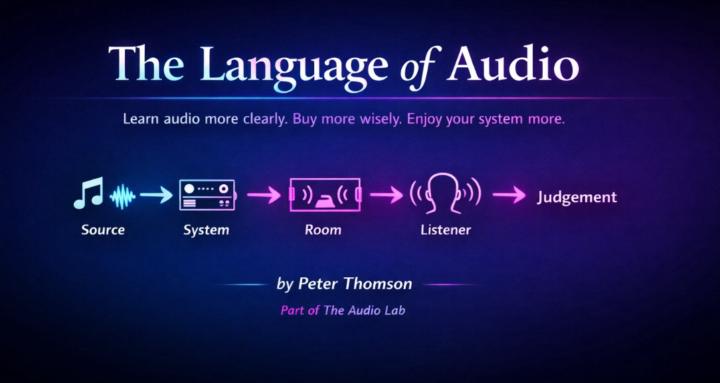
When people talk about audio systems, they often focus on individual pieces of equipment. A DAC, an amplifier, a pair of speakers, a cartridge. But what we actually hear is never produced by one component alone. It is the result of an entire chain working together. This is what we call the listening chain. A simplified listening chain looks like this: Music or recording Source or playback device Digital or analog conversion Amplification Speakers or headphones The listening room The listener Every part of that chain influences the final sound. For example: The recording determines how the music was captured and mixed. The source and conversion determine how accurately the signal is reproduced. The amplifier controls how the speakers are driven. The speakers or headphones convert electrical energy into sound. The room affects how sound reflects, absorbs, and interacts before reaching your ears. And finally, the listener brings personal hearing, experience, and expectations to the experience. This is why changing a single component does not always produce the expected result. If the room dominates the sound, changing electronics may have little effect. If the recording itself has certain characteristics, no system can completely remove them. Understanding the listening chain helps us ask better questions. Instead of asking: “Is this DAC warm?” “Are these speakers musical?” We can ask: Where in the listening chain might this effect be coming from? Is it the recording, the room, the setup, the equipment, or my own listening preference? Once you start thinking about audio as a chain rather than isolated products, many confusing discussions start to make more sense. The goal is not to eliminate subjective listening. The goal is to understand the system that produces what we hear.
0
0
5d •
Why Audio Language Is Broken
One of the biggest sources of confusion in audio is the language people use to describe sound. Terms like warm, detailed, musical, transparent, or technical are used constantly in reviews and discussions, but they are rarely defined clearly. The same word can mean different things to different people, and sometimes the person using the word does not fully understand what they are describing. Over time these words become part of the culture of audio, repeated often enough that they feel meaningful even when the meaning is vague. This leads to several problems. First, two people can hear the same system and describe it with completely different language. Second, people sometimes adopt words from reviewers or forums without really knowing what those words are pointing at. Third, discussions about audio can become confusing or intimidating, especially for people who are new to the hobby. The goal of The Language of Audio is not to eliminate subjective listening. Listening will always involve personal perception and preference. The goal is to make the conversation clearer. When we talk about sound here, we try to think about several things that influence what we hear: The recording itself The playback system The listening room The listening level The listener’s own preferences and expectations When these factors are separated and understood, audio discussions become much easier to follow. Instead of repeating vague descriptions, we can start asking better questions. What part of the system is influencing what we hear? Is the effect coming from the recording, the room, or the equipment? Are we describing a preference, or a measurable behaviour? This is the starting point for clearer conversations about audio. Not perfect language. Just better language.
0
0
1-6 of 6
powered by
skool.com/the-language-of-audio-1311
Learn audio more clearly, describe sound better, and make smarter system and buying decisions without hype, snobbery, or reviewer nonsense.
Suggested communities
Powered by