
Write something
May 19 •
A moment catches the eye. A pattern gets you signed.
I've been thinking about this a lot this week. Parents always focus on the moments. The goal. The assist. The one brilliant piece of skill. And yes — moments make scouts look up. They made me look up plenty of times at United. But the moment is just the invitation to watch more closely. What happens in the next 10 minutes after that moment — that's where the real assessment happens. Does this player do it again? Do they do the hard invisible work when the ball isn't coming to them? Do they press with the same intensity in the 70th minute as the 10th? That's the pattern. And the pattern is everything. What's the one thing your player does consistently — not occasionally — that you think gets overlooked? Drop it below.
Apr 22 •
The honest truth about making it as a professional footballer
I spent 8 years watching players get evaluated for Manchester United. I saw players who had everything — the technique, the athleticism, the football brain — who never made it. And I saw players who looked ordinary at 14 who went on to have professional careers. Here's what I actually learned about what separates them. The window is real — but it's not what you think. Most families believe the professional pathway closes at 16 or 17. It doesn't. But the evaluation intensifies dramatically between 14 and 18. By the time a player is 16 a professional scout has already formed an opinion about their ceiling. Not a final verdict — but a strong working assessment. And that assessment is based on things that are rarely talked about outside of professional environments. Here's what we were actually evaluating. Technical foundation. Not tricks. Not highlights. Whether the basics — receiving, passing, first touch under pressure, striking the ball cleanly with both feet — were automatic. Not thought about. Automatic. By 16 a player at professional level should not be thinking about their first touch. It should just happen. Tactical understanding. Does this player understand why they're making a decision, not just what decision to make? Can they read the game two moves ahead? Do they understand their position in relation to the ball, their teammates, and the space — simultaneously? This is the thing that most separates the players who make it from the players who don't. And it's the thing most youth coaches spend the least time developing. Mentality under adversity. How does this player respond when the game goes against them? When they make a mistake? When they're being dominated? I've watched players with elite technical ability crumble under pressure and never recover within a game. I've watched players with average technique who were absolutely relentless — who made things happen through sheer clarity and determination. Mourinho was obsessive about this. It was a non-negotiable in every report I submitted.
Apr 22 •
The D1 recruiting process — what most families get completely wrong
I earned a full Division 1 scholarship as a kid from Ireland with no connections in the US, no money for showcase circuits, and nobody to guide me through the process. I figured it out the hard way. Since then I've watched hundreds of families spend thousands of dollars on showcase events and recruiting services — most of them doing it in the wrong order, at the wrong time, targeting the wrong programmes. Not because they weren't trying hard enough. Because nobody gave them an honest map . Here it is. Age 13–14: College coaches cannot contact you directly yet under NCAA rules — but you can contact them. Most families waste these two years doing nothing. Build your highlight reel. Attend ID camps at programmes you're genuinely interested in. Research which D1 programmes honestly fit your player's level and academic profile. A realistic list, not a dream list. Age 15: September 1st of sophomore year — coaches can now contact you directly. This is the most important date in D1 recruiting and most families don't know it exists. By now you should have 15–20 realistic target programmes and you should be sending emails and video. A specific, researched email to a coach stands out immediately from the hundreds of copy-paste messages they delete without reading. Age 16: Stop mass emailing. Build real relationships with your 5–8 realistic targets. A coach who knows your player's name before a showcase watches them completely differently to a coach seeing them cold. The showcase confirms the relationship. It doesn't create it. Age 17: Verbal commitments happen here. Know your academic profile — GPA, test scores, intended major. A player who is a D1 prospect but an academic risk is a problem for a programme. Don't let academic unpreparedness close doors that should be open. Age 18: Most competitive D1 programmes have already filled their classes. If your player is uncommitted here the pool has narrowed — but the door is not closed. This is where families give up too early. D2 and D3 programmes offer genuine scholarship opportunities and outstanding football environments. JUCO — junior college — is another route entirely and one that is significantly underused by international players. Two years at a JUCO programme, strong grades, strong performances, and the D1 door can open again as a transfer. It happens regularly. It requires focus, patience and the right attitude — but the pathway is real.

Apr 23 •
Introduction
I am based in australia and i am 12 years old. I am a fullback and i play community level in aus. My aim for this year is to reach junior npl for the 2027 season
0
0
Apr 22 •
Before I get into content — introduce yourself
Before I get into content — I want to know who's here. This community is only as useful as I make it relevant to the people in it. And I can't do that without knowing who you are and what you're actually dealing with. Drop a comment with: — Where you're based — Your player's age and position — Their current level — academy, NPL, MLS Next, high school, club — The goal — professional, D1 scholarship, highest level they can reach, or just love the game and want to make the most of it — The one thing you're most uncertain about for them right now If you're a player rather than a parent — answer for yourself. Same questions. What's the dream and what's standing between you and it? I read every single one. And I'll reply to each of you directly this week. This community works because of the people in it. Introduce yourself.
0
0
1-6 of 6
skool.com/the-decision-room
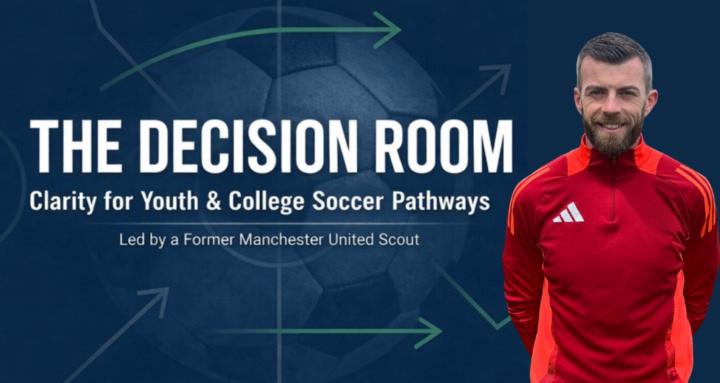
Former Manchester United First Team Scout. Mourinho, Van Gaal & Solskjær. UEFA A Licence & Academy Owner. Honest answers for football families.
Powered by