
Write something
Pinned

56m •
📄 Unstructured Work Is the Next Big Time Leak: Why AI Document Automation Is Suddenly a Bigger Deal
A lot of AI conversation still gravitates toward the visible parts of work. The draft that gets generated. The summary that appears in seconds. The assistant that responds quickly. Those are easy to notice, which is why they get so much attention. But some of the biggest time losses in business are happening in places that feel much less glamorous. They live inside invoices, forms, contracts, reports, applications, intake documents, and the messy layers of unstructured information that teams still move by hand every day. That is why AI document automation is becoming such a meaningful shift. It is not just about generating content. It is about reducing the heavy, repetitive work required to extract information, route it correctly, turn it into action, and keep processes moving. In many organizations, that document friction is one of the largest hidden drains on time. The work is not difficult because it is intellectually complex. It is difficult because it is repetitive, fragmented, and constantly waiting for someone to translate the document into the next useful step. ------------- Context ------------- Most teams underestimate how much of their week is spent handling documents that were never designed for speed. Someone opens a form and manually types information into another system. Someone reviews a contract to find one key clause. Someone pulls numbers from an invoice, checks them against a spreadsheet, and routes the file to the next approver. Someone reads a PDF attachment just to extract the same handful of fields they extracted yesterday from a slightly different version of the same file. None of this looks dramatic. That is why it stays invisible for so long. It feels like administrative maintenance, the sort of work that simply comes with business. But the total cost is enormous because these steps happen constantly. They delay approvals, lengthen process times, create avoidable handoffs, and consume attention that could be going toward work with far higher leverage.
1
0

Pinned

23h •
The Reason I Refused To Quit
Everybody wants success until success starts testing them. Because eventually this journey asks a question most people aren’t prepared for: “How bad do you really want it?” Not when things are easy. Not when the money starts coming in. Not when everyone is cheering you on. I mean when you’re doubting yourself. When nothing seems to be working. When you’re exhausted. When you feel embarrassed. When you fail publicly. When it would honestly be easier to quit. That’s the moment your WHY matters. For me, it was my mom. Mother’s Day always reminds me of this… I watched my mom work herself to exhaustion trying to provide for us. Multiple jobs. Constant stress. Doing the best she could with what she had. And as a kid, I remember the moments that stuck with me most weren’t the things we didn’t have…It was watching how hard she worked and realizing she still couldn’t buy back time. She missed games. Missed moments. Missed parts of life because survival demanded everything from her. I remember thinking very early on: “One day I’m going to change this.” Not because I wanted fancy things. Not because I cared about looking successful. I just wanted freedom. Freedom for her. Choices for her. Relief for her. That became the thing I held onto anytime life punched me in the face. And trust me, there were a LOT of moments where quitting would’ve been easier. But when your reason is emotional enough, you find another gear. That’s the part people don’t talk about enough. Success is rarely about intelligence alone. It’s usually about emotional conviction. The people who make it have something that pulls them forward when motivation disappears. So, I’d love to ask you: What’s the reason behind your drive? Who are you fighting for when life gets hard? P.S. Happy Mother’s Day to all the moms out there doing their best, carrying more than anyone sees, and loving through it all. You’re appreciated more than you know. ❤️
Pinned

⭐
12d •
🔥 Quick Clarification: The Difference Between Our 3 AI Advantage Communities
Hey everyone, we’ve received a few questions in the customer service inbox, so we wanted to take a moment to clearly explain the difference between the groups and experiences inside the AI Advantage ecosystem. --------------------------------------------------------------------------------------------------- 1. This Skool Community (Free) This group right here is our free community. It’s where Igor Pogany, our team, and the community continue to share value, insights, resources, conversations, and support. Inside here you can expect: - Free trainings and resources inside the Classroom - Ongoing conversations - Community support - Updates of the latest AI News - Updates and announcements for AIA - Valuable insights to help you grow with AI This group is completely free and we fully encourage you to stay engaged, ask questions, connect, and use everything available here. And just because the Summit is over, doesn’t meant mean this group is going anywhere! --------------------------------------------------------------------------------------------------- 2. AI Advantage Club (Paid Membership) The AI Advantage Club is our premium membership for those who want to go deeper and continue building their AI skillset consistently. Depending on how you joined: - VIP members received a 30-day trial - Bootcamp members receive 3 months included And if you took the VIP upgrade AND joined the Bootcamp, you would have 4 months free inside the Club. Inside the Club, the experience goes deeper with things like: - Advanced trainings - Step-by-step guides and our “Hacks of the Week” - AI workflows - Prompt libraries you can copy - Business use cases - Time-saving systems - Ongoing implementation support - New resources added regularly - A Technical Support Team who can answer questions if you hit roadblocks trying to implement an AI tool Think of this as your AI gym membership. It’s the place where you will train those AI muscles and really focus on implementing AI into your life and business.

🔥
59m •
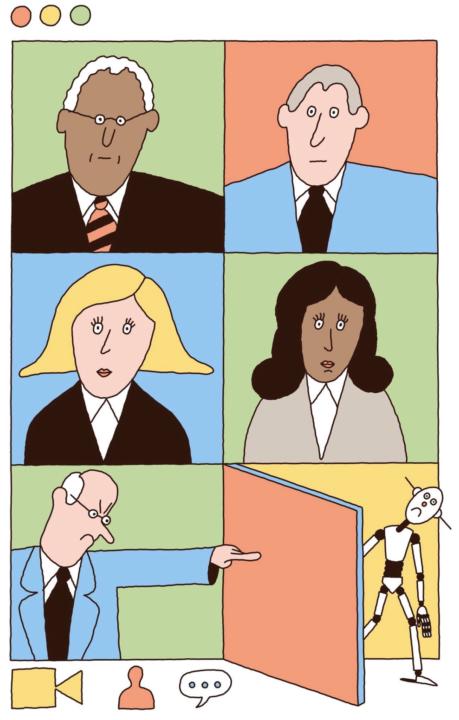
📰 AI News: Your AI Meeting Notetaker Could Be Creating Legal Risk You Never Meant to Invite 📰
📝 TL;DR 📝 AI meeting note tools like Otter, Fireflies, and Granola are convenient, but lawyers are warning they can create serious legal exposure in sensitive conversations. The big issue is simple: if an AI recorder is treated like a third party in the room, you may be weakening confidentiality and privilege without realizing it. 🧠 Overview 🧠 AI note-taking tools have become normal in sales calls, team meetings, client updates, and internal planning sessions. But a growing legal warning is now surfacing around what happens when those tools record, transcribe, summarize, and store sensitive conversations on third-party systems. This matters because many people turn these tools on by default, even in meetings that involve legal advice, HR issues, deal strategy, or confidential business information. 📜 The Announcement 📜 Recent legal reporting highlights a rising concern that AI meeting assistants may create privilege and confidentiality problems when used in attorney-client discussions or other highly sensitive meetings. The core issue is that these systems often record everything, process it through outside vendors, and create durable transcripts that may later be discoverable. Lawyers are increasingly advising organizations to treat AI notetakers as something that should be actively managed, not casually left on. ⚙️ How It Works ⚙️ • Third party in the room - Many legal experts view AI note-taking services as an outside party participating in the conversation, not just a passive tool. • Permanent transcript creation - These systems often generate detailed records of everything said, including side comments, jokes, and offhand remarks that would normally disappear. • Cloud processing risk - In many cases, the audio and transcript are processed or stored on third-party infrastructure outside your direct control. • Privilege complications - In legal contexts, sharing privileged discussions with a third party can weaken or waive attorney-client protections.
0
0
6d •
If everything feels important, nothing really moves.
Most people don’t have an effort problem. They have an aim problem. If everything feels important, nothing really moves. When things feel busy but not productive, I always come back to this: What’s the actual goal right now? Not five goals. Not the big vision. Right now. More leads? More sales? More time back? Then get brutally honest about what’s in the way. No leads usually means you’re not getting enough attention. Leads but no sales usually means something isn’t connecting. Sales but you’re overwhelmed usually means your systems aren’t there yet. That’s the work. Not a new strategy every week. Not ten different projects at once. Just fixing the thing that’s slowing everything else down. Where people get stuck is they start doing a little bit of everything. Tweaking the brand. Building something new. Testing another idea. It feels productive. It looks productive. But nothing actually moves. Instead, look at what’s already showing signs of working and build on that. If something is getting attention, do more of it. If something is converting, improve it. If something is taking too much of your time, fix or automate it. That’s where leverage comes from. And yes, tools like AI can help you go faster. But only if you’re pointed in the right direction first. Otherwise you’re just speeding up the wrong things. At the end of the day, this is simpler than people make it. If what you’re doing isn’t helping you get attention, make a sale, or buy your time back, it’s probably not the priority. You don’t need more. You need focus. That’s how momentum actually starts to build. So let me ask you this: What’s the one thing in your business that, if you fixed it right now, would make everything else easier?
1-30 of 18,895

skool.com/the-ai-advantage
Founded by Tony Robbins, Dean Graziosi & Igor Pogany - AI Advantage is your go-to hub to simplify AI and confidently unlock real & repeatable results
Leaderboard (30-day)
1

🔥
+1874
2

+783
3

+772
4

+740
5

+552
Powered by