
Write something
Pinned

5h •
It’s Hard to Feel Grateful and Angry at the Same Time
One thing I’ve learned the hard way: It’s really difficult to feel gratitude and anger at the same time. Not impossible. But difficult. Because whatever emotion you feed tends to shape the lens you see your life through. When you stay stuck in frustration long enough, your brain starts scanning for more proof that things aren’t working. More proof that people are disappointing. More proof that you’re behind. And the scary part is… you’ll find it. But gratitude shifts your focus completely. Not fake positivity. Not pretending hard things aren’t real. I mean intentionally zooming out long enough to remember: • what’s still working • what you’ve already overcome • what opportunities are still in front of you • who’s still in your corner • how far you’ve actually come The people who build great businesses and great lives aren’t the people who never get frustrated. They’re the people who don’t stay there. They know how to reset their perspective before resentment becomes their identity. And honestly, this matters even more as entrepreneurs because this journey will give you endless reasons to focus on what’s broken. The algorithm changed. Sales slowed down. Someone copied your idea. A launch flopped. A partnership fell apart. People unsubscribed. Cool. Welcome to building something meaningful. But if you lose your ability to access gratitude in the middle of the mess, this game gets really heavy really fast. So here’s the question: What’s something in your life right now that you were once praying for… but have slowly started treating as normal?
Pinned

7h •
🔌 Human Middleware Is the New Time Drain: Why Disconnected AI Tools Are Quietly Stealing a Day a Week
For a while, the AI conversation was dominated by capability. Which model is smarter, faster, cheaper, more creative, or more useful. But a new problem is becoming impossible to ignore. Many people are not losing time because AI is weak. They are losing time because AI is disconnected. The tools may be powerful on their own, yet the human still ends up acting as the bridge between them. That is why “human middleware” is such an important phrase. It captures a modern time leak that many teams can feel but have not named clearly enough. People are copying outputs from one tool into another, reconciling conflicting responses, re-entering the same context across multiple systems, and manually stitching together workflows that were supposed to feel easier. The result is a strange kind of productivity theater. AI is everywhere, yet the human is still doing too much glue work to make it all function. ------------- Context ------------- Most AI adoption does not begin with one perfect integrated system. It begins with experimentation. A writing tool here. A note summarizer there. A meeting assistant, a search tool, a design tool, a chatbot, a document analyzer. One by one, the tools enter the workflow because each solves a visible pain point. This is understandable, but it can create a new problem. The work becomes fragmented across too many partially useful systems. Instead of simplifying the day, AI tool sprawl can create more transitions, more duplicate context loading, and more small manual steps that nobody intended to keep forever. That is where the human becomes middleware. The person is no longer only doing the work. They are also doing the integration work. They carry the thread from tool to tool, move information between systems, and keep rebuilding coherence because the workflow itself is not holding together cleanly. This is not just annoying. It is expensive. Every extra transition costs time and attention. Every repeated explanation is hidden rework. Every manual reconciliation step steals focus from the actual task. If this continues unchecked, AI can end up creating its own layer of drag.

Pinned
8d •
🔥 Quick Clarification: Which AI Advantage Community Should You Be In?
We've been getting a few questions in the community and inbox about the difference between our communities, unsure which one you should be in. Here's a quick breakdown to help you find your home base. --------------------------------------------------------------------------------------------------------------------------------------------------- 1. This Skool Community (Free) You're already here. This is our free hub where our team and members share value, ask questions, and grow together. What's inside: - Free trainings and resources in the Classroom - Ongoing community conversations and support - The latest AI news and AIA updates - Practical insights to help you grow with AI Best for: Anyone exploring AI, building community connections, and staying current without a monthly commitment. The Summit may be over, but this group isn't going anywhere. --------------------------------------------------------------------------------------------------------------------------------------------------- 2. AI Advantage Club (Paid Membership) Our premium membership for members ready to go deeper and build their AI skillset consistently. How you may already have access: - VIP members: 30-day trial included - Bootcamp members: 3 months included - VIP + Bootcamp: 4 months free What's inside: - Advanced trainings and step-by-step guides - "Hacks of the Week" you can apply immediately - AI workflows and copy-and-paste prompt libraries - Real business use cases and time-saving systems - Ongoing implementation support - A Technical Support Team for when you hit roadblocks - New resources added regularly Think of it as your AI gym membership: the place to train those AI muscles and really implement AI into your life and business. Best for: Members ready to move past learning and into hands-on implementation with structured support. Where is the AI Advantage Club? Right here: https://app.aiadvantage.com/login

🔥
3h •
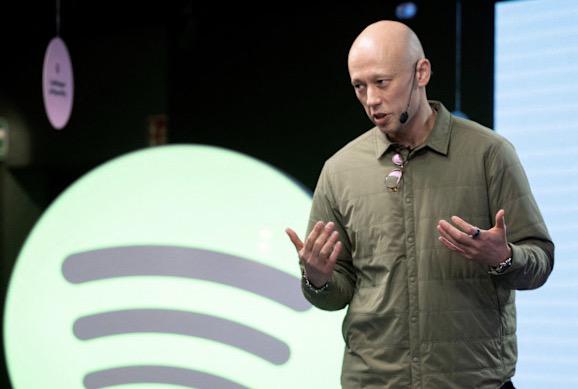
📰 AI News: Spotify Is Bringing AI Remixes Into the Mainstream 📰
📝 TL;DR 📝 Spotify is defending its move into AI-generated music after striking a deal with Universal Music Group. The big idea: instead of letting random AI music flood the internet, Spotify wants a licensed version where artists can opt in, get credited, and get paid. 🧠 Overview 🧠 Spotify is preparing to let Premium users create AI-generated covers and remixes using songs from participating Universal Music artists. The feature will be a paid add-on, and the resulting tracks are expected to sit inside Spotify’s ecosystem rather than floating around the internet without permission. 📜 The Announcement 📜 Spotify and Universal Music Group announced a licensing agreement that allows fans to create AI-powered covers and remixes from approved artists and songwriters. Spotify’s co-CEO Alex Norström defended the move, arguing that a controlled, licensed system is better than the unregulated wave of AI music already spreading online. The feature is not fully live for everyone yet, and participation appears to depend on artist consent. ⚙️ How It Works ⚙️ • Paid AI remixing - Spotify Premium users will be able to pay extra to create AI-generated covers and remixes from participating artists. • Artist opt in - The system is designed around approved artists and songwriters, not a free for all where anyone’s voice or music can be cloned. • Revenue sharing - Artists and rights holders are expected to earn from AI-generated versions based on their work. • Controlled creation - Spotify wants the experience to happen inside its own platform, where it can manage licensing, quality, credits, and distribution. • Human music stays central - The tool is positioned as a way for fans to interact with existing songs, not as a replacement for artists. • AI music gets legitimized - This is one of the clearest signs that major music companies are moving from fighting AI to licensing it. 💡 Why This Matters 💡

7h •
Quantum Daily Drop Generator
I created this GPT to generate daily wisdom. Writing this to inspire someone to see what is possible. The Quantum Daily Drop Generator is a tool designed to create short, powerful transmissions that help regulate the nervous system, shift identity, and bring greater clarity, alignment, and intentionality into daily life. Each “drop” combines grounded wisdom, conscious intention, and energetic activation language to support embodiment—not just positive thinking. Topics can include things like: Clarity, Abundance, Self-Trust, Identity, Love, Vision, Emotional Regulation, Cosmic Intelligence, and more. The purpose is simple: to help people move from survival-based patterns into greater coherence, presence, and chosen reality. For this group I simply put in “My Why” and this is what I got. _________ Quantum Daily Drop: My Why ☀️ Alignment Wisdom Your “why” is the deeper meaning that organizes your energy, choices, and direction beyond temporary motivation. When the nervous system is disconnected from purpose, action can begin feeling forced, scattered, or emotionally draining. A clear why restores coherence. Your why is not something you perform for others. It is the internal truth that keeps identity aligned even when circumstances fluctuate. 🪷 Sankalpa I move as clear purpose already alive within everything I create and embody. 🔥 Quantum Activations My breath stabilizes the field where meaning, direction, and aligned movement organize simultaneously. I stand as the identity that no longer disconnects from what deeply matters to me. Reality responds through the purpose already active within my presence and choices now. _______ Here are a couple simple but powerful tips for creating a GPT like this: A couple tips for creating a custom GPT like the Quantum Daily Drop Generator: 1. Be extremely clear about tone and structure.The more specific you are about voice, formatting, emotional tone, and output style, the more consistent and powerful the responses become. Think of it like training a nervous system for language. 2. Define what the GPT should NEVER do.This is just as important as defining what it should do. For example, I instructed mine to avoid fluffy affirmations, over-explaining, or rigid spiritual language. Constraints create clarity. 3. Build around a core philosophy.The best GPTs are not random prompt collections. They operate from a consistent framework or worldview. In this case: nervous system regulation, identity work, coherence, and embodiment. 4. Refine through repetition. Creating a good GPT is iterative. You notice patterns, adjust wording, strengthen rules, simplify language, and train for rhythm and feel over time.
1-30 of 19,308

skool.com/the-ai-advantage
Founded by Tony Robbins, Dean Graziosi & Igor Pogany - AI Advantage is your go-to hub to simplify AI and confidently unlock real & repeatable results
Leaderboard (30-day)
1

+803
2

+795
3
+482
4

+409
5

+267
Powered by