
Write something
Pinned

6h •
🤝 Your Clients Now Expect AI Speed. Did You Actually Agree to That?
Something has been shifting quietly across most client-facing industries over the past year, and it's worth naming directly because it's rarely discussed as its own phenomenon. Turnaround expectations have been resetting, not because clients are asking for faster service explicitly, but because the fastest available option in any given market becomes the invisible new baseline everyone gets measured against, whether or not they agreed to compete on that basis. The professionals absorbing the most pressure from this shift are often the ones who haven't addressed it directly at all. They're not failing to deliver quality. They're being quietly judged against a speed standard they never negotiated and may not have the workflow to consistently meet. ------------- Context ------------- Client expectations are relative, not absolute. A three-day turnaround felt reasonable when three days was close to the market standard. As AI-assisted competitors compress turnaround times across an industry, three days starts to feel slow, even though nothing about the underlying work or its value has changed. The client isn't necessarily aware they're comparing you to a faster competitor. The comparison happens quietly, in the background of their overall impression, and it shows up as a vague sense that something feels slower than it should, even if they can't articulate exactly why. This dynamic is particularly tricky because it happens without any explicit negotiation. Nobody sits down and renegotiates the terms of a service relationship because a competitor got faster. The expectation just shifts, gradually, and the professional operating at the old pace finds themselves falling short of a standard that was never discussed. A freelance graphic designer noticed this pattern directly when a long-standing client mentioned, almost in passing, that they'd been surprised by how quickly a different vendor had turned around a similar project. The comment wasn't a complaint, and the designer's work quality hadn't changed. But the remark signaled that the client's baseline expectation had shifted, and the designer's usual turnaround, which had been perfectly acceptable for years, was now being measured against a faster standard she hadn't been consulted on.

Pinned
2d •
Fable 5 is Back! Here's the Best Way to Use It...
Anthropic finally brought Fable 5 back and in the same week, they also launched the new Sonnet 5 model. In this video, I break down everything you need to know about these models and explains which one you should be using. Enjoy!
Pinned

6d •
What Success Actually Buys You
Most people think success is about money. It's not. Money is just what buys you options. I've worked hard for decades. Not because I fell in love with the grind, but because I fell in love with what the work could create. Every uncomfortable conversation. Every risk. Every time I wanted to quit but didn't. None of it was just to make more. It was to own my time. To be there for the people I love. To create memories instead of regrets. To have the freedom to say yes to what matters and no to what doesn't. Don't chase success because you want to look successful. Chase it because one day you'll realize time is the only thing you can't earn back. Work hard. Do the uncomfortable things. Become the person capable of creating the life you want. Because real success isn't measured by what you own. It's measured by how fully you get to live. Question for you: If you had complete freedom over your time one year from now, what would you spend more of it doing... and who would you spend it with?

8h •
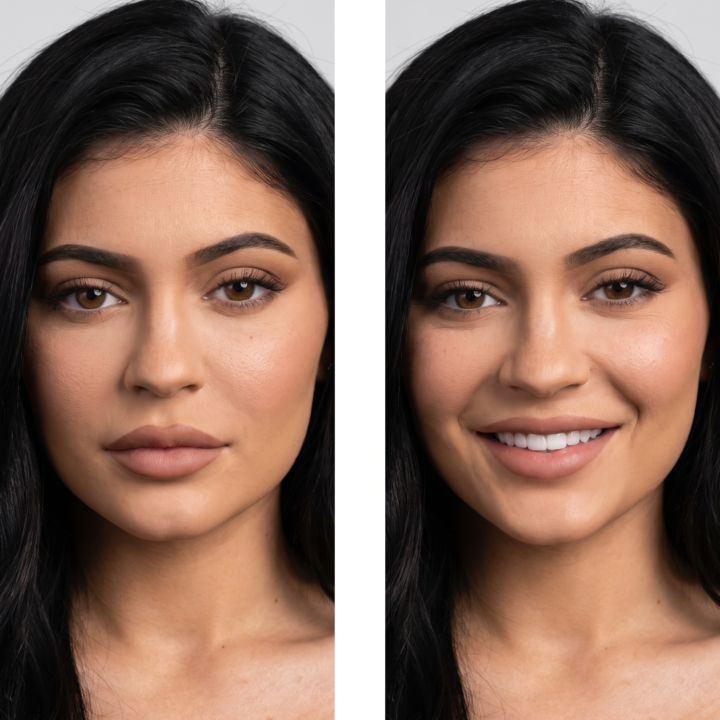
📸 The Perfect Smile: Zero-Drift Identity Lock
Most image-to-image tools destroy a character's identity the moment you ask for a simple facial change. If you prompt an engine to turn a neutral expression into a smile, it doesn't just adjust the mouth muscles—it completely rewires their jawline, bone structure, and eye shape, turning them into a different person. To fix this, you have to treat the prompt like a medical surgical brief. You must explicitly fence off the anatomical nodes that cannot move, and only give the AI permission to flex the specific muscle layers responsible for a natural smile. Here is the exact framework to run inside your image-to-image or inpainting workspace to execute non-destructive facial modifications. 📐 The Master Expression Prompt Drop your source image into your generator, mask the face if using an inpainting tool, and apply this exact text layout: Change the facial expression of the person in this photo to SMILING. Keep the person's identity, age, bone structure, face shape, eye shape, nose, lips, and jawline exactly as in the original. ### ANATOMICAL PRESERVATION - Preserve skin texture, pores, freckles, moles, facial hair, and hairstyle with absolute fidelity. - Adjust ONLY the local muscles involved in the new expression—specifically the mouth, cheeks, eyes, and eyebrows—so the change looks anatomically natural. - If the expression involves a smile or laugh, show teeth only if appropriate and keep them entirely consistent with the person's real teeth shape, spacing, and enamel color. ### ENVIRONMENTAL LOCK - Preserve the original lighting direction, specular highlights, shadows, skin tone, and color grading. - Do NOT change the head position, tilt angle, body pose, gaze direction, clothing, or background elements. ### QUALITY BAR The result must look like a real photo of the exact same person captured a single split-second later with a natural, authentic expression shift. Zero digital artifacts, zero identity drift.

9h •
Anyone actually landed an HVAC / AC client here? Reality-checking what I found on the ground
Been door-knocking AC businesses in the UAE to validate the niche in person, and what I'm seeing doesn't match the "missed calls = easy AI receptionist sale" idea. Wanted to sanity-check with people who've actually worked with this niche. What I found across ~15–20 shops: - 95% are small owner-operator repair shops, no marketing budget, few leads to begin with - The one serious/bigger company I met already had a team handling calls — so no gap to fill - They mostly don't miss calls — owner or a guy is always on the phone, it's a small operation - Heavily concentrated in industrial areas, which seems to self-select for the low-budget end So my questions for anyone who's actually worked with HVAC/AC: 1. Did you land them as repair shops, or bigger maintenance contractors / HVAC-MEP companies? 2. What problem did you actually end up solving for them — was it missed calls, or something else (lead gen, follow-up, reviews, seasonality)? 3. Roughly how many inbound calls a month were these businesses getting? Trying to gauge if "missed calls" is even a real pain at their volume. 4. Were the ones who paid on the smaller end or the bigger end? Trying to figure out if I searched the wrong tier or if the niche itself is just weak here. Appreciate any real numbers or experience.
1-30 of 19,934

skool.com/the-ai-advantage
Founded by Tony Robbins, Dean Graziosi & Igor Pogany - AI Advantage is your go-to hub to simplify AI and confidently unlock real & repeatable results
Leaderboard (30-day)
1

+504
2

+353
3

+251
4

+169
5

+134
Powered by