
Write something
Pinned

2d •
Let Results Do the Talking This New Year...
Declaring your goals is great… if that works for you. For some people, saying it out loud creates accountability. It lights a fire. It locks them in. But for a lot of people, talking becomes the release. They feel productive just by declaring it and the work never actually starts. Here’s what I’ve learned over decades of doing this: You don’t owe anyone an announcement. You don’t need validation to begin. You don’t need permission to move. Sometimes the most powerful thing you can do is stay quiet, put your head down, and do the work. Results don’t need a speech. They introduce themselves. It’s the last day of 2025. Whatever this year gave you...lessons, wins, losses, clarity...use it. Happy New Year. Now let’s get to work.

3m •
2026 AI Influencers Opportunity
One of the biggest AI opportunities right now is AI influencers. For the first time, we can keep the same face and body while changing angles, poses, environments, and framing. That consistency is what turns random images into a real digital identity. Once identity is stable, AI stops being art and starts becoming content, brands, and businesses. Still early. Huge upside.
0
0


27m •
Introduction Bernd - „actively exploring“
Hi, I’m Bernd. I work in mechanical engineering, helping turn complex technical knowledge into clear processes and usable information across teams. I’m a systems thinker—interested in how ideas become products, and how organizations learn faster without losing precision. My relationship with AI is “actively exploring”: I use ChatGPT regularly, test prompts, and focus on practical value. I’d love AI to help most with knowledge management—making scattered notes, documents, and standards searchable and structured so the right info shows up at the right time. I joined this community to learn real-world approaches and share what works. Fun fact: I love baking pizza—and ChatGPT wrote this intro for me, without putting additional input in.

24m •
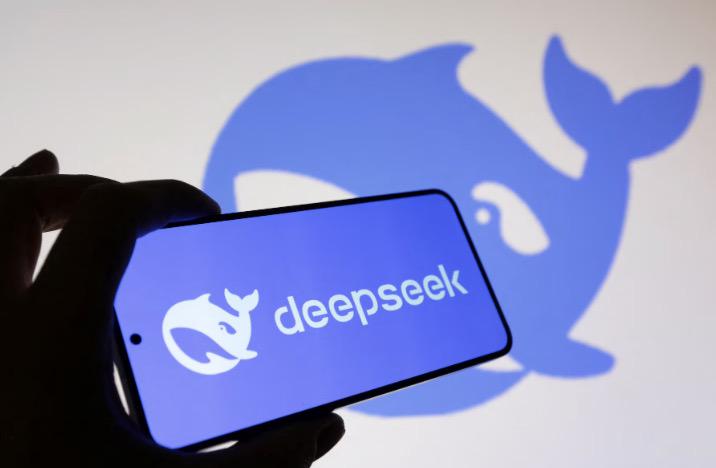
📰 AI News: DeepSeek Unveils New Training Method To Make AI Cheaper And More Efficient
📝 TL;DR Chinese AI startup DeepSeek has released a new training method that promises bigger, smarter models using less compute and energy. If it works as advertised, it could lower the cost of serious AI and speed up how fast new models hit the market. 🧠 Overview DeepSeek has kicked off 2026 by publishing a technical paper that introduces a new training approach called Manifold Constrained Hyper Connections, or mHC. The goal is simple, train large language models more efficiently so they do not collapse or get too expensive as they scale up. This matters because DeepSeek operates under strict limits on access to top tier Nvidia chips. If they can keep matching Western models while spending less on hardware, it challenges the whole idea that you must burn billions on GPUs to stay competitive. 📜 The Announcement The new paper, co authored by DeepSeek founder Liang Wenfeng, outlines a redesigned architecture for training advanced language models. Instead of just throwing more parameters and more GPUs at the problem, the method focuses on how different parts of the model talk to each other internally. Analysts who have reviewed the research are calling it a potential breakthrough for scaling. They highlight that it aims to deliver richer model behavior with only a small increase in training cost, which could underpin DeepSeek’s next generation models later this year. ⚙️ How It Works • Rethinking internal connections - mHC changes how layers inside the model pass information, so they can share more context without the training getting unstable or exploding. • Constrained communication - The method lets the model create extra “hyper connections” between layers, but under strict mathematical constraints that keep training under control. • Stability at scale - As models grow, they are more likely to break during training, mHC is designed to reduce those failures so runs do not need to be restarted, which saves time and money.
0
0

Oct '25 •
Where is everyone from? That’s a wrap - what was your biggest takeaway?
Hello new friends! Would love to know where you are from!! 🤗 Houston Texas here. Biggest takeaway for me: It’s not AI that will replace my work, it will be those who learn the tools. 🤯
1-30 of 10,501

skool.com/the-ai-advantage
Founded by Tony Robbins & Dean Graziosi - AI Advantage is your go-to hub to simplify AI, gain "AI Confidence" and unlock real & repeatable results.
Leaderboard (30-day)
1

+933
2

+457
3

+360
4

+309
5

+252
Powered by