
Write something
Pinned

19h •
Hard truth…
Your life usually doesn’t fall apart all at once. It drifts. A little less focus. A little more distraction. A little more scrolling. A little less doing the things you know you should be doing. And over time, that adds up. I’ve learned this the hard way more than once. If you want to build something meaningful, you have to protect your focus like it’s your job. Because in a lot of ways… it is. Not every opportunity deserves your time. Not every opinion deserves your attention. Not every thought deserves to be followed. Stay locked in on what actually matters. That alone will put you ahead of most people. So, what are you focused on right now and what are you going to do this week to protect that focus at all cost?
Pinned

24h •
🪫 AI Should Reduce Burnout, Not Just Increase Throughput
A lot of AI conversations still center on one question, how can we produce more? More content, more output, more speed, more tasks completed in less time. But that framing misses something important. If AI only helps us do more work in the same number of hours, without reducing pressure, then it is not solving one of the biggest problems modern teams actually face. Burnout is not just a workload issue. It is often a friction issue. It comes from constant switching, unfinished tasks, unclear priorities, repeated mental resets, and the feeling that work never really stops moving toward us. That is why AI matters here. Its value is not only in accelerating output. Its value is in reducing unnecessary drain so people can get time and attention back. ------------- Burnout is often caused by how work feels, not just how much there is ------------- When people think about burnout, they often picture too many hours or too many responsibilities. That is part of it, but it is not the whole story. Plenty of people can handle demanding work when the work is focused, clear, and meaningful. What wears them down is fragmented effort. A day filled with half-finished tasks, scattered requests, unclear next steps, and constant context switching creates a different kind of exhaustion. Even when no single task is impossible, the total experience becomes mentally expensive. People end the day feeling busy but strangely unproductive, which makes the next day feel heavier before it even starts. This is where time leaks turn into energy leaks. The problem is not just that work takes too long. It is that the effort required to keep re-entering the work is draining. Every restart costs attention. Every unclear request creates friction. Every small administrative task steals cognitive energy that should have gone toward something more important. If AI is going to improve work in a meaningful way, it has to reduce some of that drag. Otherwise, all we are doing is making the conveyor belt move faster.

Pinned
3d •
Which Top AI Should You Choose & More AI News You Can Use
In this video, I did something a little special, as I was out of commission for a week due to surgery. Instead of skipping the week in AI news, we put some of the best modern AI tools to the test to see what we could create. So I'm proud to present our guest host AI Igor, who will only be filling in this week while I rest my voice. AI Igor covers the results of the testing we've been doing on the top models for the past week, talks about the new Copilot Cowork coming to Microsoft 365 users, discusses the disappointing release from Luma with Uni-1, and more. Enjoy this special edition and I will be back next week!

11m •
Song Dive - a musical graphics experience
These images were created with the exact same prompt. Can you guess which song inspired them? If you said "A day in the life" by the Beatles - give yourself a medal. Song Dive is a non-graphical graphical effect in my PCS Fx app. It doesn't just generate images, you give it a name of a song and an optional artist and it'll use AI to look up the lyrics for that song and then based on these lyrics create an image, which is what you're seeing here. This is 3 iterations from the same song, but as you can see they look pretty different. John wound up in the first one, the second one is similar visually but with another man, but you can see part of the lyrics in his newspaper and of course the last image is the famous "he blew his mind out..." visualized. Why did it make the smoke be in these beautiful colors? I have no idea, but I like that it did. If you'd like to see a visualization using Song Dive, just drop the name of the song/artist in a comment and I'll post what AI comes up with in reply.
0
0


🔥
59m •
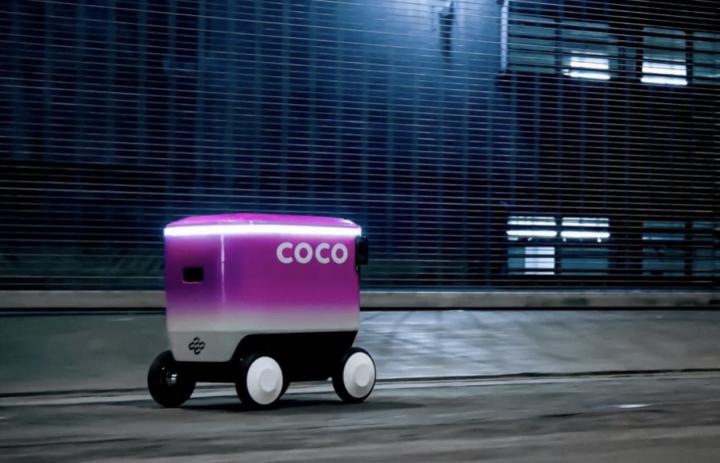
📰 AI News: Pokémon Go Players Accidentally Trained The Robots Delivering Your Pizza
📝 TL;DR Years of Pokémon Go and Ingress players scanning streets, parks, and landmarks have quietly helped build a huge 3D map of the world that is now being used to guide delivery robots. The same tech that helped you find a PokéStop is now helping robots find the right curb, building entrance, and pizza drop-off spot. 🧠 Overview This is one of those stories that sounds like a joke until you realize it makes perfect sense. Niantic’s games got millions of people to point their phones at the real world, capturing billions of ground-level images and location signals that no satellite map could easily collect. Now that spatial data is being repurposed for robotics. Niantic Spatial is using it to help Coco Robotics improve navigation for delivery bots, especially in dense city areas where GPS alone is too sloppy for precise drop-offs. 📜 The Announcement The big reveal is that the crowdsourced mapping behind Niantic’s AR games has become a practical infrastructure layer for the real world. Niantic Spatial says its visual positioning system has been trained on more than 30 billion ground-level images and scans collected over the years through products like Pokémon Go and Ingress. That system is now being used in partnership with Coco Robotics, a delivery robot company, to help its robots navigate urban routes with much finer accuracy. Instead of just knowing the general block, the robots can get much closer to understanding the exact curb, storefront, or entrance they need. ⚙️ How It Works • Ground level world map - Players scanning PokéStops and landmarks created a rich street-level dataset that captures buildings, signs, benches, paths, and other real-world details. • Visual positioning system - Instead of relying only on GPS, robots compare what their cameras see to this mapped world so they can localize themselves much more precisely. • Better last meter navigation - The hardest part of delivery is often not the route, it is the final approach, finding the correct side of the street, entrance, or drop-off location.
1-30 of 11,974

skool.com/the-ai-advantage
Founded by Tony Robbins, Dean Graziosi & Igor Pogany - AI Advantage is your go-to hub to simplify AI and confidently unlock real & repeatable results
Leaderboard (30-day)
1

+166
2

+149
3

🔥
+145
4

+108
5

+103
Powered by