
Write something
Pinned

4h •
🧪 Legal and Compliance Teams Are Using AI to Cut Review Cycles, and Every Team Should Pay Attention
A lot of AI productivity conversations focus on creation. Faster writing. Quicker summarization. More efficient research. Those gains matter, but they can miss another major source of delay inside organizations. Many teams are not actually slowed most by production. They are slowed by review. Work gets drafted quickly enough, but then it waits. It waits for legal. It waits for compliance. It waits for policy review. It waits for someone to confirm whether it can go out, whether the language is acceptable, whether the risk is manageable, whether the process is clean enough to approve. That waiting time often stretches far longer than the original act of creating the work. This is why the growing use of AI in legal and compliance workflows matters so much. It points to a more mature understanding of where time really gets trapped. Some of the most valuable gains do not come from making the work faster to create. They come from making the work faster to clear. ------------- Context ------------- Every organization has approval bottlenecks. Some are obvious. Others are hidden inside normal workflow patterns. A draft needs review before it can be published. A message needs legal signoff before it can be sent. A new process needs a policy check before it can be implemented. A client-facing asset needs compliance review before it can go live. These checks are often necessary, but they are also expensive in time terms. The work itself may be finished, yet the value cannot move because the approval layer is still catching up. That creates a frustrating dynamic where teams produce quickly but still feel slow. This is where AI becomes especially interesting. If it can help legal and compliance teams review faster, identify common issues earlier, and structure work in a more approval-ready form, then the organization gains more than efficiency inside one department. It gains shorter cycle times across the business. That is a crucial insight. Review teams do not only affect their own workload. They affect the pace of everyone else’s work too. When review accelerates, the whole system becomes lighter.

Pinned

3d •
Stop expecting results on a timeline that doesn’t match the goal
One of the hardest parts of building anything meaningful is doing all the work and still feeling like nothing is happening. You’re showing up. You’re improving. You’re staying disciplined. You’re sacrificing. You’re doing what everyone says to do. And still… the results aren’t showing up as fast as you expected. That’s the part that messes with people mentally. Because eventually your brain starts trying to convince you that if it’s taking this long, maybe it’s not working. Maybe you need a new strategy. Maybe you should pivot. Maybe you’re behind. But most people aren’t failing because they’re incapable. They’re failing because they expected a 10-year result on a 10-week timeline. Big things take longer than people think. Skills take longer. Momentum takes longer. Trust takes longer. Compounding takes longer. And most people quit right before the part where things finally start working because the silence makes them assume they’re losing. The people who usually win are the ones who can tolerate uncertainty longer than everyone else. What’s something in your life or business right now that you know requires more patience than you originally expected?
Pinned
3d •
This One Prompt Unlocks ChatGPT Images 2.0
In this video, I show off a trick The AI Advantage team developed to reverse-engineer any image using the new ChatGPT Images 2.0. Watch to learn how to create nearly any image with one prompt and this incredible new AI model! Enjoy :)

4h •
🚀 Automating Trade Show Lead Capture and Personalized Follow Up with Make.com
One of the biggest problems businesses face after trade shows is follow up. Teams collect dozens of leads at booths then spend hours manually organizing contacts and sending generic emails that rarely feel personal. This is exactly where automation becomes extremely valuable. Using Make.com businesses can build systems that automatically turn booth conversations into personalized follow up workflows. Here’s what this type of automation can do • Capture lead information directly from a tablet form at the booth • Instantly log the conversation into a CRM or Google Sheets • Pull product and pricing information automatically • Generate personalized follow up emails using AI • Build dynamic product tables based on customer interest • Attach brochures and resources automatically • Create ready to send Gmail drafts within seconds Instead of manually handling every lead after an event the entire process becomes structured scalable and much faster. For businesses attending multiple trade shows every year this type of workflow can dramatically improve response speed lead organization and customer experience. Small automation systems like this can completely transform post event sales operations. #makecom #automation #workflowautomation #leadgeneration #salesautomation #gmailautomation #googleworkspace #businessautomation #aiautomation #crmautomation #emailautomation #automationexpert #digitalautomation #eventmarketing #tradeshowmarketing #customerengagement #leadcapture #marketingautomation #automateyourbusiness #processautomation #nocodeautomation #automationworkflow #smartworkflows #futureofwork #aiintegration #businesssystems #productivityautomation #techautomation

🔥
3h •
📰 AI News: OpenAI Just Put One Person in Charge of ChatGPT, Codex, and the API, and That’s a Big Strategic Signal 📰
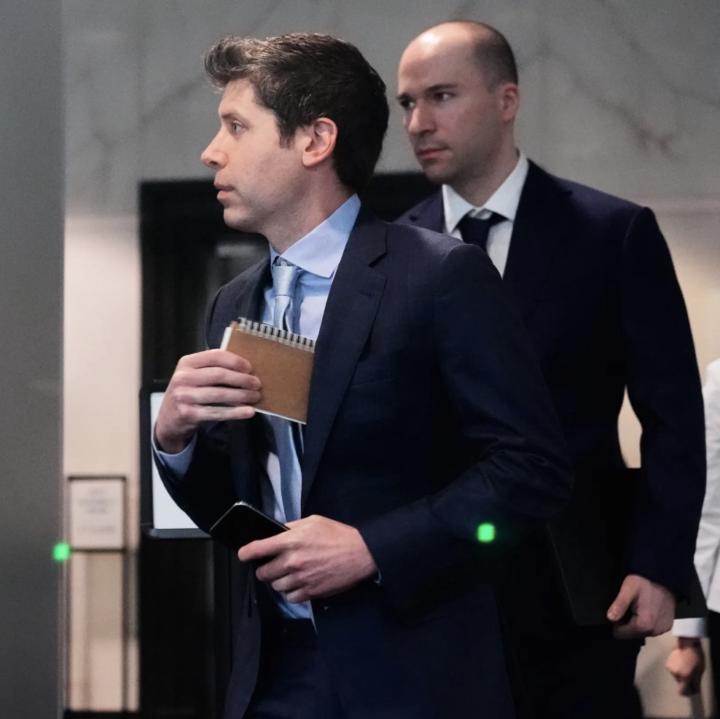
📝 TL;DR 📝 OpenAI has officially put co-founder Greg Brockman in permanent charge of product strategy across ChatGPT, Codex, and the developer API. The real story is not the org chart, it is the direction: OpenAI is consolidating around an agent-first future where these products increasingly become one unified platform. 🧠 Overview 🧠 This is a leadership change, but it says a lot about where OpenAI is heading next. According to reporting, Brockman’s new role makes him the single product leader across the tools most users actually touch, while OpenAI reorganizes around a tighter, more focused structure. That matters because when a company merges product leadership like this, it usually means the lines between those products are about to blur. 📜 The Announcement 📜 Reporting says OpenAI told staff Brockman will now permanently lead product strategy, formalizing what had been interim oversight. The reorganization brings ChatGPT, Codex, and the developer API into a more unified product organization, while other leaders shift into more focused enterprise and consumer roles. The move also points to OpenAI’s broader push toward AI agents and a more integrated “super app” style product direction. ⚙️ How It Works ⚙️ • One product leader - Greg Brockman now has permanent oversight of OpenAI’s core product strategy across ChatGPT, Codex, and the API. • Product consolidation - OpenAI is reportedly bringing ChatGPT and Codex closer together instead of treating them as separate product worlds. • Agent-first direction - Brockman reportedly described the strategy as focused on the “agentic future,” which suggests agents are becoming the central product idea, not just an extra feature. • Team reshuffle - Reporting says Thibault Sottiaux will lead core product and platform, Nick Turley is shifting toward enterprise, and Ashley Alexander is taking on consumer product leadership. • Super-app logic - Multiple reports say OpenAI is working toward a more unified experience that brings together ChatGPT, Codex, and related tools.
1-30 of 19,121

skool.com/the-ai-advantage
Founded by Tony Robbins, Dean Graziosi & Igor Pogany - AI Advantage is your go-to hub to simplify AI and confidently unlock real & repeatable results
Leaderboard (30-day)
1

🔥
+1602
2

+838
3

+740
4

+676
5

+470
Powered by