
Write something
Pinned

3m •
🔍 Responsible AI Use Is Actually a Time-Saving Strategy
A lot of people talk about responsible AI as if it slows things down. They imagine extra checks, extra caution, extra friction, and more steps standing between a team and fast execution. That assumption sounds reasonable on the surface, but in practice it often gets the relationship backward. Responsible AI use is not mainly about slowing work down. It is about preventing the kinds of mistakes that create expensive rework later. Weak review, unclear boundaries, and careless use do not save time in the long run. They create bad drafts, wrong decisions, quality issues, and trust problems that take even more time to fix. The real time-saving strategy is not reckless speed. It is smart speed with guardrails. ------------- Fast without guardrails often becomes slow later ------------- One of the biggest mistakes teams make with AI is assuming the fastest path is the one with the fewest checks. They generate a draft, skim it quickly, and move on. Or they use AI to summarize, rewrite, or recommend without thinking carefully about whether the output is accurate, complete, or appropriate for the situation. At first, this can feel efficient. The task gets done quickly. The work moves forward. But if the result is misleading, incomplete, poorly framed, or off-target, the time savings disappear. Someone else has to catch the issue. A revision cycle begins. Trust drops. The work has to be revisited, clarified, or corrected. This is the hidden cost of careless speed. It creates the illusion of faster work while quietly increasing downstream drag. A rushed output that needs repair is rarely a true time win. It simply shifts the time cost to a later stage, where it often becomes more expensive. That is why responsible use matters. It is not bureaucracy for its own sake. It is a way of keeping speed from turning into rework. ------------- Good guardrails reduce rework, hesitation, and cleanup ------------- When people hear the word guardrails, they sometimes picture heavy process. But good guardrails are usually simple. They are clear rules for when AI can help, what needs human review, what should not be delegated blindly, and where extra care matters most.
0
0

Pinned

3d •
Hard truth…
Your life usually doesn’t fall apart all at once. It drifts. A little less focus. A little more distraction. A little more scrolling. A little less doing the things you know you should be doing. And over time, that adds up. I’ve learned this the hard way more than once. If you want to build something meaningful, you have to protect your focus like it’s your job. Because in a lot of ways… it is. Not every opportunity deserves your time. Not every opinion deserves your attention. Not every thought deserves to be followed. Stay locked in on what actually matters. That alone will put you ahead of most people. So, what are you focused on right now and what are you going to do this week to protect that focus at all cost?
Pinned
5d •
Which Top AI Should You Choose & More AI News You Can Use
In this video, I did something a little special, as I was out of commission for a week due to surgery. Instead of skipping the week in AI news, we put some of the best modern AI tools to the test to see what we could create. So I'm proud to present our guest host AI Igor, who will only be filling in this week while I rest my voice. AI Igor covers the results of the testing we've been doing on the top models for the past week, talks about the new Copilot Cowork coming to Microsoft 365 users, discusses the disappointing release from Luma with Uni-1, and more. Enjoy this special edition and I will be back next week!

17m •
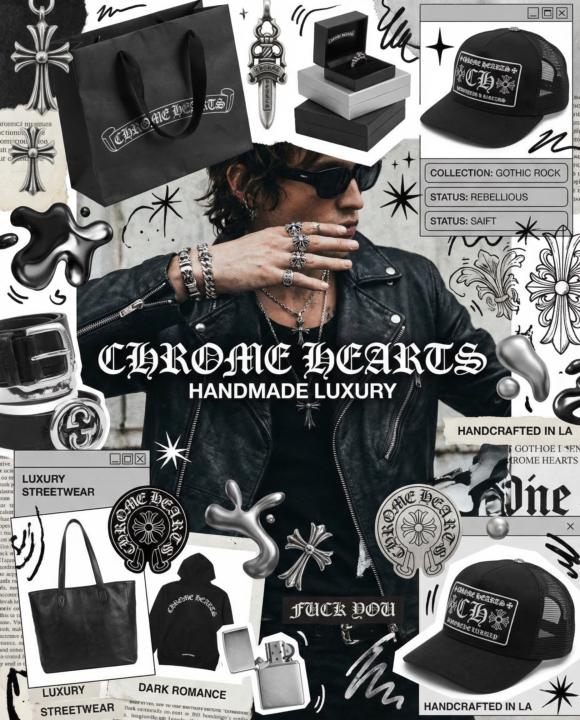
🧩 Brand World Collage Test
Been testing a more layered brand moodboard style and honestly this kind of output is way more interesting to me than a clean single render It feels less like “here’s the product” and more like “here’s the whole brand world” That’s what I like about it The mix of packaging, lifestyle, typography, symbols, textures, and collage-style layering makes it feel more like a real campaign direction instead of just another polished AI image I think this is where AI gets stronger creatively — when it starts building identity, not just visuals Curious which one works best for you
0
0

🔥
18m •
📰 AI News: Midjourney V8 Is Here, Faster, Sharper, And Better At Actually Following Your Prompt
📝 TL;DR Midjourney has started testing an early version of V8 with its community, and it looks like a serious upgrade. It is around 5 times faster, supports native 2K output, renders text better, and is much stronger at following prompts without drifting off into weird directions. 🧠 Overview Midjourney is clearly aiming to make image generation feel less like “prompt and pray” and more like a reliable creative tool. V8 is not just about prettier images, it is about speed, control, and getting closer to what you actually asked for on the first try. That matters because the real bottleneck in AI image work is not only quality. It is the number of retries, tweaks, and workarounds needed to get something usable. 📜 The Announcement Midjourney has begun testing an early version of its V8 model with the community. The company says the model is much better at following prompts, generates around 5 times faster, includes native 2K modes, and delivers improved text rendering. It also adds a new HD mode and upgrades to personalization, sref performance, and moodboard support. In plain English, Midjourney is pushing V8 as both a speed upgrade and a control upgrade. ⚙️ How It Works • Faster generation - V8 is reported to generate images around 5 times faster, which means less waiting and more iteration. • Stronger prompt following - The model is better at sticking to what you actually asked for instead of drifting into random aesthetic choices. • Native 2K output - Higher resolution is now built in more directly, making outputs more useful for real design and marketing work. • Better text rendering - One of the biggest weaknesses in AI image tools is improving, so signs, labels, and on-image copy should come out cleaner. • New HD mode - Users get another quality option for pushing image detail further when needed. • Better personalization and moodboards - Midjourney is leaning harder into style consistency, which is key for creators and brands trying to build a recognizable visual identity.
0
0

1-30 of 12,020

skool.com/the-ai-advantage
Founded by Tony Robbins, Dean Graziosi & Igor Pogany - AI Advantage is your go-to hub to simplify AI and confidently unlock real & repeatable results
Leaderboard (30-day)
1

+164
2

🔥
+159
3
+144
4

🔥
+113
5

+108
Powered by