
Write something
Pinned

8h •
🧾 Proof of Origin: Why Provenance Will Become a Workplace Superpower
We are moving into a world where content can be generated faster than it can be trusted. In that world, the advantage will not go to the teams who create the most, it will go to the teams who can prove where things came from, how they changed, and why they should be believed. ------------- Context: When “Looks Legit” Stops Being a Standard ------------- For years, most workplace content came with implied authenticity. A slide deck had an author. A report had an owner. A screenshot was assumed to reflect a real system. Even when mistakes happened, the chain of origin was usually easy to trace because the creation process was human, slow, and visible. Now, creation is fast, remixable, and increasingly automated. A single person can produce dozens of assets in minutes, some drafted by AI, some stitched from multiple sources, some iterated across tools. That speed is powerful, but it also breaks a familiar social contract. When content moves quickly, context often gets stripped away. The result is not always deception. More often, it is ambiguity. People ask, where did this number come from? Is this the latest version? Was this approved? Is this based on real customer feedback or synthetic examples? Which parts were AI-generated. Nobody is accusing anyone, but trust still weakens because the origin story is missing. This is where provenance comes in. Provenance is not a technical add-on. It is a way of working that keeps trust intact as creation accelerates. ------------- Insight 1: Provenance Is Not About Suspicion, It’s About Speed With Confidence ------------- Provenance can sound like a distrust mechanism, as if we are preparing to audit everyone. But the practical benefit is the opposite. Provenance reduces friction by eliminating guesswork. When we can see a clear trail, who created something, what sources were used, what edits were made, what version is current, decisions happen faster. Meetings shrink. Arguments fade. People stop debating reality and start debating strategy.

Pinned
1d •
Claude Interactive Responses, ChatGPT Ads Explained & More AI News You Can Use
This week, I show you how to use Claude's new Interactive Reponses, breaks down AI ads at the Superb Owl and how ads in ChatGPT work (for now), reviews our testing results comparing GPT-5.3-codex and Claude Opus 4.6, and way more. Enjoy!
Pinned

3d •
You know what’s crazy?
How many people think if they just don’t deal with something… it’ll magically work itself out. It never does. That conversation you’re avoiding? It doesn’t get easier next month. It gets heavier. Now there’s more emotion attached. More resentment. More fallout. That decision you’re putting off in your business? It doesn’t get cheaper. It gets more expensive. More money lost. More time wasted. More energy drained. Avoidance feels good for about five minutes. It gives you temporary relief. But you’re not eliminating the cost. You’re just adding interest. And here’s the part people don’t want to hear… Every time you avoid something, you train yourself to hesitate. Every time you face it, you train yourself to lead. The difference between people who win big and people who stay stuck isn’t intelligence. It’s not resources. It’s not even confidence. It’s speed of truth. Winners look at the ugly numbers. They have the uncomfortable conversation. They fire the wrong hire. They fix the broken system. They say what needs to be said. Not because it feels good. But because they know delay compounds pain. So if there’s something sitting in the back of your mind right now... that thing you keep saying “I’ll deal with it later”... that’s probably the thing you need to handle first. Discomfort now builds momentum. Avoidance builds debt. Your choice.

🔥
2d •
Nobody Sees the Becoming
People celebrate the results. They don’t see the becoming. The early mornings. The self-doubt you had to fight. The discipline you chose when quitting felt easier. Growth is quiet. It happens internally before it ever shows externally. Respect the version of you that kept going when no one was watching.

2h •
What's up everybody!
🔥 I've been experimenting all day with AI photo and video generations understanding better script writing. 🔥 I am very curious what models you all guys use for generating media with AI Models! Im very enthusiastic to hear all your tips and tricks if you may wanna share some! 💪😝🤑
1-30 of 11,427
skool.com/the-ai-advantage
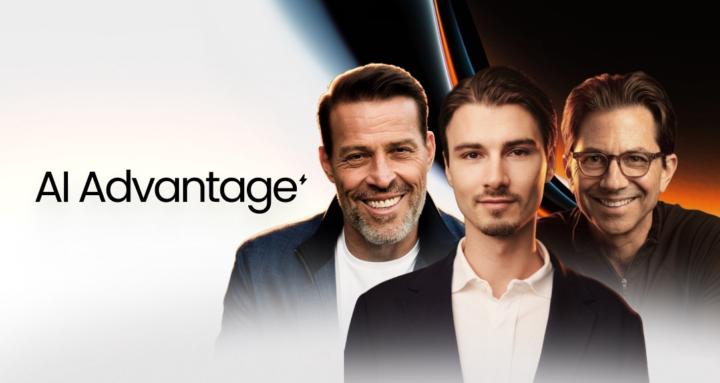
Founded by Tony Robbins, Dean Graziosi & Igor Pogany - AI Advantage is your go-to hub to simplify AI and confidently unlock real & repeatable results
Leaderboard (30-day)
1

+181
2

+163
3

+148
4

+135
5

+123
Powered by