
Write something
Pinned

8h •
💡 AI's First Idea Is Never Your Best One. Most People Stop There Anyway.
There's a specific and easily overlooked pattern in how AI-assisted ideation actually plays out in practice. AI generates a plausible first option remarkably fast. That option is usually reasonable, competently constructed, and immediately available. And because it's immediately available and reasonable, there's a strong pull toward accepting it and moving on, rather than pushing further into genuinely better territory that would have required more iteration to reach. This pattern is quietly narrowing the range of ideas that actually get considered before a direction gets locked in, and most people doing it have no idea it's happening, because the first option genuinely is good enough to feel complete. ------------- Context ------------- Before AI, generating a first option for anything, a strategy, a piece of creative work, a solution to a problem, required real effort. That effort created a natural incentive to keep working with what you'd produced rather than starting over, but it also meant that the ideation process itself often surfaced better ideas along the way, because thinking through a problem carefully to produce even a first option involved genuine engagement with its complexity. AI changes this dynamic in an important way. The first option is now nearly free to generate. There's no natural effort barrier discouraging you from generating more, but there's also no forcing function requiring the kind of deep engagement that used to happen automatically while producing that first option manually. The speed of AI's first response can create the feeling of having done the ideation work, when in fact very little genuine ideation has happened yet. The AI generated something plausible quickly. That's different from having explored the actual space of good options. This creates a subtle trap: because the first AI-generated option is reasonable and immediately available, there's less felt need to push further, even though pushing further, in a world where generating additional options is nearly free, would often surface genuinely better ideas with very little additional cost.
10
0

Pinned
5d •
Fable 5 is Back! Here's the Best Way to Use It...
Anthropic finally brought Fable 5 back and in the same week, they also launched the new Sonnet 5 model. In this video, I break down everything you need to know about these models and explains which one you should be using. Enjoy!
Pinned

9d •
What Success Actually Buys You
Most people think success is about money. It's not. Money is just what buys you options. I've worked hard for decades. Not because I fell in love with the grind, but because I fell in love with what the work could create. Every uncomfortable conversation. Every risk. Every time I wanted to quit but didn't. None of it was just to make more. It was to own my time. To be there for the people I love. To create memories instead of regrets. To have the freedom to say yes to what matters and no to what doesn't. Don't chase success because you want to look successful. Chase it because one day you'll realize time is the only thing you can't earn back. Work hard. Do the uncomfortable things. Become the person capable of creating the life you want. Because real success isn't measured by what you own. It's measured by how fully you get to live. Question for you: If you had complete freedom over your time one year from now, what would you spend more of it doing... and who would you spend it with?

2h •
Choose a lane before you speed up
One thing I’ve learned is that AI is a huge field. If you try to learn everything at once, it’s easy to get overwhelmed. Instead, choose one lane and stick with it for a while. Maybe that’s productivity, automation, or content creation. Build a solid foundation first, then expand from there. Small daily actions create massive results.

3d •
Figureoutability Lesson #3
Most people think they need a perfect plan. I don't. I need a direction. A direction lets me take the first step. The first step gives me feedback. Feedback helps me adjust. And after enough adjustments... I end up somewhere I never could have planned from the beginning. That's why I don't obsess over getting it right. I focus on getting it moving. AI helps me see possibilities. Action tells me which possibility is worth pursuing. Figureoutability isn't having the perfect roadmap. It's trusting yourself to navigate the next turn. Direction creates action. Action creates feedback. Feedback creates better direction. That's figureoutability. Question: What's one thing you've been waiting to have completely figured out before you begin?
1-30 of 19,972
skool.com/the-ai-advantage
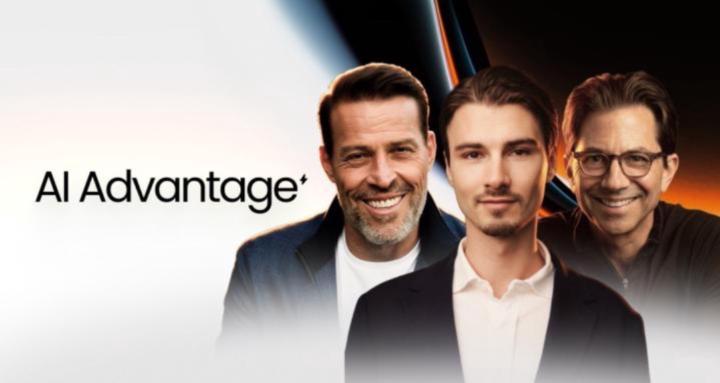
Founded by Tony Robbins, Dean Graziosi & Igor Pogany - AI Advantage is your go-to hub to simplify AI and confidently unlock real & repeatable results
Leaderboard (30-day)
1
+505
2

+333
3
+274
4

+148
5

+135
Powered by