
Write something
Pinned

9h •
Nobody really cares...
Let me tell you something that might free you up a little. People don’t care about what you’re doing as much as you think they do. They’re not sitting around analyzing your moves. They’re not replaying your mistakes. They’re not judging you nearly as hard as you’re judging yourself. They’re thinking about their own lives. And yet so many of us hold back because we’re afraid of looking stupid. Afraid of failing publicly. Afraid it won’t go perfectly. But embarrassed in front of who? The real tragedy isn’t trying and falling short. The real tragedy is getting to the end of your life and realizing you played small. You had ideas and kept them safe. You had dreams and negotiated them down. You waited for the “right time” that never came. That’s the part that should scare you. You don’t get to run this life back. So if there’s something on your heart... a business to start, a move to make, a conversation to have... Do it. Not because it’s guaranteed to work. But because missing your shot is heavier than failing at it. What’s the bold move you’ve been overthinking?
Pinned

9h •
How to Switch from ChatGPT to Claude (Without Losing Anything!)
In this video, I show you how to quickly and easily switch from ChatGPT (or any other LLM provider) over to Claude without losing all those precious memories you've built up. Give it a watch if you're one of the many making the switch to Claude! Enjoy :)
Pinned
14h •
⏱️ The “Definition of Done” That Saves Hours: How Clarity Prevents Rework
Perfection is expensive, but ambiguity is even more expensive. Most teams do not lose time because they aim too high. We lose time because we do not agree on what “done” means, so we keep revisiting the same work. A clear Definition of Done is not bureaucracy, it is a time strategy that protects cycle time, reduces rework, and speeds up decisions. AI amplifies this truth. When we generate faster drafts, the bottleneck becomes alignment. If “done” is unclear, we simply produce more versions, faster. If “done” is clear, we produce better first drafts, faster, and we get time back instead of creating more noise. ------------- The Time Leak We Keep Normalizing ------------- We have all watched a simple deliverable turn into a multi-week loop. Someone submits a document. A reviewer says, “This is not what I expected.” Another reviewer asks for more detail. A stakeholder wants it shorter. Someone else wants it more formal. The author revises, resubmits, and the cycle repeats. We call it collaboration, but often it is a missing agreement. The real issue is that we asked for “a brief,” or “a summary,” or “a plan,” without defining the job the artifact must do. That vagueness creates handoff latency. People cannot evaluate quickly because they do not know what standard they are evaluating against. So they revert to preferences. This is also why meetings expand. When a deliverable is unclear, we schedule a sync to “align.” The meeting becomes a debate over expectations that could have been written in two paragraphs. That meeting leads to changes, which leads to more review, which leads to more time lost. A Definition of Done is how we stop paying this clarity tax. It gives us a shared finish line, which shortens time-to-decision and prevents expensive rework. ------------- Insight 1: “Done” Is a Contract, Not a Feeling ------------- Most teams treat “done” like a vibe. We know it when we see it, and we assume everyone else does too. That assumption is the source of wasted hours.


1d •
The one prompt variable that improved my AI images more than switching models
Everyone obsesses over which AI image model is "the best." I spent months comparing them in production. Here's what actually moved the needle more than any model switch: Specifying the LENS. Not "high quality." Not "professional." Not "8K." The actual lens focal length. "85mm f/1.4" in a product photo prompt produces shallow depth of field that looks optically correct — because the model learned from millions of real photos taken with that lens. It's not applying a blur filter. It's reproducing real optical physics. Here's what I've found after testing this extensively: Wide angle (24mm) — Best for environmental/lifestyle shots. You'll sometimes get barrel distortion artifacts, and that's actually a GOOD sign — it means the model is rendering real optics, not just ignoring the parameter. Portrait (85mm) — The sweet spot for product and people shots. Subject isolation looks natural, not composited. Background compression matches what your eye expects from a real photo. Macro (100mm macro) — Texture detail jumps dramatically. Jewelry, cosmetics, food — anything where surface detail sells. This is the one parameter that consistently separated "looks AI" from "looks photographed." Telephoto (200mm) — Background compression creates that editorial magazine look. Great for fashion and brand imagery. The difference between "a photo of a watch on marble" and "a photo of a watch on marble, shot with 100mm macro lens, f/2.8, studio lighting with softbox" is not incremental. It's a completely different image. The models that handle lens simulation well are the ones worth using in production. The ones that ignore the parameter and give you the same generic rendering regardless? Those are toys. Curious: do you specify lens parameters in your image prompts, or have you found it makes no difference with the model you're using?

1d •
Need to know what AI is good for writing/scripting a podcast
I've been using ChatGPT for writing my weekly podcast, but it's like pulling teeth to get a script that is conversational and not just a document with headings, subheadings, and bullet points. I've given ChatGPT a formula I want to follow with every episode, but I have to outline that formula each and every time if I want consistency. I really don't want to start over with a new AI Tool because I'd been working on my podcast, journals, art prompts, etc for almost a year. But right now this is becoming a real time waste reminding ChatGPT of what I want/need. I need a good writing AI tool. What are some recommendations? I've been going through the postings here, but again, reading each post will take time that I don't have right now.
1-30 of 11,695
skool.com/the-ai-advantage
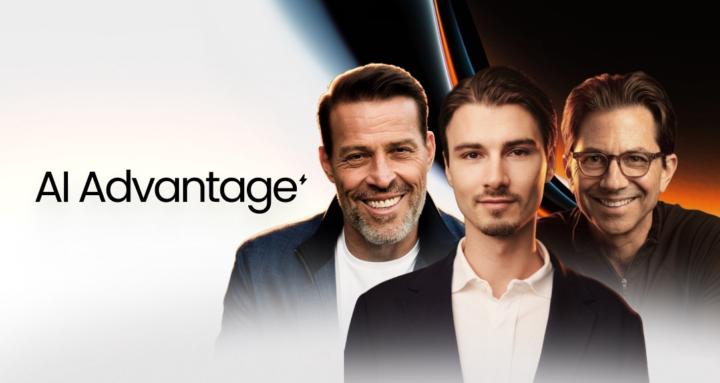
Founded by Tony Robbins, Dean Graziosi & Igor Pogany - AI Advantage is your go-to hub to simplify AI and confidently unlock real & repeatable results
Leaderboard (30-day)
1

+179
2

+150
3

🔥
+137
4

+125
5

+121
Powered by