
Write something

Mar 16 •
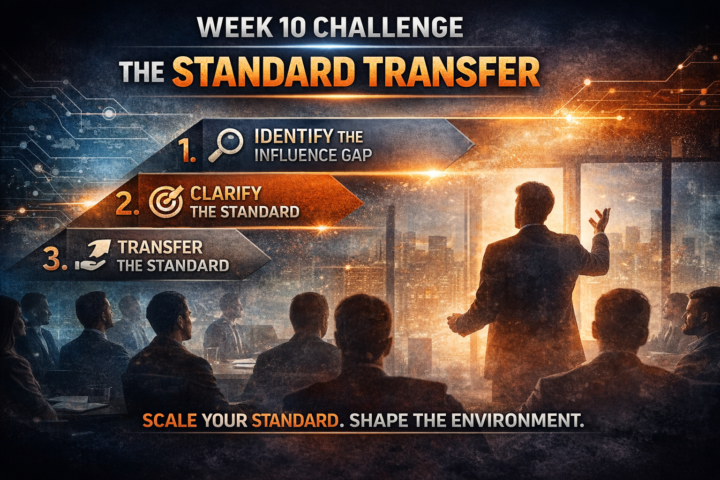
WEEK 10 CHALLENGE THE STANDARD TRANSFER
Leadership becomes real the moment it stops being personal. Up to now, you have done three things: You declared a new standard. You executed it. You installed structure around it. Now comes the real leadership test. Can your standard influence the environment around you? Because leadership is not self-discipline. Leadership is standard setting. Step 1: Identify the Influence Gap Look at the behavior you changed in Weeks 8–9. Now ask: Where is this same pattern still showing up around me? Examples: • A team member over-functioning • Meetings without decisions • Work being delayed because no one speaks directly • Priorities drifting because standards are unclear You are not fixing people. You are clarifying standards. Write this: “The pattern I see around me is ______.” Step 2: Clarify the Standard Leadership requires making the invisible visible. Define the standard clearly. Examples: Instead of:“We need better communication.” Say:“We address issues within 48 hours.” Instead of:“Everyone needs to be accountable.” Say:“If you own it, you decide it.” Clarity reduces friction. Step 3: Transfer the Standard This week, introduce the standard in one conversation. Not a lecture. A moment of leadership. Examples: • In a team meeting • In a 1:1 conversation • During a project discussion • When a decision point appears The goal is simple: Name the standard out loud. Example language: “I’m working on changing how I handle this, and the standard I’m setting is ______.” Leadership often starts with one calm sentence. Step 4: Public Reinforcement Inside the community post: “My personal shift was ______. The pattern I noticed around me was ______. The standard I introduced was ______. What happened next was ______.” No drama. Just observation. Rules No forcing change. No correcting people. Just clarity. Standards reshape environments over time. Why This Matters Most leadership programs focus on personal development.
0
0
Mar 9 •
WEEK 9 CHALLENGE THE STRUCTURE INSTALL
Last challenge you proved the standard. This week you build the system that protects it. Not willpower. Not reminders. Architecture. Step 1: Identify the Pattern Look at the execution you completed in Week 8. Ask yourself: What pattern created the old behavior? Examples: If you finally delegated something…What pattern caused you to hold onto it before? If you said no to something…What pattern made you say yes in the past? If you had a difficult conversation…What pattern made you delay it? Write this clearly: “The pattern that created the old behavior was ______.” Step 2: Install a Structural Trigger Now design a simple rule that prevents the old pattern from returning. Not a goal. A trigger. Examples: • “If a task takes less than 5 minutes of explanation, I delegate it.” • “If a meeting doesn’t require my decision, I decline.” • “If tension appears, I schedule the conversation within 48 hours.” • “If I feel the urge to over-function, I pause and ask: who actually owns this?” Structure turns identity into repeatable behavior. Step 3: Test the System Within the next 7 days: Use your new rule at least twice. Not perfectly. Just intentionally. The goal is not performance.The goal is installation. Step 4: Public Reinforcement Inside the community post: “My old pattern was ______.My new rule is ______.This week I used it when ______.What changed was ______.” Short. Clear. Real. No explanation required. Rules No complexity. No over-designing systems. The best leadership structures are simple enough to survive pressure. Why This Matters Most leaders rely on motivation. Great leaders rely on operating systems. Behavior → Pattern → Structure → Identity. This is how antifragile leadership develops in chaotic environments. If you’re noticing that new behaviors collapse under pressure… That’s not weakness. It’s missing structure. If you'd like help designing your personal leadership operating system: michaelschindler.com/start
0
0

Mar 2 •
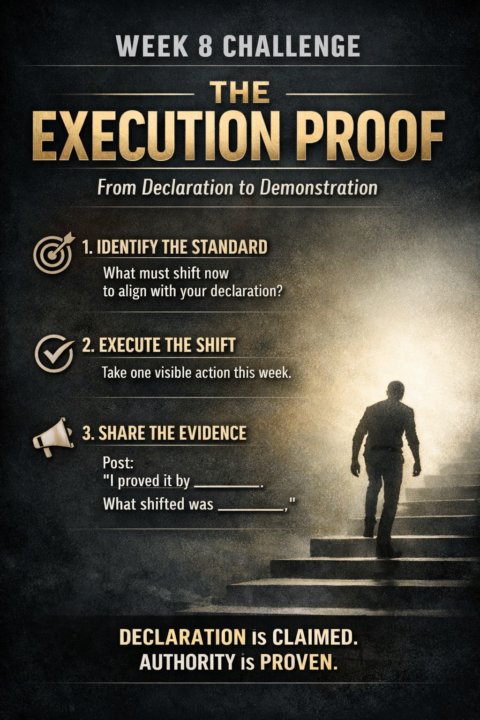
WEEK 8 CHALLENGE THE EXECUTION PROOF
Clarity declared is powerful. Clarity demonstrated is authority. This week, you will prove your declaration through behavior. Not dramatic. Not symbolic. Operational. Step 1: Identify the Standard Re-read your Week 7 declaration. Now ask: What behavior must change immediately for this declaration to be true? If you said: “I am no longer available for over-functioning…” Then what stops? If you said:“I am now committed to decisive leadership…” Then what starts? Define one visible shift. Step 2: Execute the Visible Shift Within 7 days, complete one action that proves your new standard. Examples: • Delegate something you would normally carry • Have the conversation you’ve been delaying • Say no where you would normally say yes • Reprioritize a commitment • Change a recurring decision pattern Small. Aligned. Visible. Step 3: Public Reinforcement Inside the community, post: “My declaration was ______. This week I proved it by ______. What shifted was ______.” No performance. No over-explaining. Just evidence. Authority builds through alignment. Rules No announcing without action. No perfection. No hedging language. Identity is reinforced through repetition. Why This Matters Most leaders declare clarity. Few operationalize it. Execution builds self-trust. Self-trust builds authority. Authority stabilizes leadership under pressure. If you’re noticing that execution feels inconsistent… Or you’re realizing this shift requires more structure than willpower… That’s not failure. That’s architecture. If you want help installing the structure behind your new standard, book a clarity session: michaelschindler.com/start Because declaration starts momentum. Structure sustains it.
0
0
Feb 23 •
WEEK 7 CHALLENGE: THE CLARITY DECLARATION
This week, you will publicly declare the direction you are choosing. Not vague.Not hedged.Clear. Clarity creates momentum.Ambiguity preserves comfort. Step 1: Define It What are you committed to becoming or building in this next chapter? Finish this sentence: “I am no longer available for ______.I am now committed to ______.” Make it specific. Step 2: State It Post it.Share it.Say it in writing. This can be:• A LinkedIn post• A conversation with your team• A message to someone impacted• A commitment inside this group The key: It must feel real when you hit send. Step 3: Anchor It Take one immediate action within 48 hours that proves this declaration is not just words. Small.Visible.Aligned. Report Back Comment below with: • Your declaration• Where you shared it• The action you took to anchor it• What shifted internally after making it public Rules No disclaimers No soft language No “I’ll try” Ownership builds identity.Identity builds authority. Let’s see who steps forward.
0
0
Feb 16 •
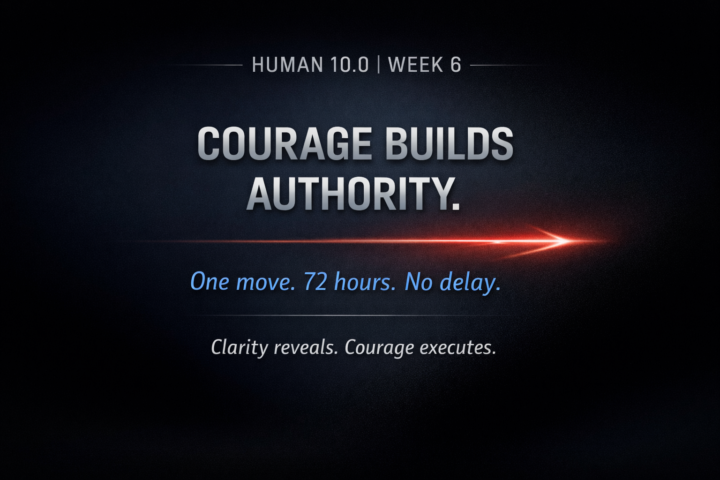
WEEK 6 CHALLENGE: THE COURAGE MOVE
This week, you will take one aligned courageous action you’ve been delaying. Not dramatic.Not reckless.Aligned. Step 1: Identify It What’s the one conversation, boundary, delegation, or decision you’ve postponed? Step 2: Execute It Take the smallest decisive step within 72 hours. Step 3: Report Back Comment below with: • What you did• What resistance showed up• What shifted afterward Rules - No overthinking - No perfection - Action before analysis Courage builds self-trust.Self-trust builds authority. Let’s see who moves.
0
0
1-10 of 10

skool.com/stuck-to-unstuck
Learn how to gain clarity, move decisively, and lead under pressure—using neuroscience and the VUCAMAX decision system.
Powered by