
Write something
Pinned

Oct '25 •
Start Here
First post, trying something new, closed my studio and practice in Australia and moved to Colombia. Happier, more aligned and now wanting to share knowledge I have learnt over the last 26 years of yoga practice and study, and running an ayurvedic clinic and medicine manufacturing company. Firstly, a warm welcome to you. I'm happy you are here 🙏☺️ First: Share a little about yourself in the community feed.. and check out the 1st lesson in the classroom. Looking forward to sharing with you.
Apr 20 •
Vata Imbalance, Travel, and Finding Inner Ground
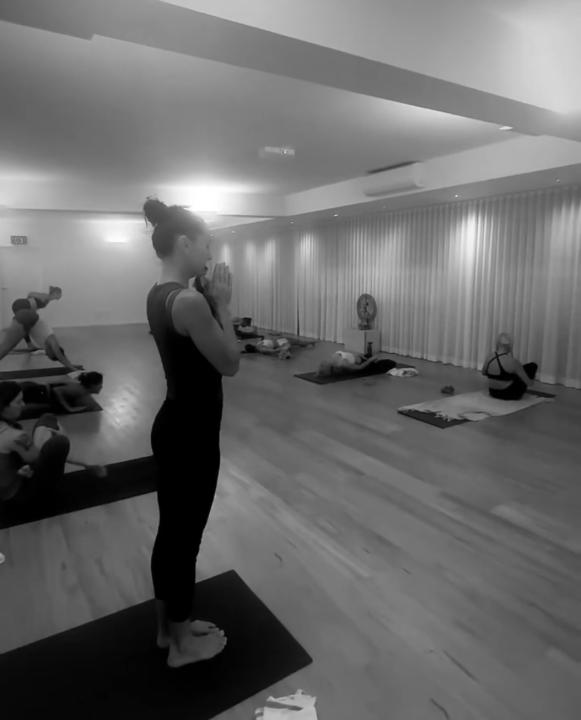
I have been away from Moksha Embodied for a few weeks; I have been travelling. I flew from Colombia to Australia. Little did I realise how much my system had taken on until I stopped moving. After a 33-hour flight, staying in multiple homes, different beds, different dynamics and shifting routines, I needed to focus a lot to stay centred. I became tired and emotionally full. Not because anything was “wrong,” but because there had been so much constant movement without steady, consistent ground. In Ayurveda, this is Vata aggravation. Vata governs communications, movement, our nervous system, thoughts, and change. When it’s balanced, we feel creative and adaptable. When Vata is in excess, it can feel like: - overwhelm - overthinking - irregular sleep patterns -heightened sensitivity Travel + irregular rhythm = increased Vata. Vata balance is simple: When there’s no rhythm, the body will look for stability wherever it can. And not every situation, place or person can provide that. A steady ground, a place to land, needs inner steadiness from consistency. The way to stabilise vata imbalance comes back to the basics. Rest, routine, nourishment. Whether during travel, life change, or in times of mental focus, vata balancing practices offer deep inner nourishment and a steady centre. The medicine for Vata is rhythm: -simplify -consistent routines, e.g. meal times, bed times -warm, regular meals -slow down and rest -make space and time for regular reflection and meditation -daily asana/movement and breath practices It doesn’t need to be a strict discipline... Just consistent. Additional Vata support would be: -Daily self-massage with warm sesame oil- Abhyaga -Have a warm ginger tea -Breakfast, lunch, dinner at the same time each day -Go to bed before 10 pm and wake before 6 am -Start the day with Meditation -No screens after 7 pm -Take care of your prana - Stay hydrated with regular herbal teas -Mindful not to talk excessively With all the planets in Aries at the moment, and the impact they may be having for people on a personal level, I'm interested to hear if anyone has experienced a rise in vata or pitta aggravation?

Feb 17 •
Power of Daily Sadhana
Some deeper reading this week took me on a reflective journey of Sadhana. Here are some highlights... Truth Is Not Negotiable One of the most dangerous assumptions of modern consciousness is that truth is negotiable, that it bends to preference, ideology, or personal narrative. But truth does not depend on your opinion. Gravity does not care how you feel about it. The old teachings say truth doesn’t bend around our thinking. It stands there, steady, whether we turn toward it or not. Moral cause and consequence operate whether or not you are conscious of them. The ancient insight embedded in Sadhana is this: You do not construct truth. You align yourself with it. And alignment requires discipline. When you practice daily, when you sit, breathe, and observe, you may see how out of alignment your perception has been. Not because you are wicked, but because you are partial. We see selectively. We defend what benefits ourselves, and rationalise what threatens our identity. This is the first confrontation and one we can over look. The ego does not merely want to survive. It wants recognition. Prestige. Moral superiority. Validation. It will disguise itself as virtue if necessary. When it does not receive recognition, it retaliates. It criticises others. It announces its own importance. It justifies itself while condemning, and here is the uncomfortable truth: this pattern does not disappear simply because you meditate. Be wary. not to measure yourself by how consistent your practice is. The ego thrives on comparison. You meditate for thirty days, and suddenly you’re “the disciplined one.” You fast and you’re “the pure one.” You speak softly, and you’re “the evolved one.” The ego doesn’t disappear in ceremony. It just changes clothes. The mind, that clever trickster, builds stories to keep itself in charge. It can turn anything into status, even humility. In fact, spiritual practice can refine the ego. We can become proud of our humility, superior because of our discipline, righteous in our detachment, and this is the crisis of consciousness if not addressed.
Mar 11 •
The Three Levels of Understanding Prana
1. Prana as the Force that Sustains Life (Physiological Level) At the most accessible level, prana refers to the vital force that maintains the functions of the living body. It governs breathing, circulation, digestion, metabolism, sensory perception, and nervous system activity. Breath is the most direct and observable expression of prana within the body, which is why yogic practice uses breath as the primary doorway for regulating it. When prana moves in a balanced and steady way, the body functions efficiently, and the nervous system remains stable. When prana becomes disturbed or irregular, physiological imbalance and mental agitation arise. Through practices such as asana and pranayama, the practitioner learns to stabilise this vital force so that the body and mind operate with greater coherence. This understanding appears clearly in the Prashna Upanishad c. 400-200 BCE, which describes prana as the force that sustains all functions of life. 2. Prana as the Bridge Between Body and Mind (Subtle Energetic Level) At a subtler level, prana functions as the link between the physical body and the mind. Yogic teachings explain that the movement of prana and the movement of thought are closely connected. Regulation of the breath, therefore, becomes a practical method for stabilising the mental field. When prana becomes disturbed, the mind becomes restless. When prana becomes steady, the mind becomes quiet. For this reason, classical yoga teaches that regulating the breath stabilises the mind. This principle is reflected in the teachings of the Hatha Yoga Pradipika, which explains that when prana flows steadily through the subtle channels of the body, the fluctuations of the mind begin to settle. This is why pranayama sits between asana and meditation in the eightfold path (Ashtanga): it refines the energetic system so that attention can become stable enough for concentration and meditation. 3. Prana as Universal Intelligence (Cosmic Level) At the deepest level of the teaching, prana is understood as the dynamic expression of the intelligence that governs the entire universe.
1
0
Mar 11 •
Moving with the planets- Vedic Astrology for 11th March
Hey Everyone, according to today’s Jyotish influences (Vedic astrology), Jupiter (Guru) is turning direct, bringing support for clarity, learning, and right understanding. It is a good day to steady the mind and strengthen connection to knowledge and guidance through simple yogic practices. Recommended Practices • Mantra Japa mala: repeat 108 times Om Brihaspataye Namah or Om Gurave Namah to honour the teacher, and to align with the strengthening influence of Jupiter. • Nadi Shodhana (alternate nostril breathing): practice 9-18 slow rounds to balance the mind and prana. • Sacred Knowledge: spend 10-15 minutes reading the Bhagavad Gita, Yoga Sutras, or another sacred text, allowing the mind to absorb the teaching. Reflection question: What belief or mental pattern am I ready to release so wisdom can move forward?
1
0

1-23 of 23
powered by

skool.com/sevendirections-6208
Learn timeless Ayurveda and Yoga practices to nourish your body, steady the mind, and live with more vitality and ease.
Suggested communities
Powered by