User
Write something
Pinned
🌍 Welcome to the Amphitheater! / ¡Bienvenidos al anfiteatro!
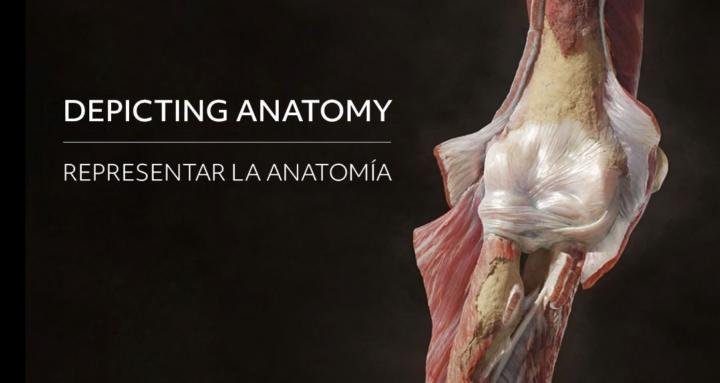
Languaje update (Versión en español abajo 👇) Welcome everyone. I created this space to bring together those who share a deep fascination for the human body and, above all, for its representation. Throughout my 15 years in medical publishing and as the founder of Anatomy One, I have proven that anatomy is never just a simple set of inert data. From the first dissection attempts in the Renaissance to CT scans and the Visible Human Project, every era has tried to solve the same problem: how to illuminate the dark architecture of flesh. This group was born to explore that intersection between science, art, and technology applied to the representation of the body. How does this bilingual community work? Due to the amazing influx of artists from all over the world, this community operates in both English and Spanish. Since Skool does not have an automatic translation feature, I will publish all major content, cycles, and resources in both languages within the same post. The categories on the left are unified by topic (not by language) because the language of 3D forms and anatomy is universal. Feel free to read, post, and comment in whichever language you are most comfortable with! What do we do here? This is not a basic software tutorial group (although there will be space for that). It is a place to debate, refine professional workflows, and understand the philosophy and aesthetics behind medical imaging. Here, we will cross current scientific rigor with the worldviews of the past. We will analyze the visual legacy of our predecessors, master the new technologies at our disposal, and explore how ancient and modern aesthetics continue to shape our vision of the human body. Whether you are a 3D modeler, scientific illustrator, fine artist, healthcare professional, or simply someone obsessed with the beauty and complexity of anatomy, you are in the right place. I would love to know who you are and what brings you here. Please introduce yourselves in the comments: tell me what you do and what aspect of anatomical representation you find most fascinating or difficult to solve.
2
0
Pinned
🔪 Dissecting the Group: How to use our categories / Diseccionando el Grupo: Cómo usar nuestras categorías
Here is a breakdown of our post categories, each reflecting different aspects of anatomical representation and basic community functions. 1. 🗣️ The Amphitheater (General)Category for: Introducing yourself to the community, sharing general thoughts, recommending books, documentaries, news, or starting discussions that don't fit into a specific category. The main meeting point. 2. ⚙️ The Digital Scalpel (Technique & 3D)Category for: Questions, tips, and workflows regarding digital anatomy. Everything related to sculpting, 3D scanning, retopology, DICOM, ZBrush, Substance Painter, real-time engines, 3D printing, or any other technology. 3. 🏛️ Theaters of Death (History & Classical Art)Category for: Discussing the history of Western dissection, classical art, Da Vinci, Vesalius, the Florentine anatomical wax models, 19th-century medical illustration, and how science and art have looked at the body in the past. 4. 🌏 Cartographies of the Soul (Non-Western Visions)Category for: Exploring how other cultures understand anatomy. Traditional Asian medicine, the Taoist body, Egyptian cardiocentrism, indigenous rituals, meridians, and symbolic representations of the human interior. 5. 💀 The Meat Machine (Biomechanics)Category for: Questions and studies on how the body physically works. Muscle tension, tendons, the role of fascia, bony pulleys, origins/insertions, and the analysis of écorchés to sculpt better. 6. 👽 Impossible Anatomies (Fiction & Concept Art)Category for: Discussing creatures, monsters, alien biomechanics, cyberpunk, literature, and how the rules of real anatomy have been applied to create credible and disturbing fictional designs. 7. 🌿 The Texture of the World (Biomimicry)Category for: Sharing images and textures from nature (bones, bark, mycelium, corals, fluids) that serve as inspiration or reference for sculpting organic tissues and realistic 3D materials. 8. ⚖️ The Beautiful and the Macabre (Ethics & Philosophy)Category for: Debating aesthetics and the moral limits of medical imaging. Censorship, grave robbers, the objectification of the patient, the Visible Human Project, or the philosophical impact of turning the physical body into pure data.
Anatomie de la tête (1748)
Anatomie de la tête (1748) is one of those works that forces you to think about what we are actually doing when we “look” at the human body. In 18th-century Paris, anatomy was establishing itself as a modern science, but learning it still relied on a practical problem: access to the body and to live demonstrations. Enter Jacques Fabien Gautier d’Agoty, an artist and printing technician who understood that a good image could be an instrument of knowledge. His gamble was massive: to publish a series of large, life-size plates—eight in total—focusing on the human head. We are not talking about "little drawings for a manual," but images made to impose themselves, ensuring the student (or the artist) would want to stay and observe. Gautier d’Agoty collaborated with surgeon Joseph-Guichard Duverney, who was linked to anatomical teaching in Paris and was responsible for preparing the specimens and dissections; Gautier d’Agoty then translated that physical reality into a printed image. The foundation, despite what it might seem, is not an idealized imagination, but a visual record of a real anatomical preparation. The work shows, for example, cranial dissections where the skull is opened to reveal internal structures, with special attention paid to the visual impact of what is exposed. The artistic quality of these pieces cannot be understood without the technique: color mezzotint. Unlike black-and-white prints that were hand-colored afterward, here color is part of the printing process itself. This allows for richer transitions, deeper shadows, and a sense of volume that could not be achieved before. This is where the figure of Jacob Christoph Le Blon appears, associated with the development of color printing, which Gautier d’Agoty utilized and pushed into the anatomical realm. That is why these plates function more as visual objects than mere "illustrations": they are designed to seduce the eye. It is fascinating that this atlas did not only compete with other atlases; it competed with the "experience of dissection" itself. In his dedication to Louis XV, Gautier d’Agoty defends the value of his "printed paintings" against the shock that direct dissection could cause. It is almost a pedagogical proposal: if the real body can be too violent or inaccessible, a well-crafted image can serve as a mediator.
2
0
Anatomie de la tête (1748)
The Anatomy of the Human Gravid Uterus Exhibited in Figures (1774) / The Anatomy of the Human Gravid Uterus Exhibited in Figures. 1774
The Anatomy of the Human Gravid Uterus Exhibited in Figures (whose original Latin title is Anatomia uteri humani gravidi tabulis illustrata) is one of the crowning achievements in the history of medical illustration and obstetrics. It was published in 1774 by the Scottish physician and anatomist William Hunter (brother of the equally famous surgeon John Hunter), and it is celebrated both for its monumental contribution to the understanding of pregnancy and for its striking, hyper-realistic aesthetic. The creation of this atlas took more than 24 years of systematic research due to the enormous difficulty of acquiring the corpses of women who had died during advanced stages of gestation. William Hunter began the project in 1750, when his anatomy school in London obtained, for the first time, the body of a woman who had died at nine months pregnant. Unlike previous books, where the uterus was depicted from the outside in or based on imagination, Hunter decided to open the corpses and rigorously document the womb from the inside out to show the different stages of fetal development (from 5 weeks to 9 months). The most outstanding element of the book is its 34 breathtaking copperplate engravings. They were printed in a spectacular folio format (known as an elephant folio), which allowed the illustrations to be life-size (a 1:1 scale) representations of the anatomical specimens. The vast majority of the original drawings were made by the Dutch artist Jan van Rymsdyk, whom Hunter forced to draw directly over the dissection table, forbidding him from illustrating from memory or embellishing the scene. As a result, Rymsdyk's style is hyper-realistic and raw: the images show not only the anatomy of the fetus, placenta, and uterus, but also the "ugly" and real details of the environment, such as the irregular cuts of the skin, the folds of fat, pins, and even the wooden blocks or ropes that supported the corpse. Precisely because of that lack of polish, the book possesses a rare and overwhelming artistic power. Each plate carries a sense of strangeness and of an unrepeatable opportunity. It forces you to look at the body as evidence, not as an icon, and that honesty has a dark component, because it reminds you of the material price of that knowledge.
2
0
The Anatomy of the Human Gravid Uterus Exhibited in Figures (1774) / The Anatomy of the Human Gravid Uterus Exhibited in Figures. 1774
The Body as Landscape / El cuerpo como paisaje.
Imagine for a moment that you belong to a culture where touching a lifeless body is the worst of profanations. There are no dissections or anatomical explorations. Opening a corpse to study its organs is unthinkable. However, disease exists, and you need to teach medicine; you must pass on how the human body works to the next generations. How do you solve that problem? In ancient China, the answer was to turn the body into the entire universe. Confucian thought made it clear: the body—every inch of skin, every hair, every nail—was a sacred inheritance from the ancestors. Mutilating it, even after death, was considered a grievous moral offense. Unable to look beneath the skin, physicians and sages had to imagine and represent the interior in a completely different way. That necessity gave rise to one of the most extraordinary works in the history of medicine: the Neijing Tu (內經圖), or "Diagram of the Internal Landscape." This 1886 engraving, which the Taoist tradition perfected over centuries, completely dispenses with muscles, bones, or nerve networks. Instead, it presents the interior of the human torso as a living, mountainous landscape. In this anatomical map, the spine rises like a steep mountain range, and the head becomes the mythical Mount Kunlun. The brain is not gray matter, but a celestial palace inhabited by gods. Further down, the stomach is represented by a peasant tirelessly plowing his field, the lungs are lush forests of white trees, and the urinary tracts flow like mighty rivers seeking the sea. Behind this apparent fantasy lies a flawless philosophical message: the human being is not a machine made of isolated parts, but a microcosm that reflects the vast geography of the natural world. What happens inside us is a mirror of nature. The flow of energy through the meridians obeys the same universal laws that govern the water of rivers or the wind between the mountains. It is easy to make the mistake of seeing this diagram as something primitive or anatomically "incorrect." But it is not. It was a sophisticated and coherent answer to the great question of what we are and how we function.
1
0
The Body as Landscape / El cuerpo como paisaje.
1-7 of 7
Depicting Anatomy (EN/ES)
skool.com/representar-la-anatomia
A multidisciplinary community dedicated to exploring anatomy, art, technology, and aesthetics. illuminating the dark architecture of the flesh.
Powered by