

28d •
You priced your business on its own. The buyer priced it on their portfolio.
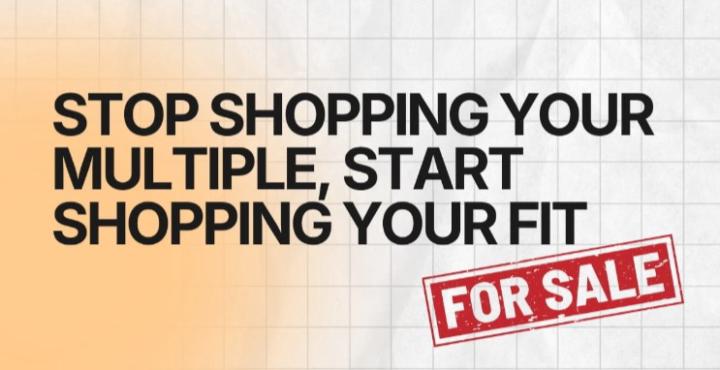
Stop shopping your multiple. Start shopping your fit. You priced your business on its own. The buyer priced it on their portfolio. The valuation deck the banker built for you uses your standalone EBITDA against a comp set of similar standalone businesses. That's the right document for the wrong buyer. The buyer most likely to actually clear the auction in 2026 is a PE-backed platform doing an add-on. They're solving a different problem on the back of an envelope. They're not pricing your $2M of EBITDA against other $2M businesses. They're pricing it against the marginal contribution your clinic, your route, your route-density, your geography makes to their platform at their eventual exit multiple. Their platform exits at 14x. Each add-on slots in at 7x or 8x. The four-to-six turns of difference between what they paid and what your EBITDA prices at inside the platform is the entire return. You are not the deal. You are the spread. The practical effect is that the strongest negotiating leverage you have isn't your growth story. It's knowing which add to which platform you actually are. The same $2M of EBITDA can clear at meaningfully different numbers depending on whether you fill a buyer's coverage gap or duplicate what they already have. A platform with five clinics on the East Coast and zero in Texas will pay one number for a Texas asset. It might pass on a sixth East Coast clinic, or buy it at a discount. The signal is in who already showed up at your door. The trade buyer who passed last year. The PE firm whose portfolio sits one state away. The strategic that bought your competitor at the same multiple. Those are the addresses on the spread. Map them before the banker maps comps for you. Most sellers shop their multiple. The leverage is in shopping their fit.
Apr 16 •
What buyers find in the first 90 days that you stopped looking for years ago.
There's a pattern in almost every acquisition I've been part of or observed up close. Within the first 90 days of closing, the new owner audits every vendor contract, renegotiates the ones that are above market, and replaces the ones that were kept out of convenience. They're not doing this because they're aggressive. They're doing it because they don't have the emotional history that made those relationships feel untouchable. The Markup On Comfort Is Real It shows up in SaaS subscriptions nobody re-evaluated, service contracts that auto-renewed for years, and retainers that made sense at one revenue level but haven't been revisited since. It shows up in that fulfillment partner you chose when you were shipping 200 units a month who's still handling logistics at 5,000. It shows up in the agency that was a lifeline in year two and has been on autopilot ever since. None of these are bad relationships, necessarily. They're just unexamined ones. And in a business, unexamined is expensive. A buyer walks in and finds 8 to 15 percent in recoverable margin just by asking a question the founder stopped asking a long time ago: "Is this still the best use of this dollar?" Its Not A Cost Cutting Exercise What makes this interesting is that it's not a cost-cutting exercise. It's a clarity exercise. The founder who pressure-tests their vendor stack and partnership terms isn't being cheap. They're demonstrating to themselves, and to any future buyer, that every dollar in the business is allocated intentionally. That's a signal of operational maturity, and it's one of the quieter things that moves a multiple. You don't need to wait for a buyer to ask that question. You can ask it yourself, this quarter. Not out of paranoia. Out of ownership.
Mar 9 •
The "Price vs. Certainty" Trap
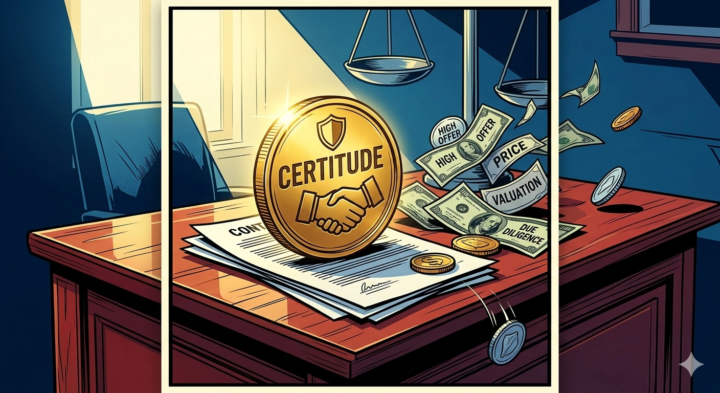
Most people lose deals because they focus on the wrong number. They think the highest offer always wins. It doesn't. The Problem : Most buyers spend weeks obsessing over the valuation. They try to squeeze every last penny out of the purchase price. The seller isn't just looking at the price. They are looking at the exit door. They want to know—with 100% conviction—that the door will actually open when they turn the handle. If they don't trust you can close, your "higher offer" is just a piece of paper. The Insight : Certainty of closing is the ultimate currency. A seller would rather take $800k they are certain will hit their bank account than a $1.2M offer from a guy who might flake, can't get financing, or asks too many "rookie" questions during due diligence. In a "no money down" or seller-financed deal, you aren't just buying a business. You are selling your competence. The 3-Step "Certainty" Framework : Step 1: Solve for the Seller’s "After." Ask them what they are doing the day after the sale. If they want to retire in Florida, your deal structure should minimize their post-sale involvement. Step 2: Use "Skin in the Game" terms. If you aren't putting cash down, you must put "consequences" down. Offer a higher interest rate or a personal guarantee on the seller note. This proves you believe the business won't fail under your watch. Step 3: Over-communicate the "How." Don't just say "I'll use a loan." Show them the pre-approval or the specific timeline for the SBA process. Professionalism creates the perception of certainty. The Application : I once saw a deal where a buyer offered $2M cash, but had a 90-day due diligence period with 15 "out" clauses. A second buyer offered $1.6M with $400k in seller financing over 3 years. He showed a 14-day due diligence plan and a proven track record of operating similar assets. The seller took the $1.6M. Why? Because he knew the $1.6M was real. The $2M felt like a gamble. Closing Thought : The best deal isn't the one with the highest price. It's the one that actually crosses the finish line.
2
0

Feb 25 •
Acquisition services and communities
Hi everyone — quick question for those who’ve been in the trenches. Has anyone here worked with a “done-for-you” buy-side advisory firm? Or joined a course + community that walks you through the acquisition process? I’d love to hear honest pros and cons. Was it worth the fees? Did it meaningfully improve your deal quality or negotiating leverage? Where I’m getting stuck is narrowing down what actually qualifies as a good deal before submitting an LOI — and then structuring terms with as little money down as possible. I’m focused on smaller acquisitions ($1M and under), so creative structure really matters. Would appreciate any real-world experiences or lessons learned.
Dec '25 •
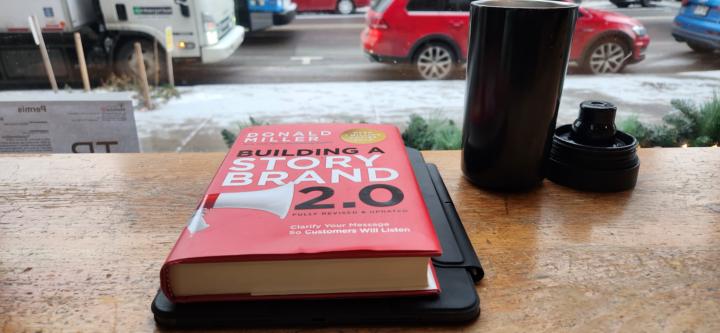
How StoryBrand 2.0 Helps You Buy a Business With $0 Down
Most people think you need money, investors, or credit to buy a business. You don’t. You need positioning. And this is exactly where StoryBrand 2.0 becomes a weapon. One of the biggest lessons from Donald Miller is this: The person who communicates the clearest value becomes the obvious choice. When you’re acquiring a business with $0 out of pocket, the seller isn’t choosing your bank account. They’re choosing the story you represent in their life. And here’s the shift that turns conversations into deals: --- 1. The Seller is the Hero — You’re Not. Most buyers show up like heroes: “I want to buy your business.” “I can fix this.” “I did X, Y, Z before.” StoryBrand flips this. The seller is the hero of the story, not you. Your role? The Guide. A guide with competence, calmness, and a clear plan. When the seller feels like you understand their fears, frustrations, and hopes, they naturally follow you. Money becomes secondary. --- 2. Unique Problem-Solving Is Your Currency In $0-down deals, you’re not buying the business… You’re solving the problems the seller can’t or doesn’t want to solve anymore. Examples: • Removing their stress • Protecting their employees • Maintaining their legacy • Handling transitions they’re tired of • Bringing systems they never had time to build • Helping them retire without chaos Your unique problem-solving abilities are the down payment. The clearer you communicate them, the more the seller sees you as the guide who can safely get them to the outcome they want. That’s StoryBrand 2.0 in its purest form. --- 3. Control the Narrative, Control the Deal StoryBrand teaches that people don’t buy the best product… They buy the message they understand the fastest. Sellers are the same. If they understand your positioning clearly, they trust you. If they trust you, they collaborate. If they collaborate, you can structure creative terms: ✓ Seller financing ✓ Earnouts ✓ Deferred payments ✓ Management transitions ✓ Cash-flow-first structures
1-10 of 10
powered by

skool.com/qcimmo-1961
A community for ambitious looking-to-become entrepreneurs who want to quit the 9-5, buy into real businesses, and scale with purpose.
Suggested communities
Powered by