
Write something

11h •
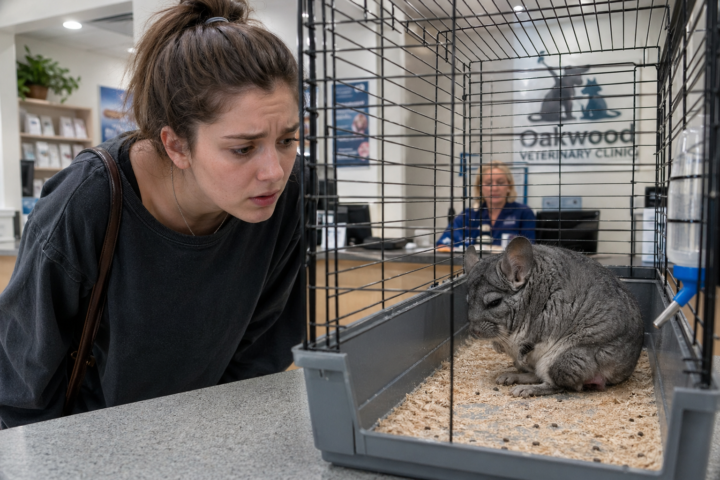
Case Study: Why Is Pepper Straining to Urinate?
Meet Pepper, a 2-year-old intact male chinchilla whose owner rushes in after noticing him hunched in the corner of his cage, straining repeatedly to urinate with almost nothing coming out. Pepper lives in a breeding colony with two females and matings have been frequent lately. You place him in dorsal recumbency and perform penile extrusion. Immediately you see it: a dense band of compacted fur wrapped circumferentially around the mid-shaft of the penis. The tissue is dark purple and swollen. Pepper vocalizes when you gently palpate the area. This is a hair ring with Grade 3 paraphimosis. The female’s shed fur was transferred onto Pepper’s extruding penis during mating, then drawn back into the preputial space during retraction. After repeated matings the fur compacted into a tight ring, blocking venous drainage and causing progressive swelling. You sedate him with isoflurane, apply generous water-soluble lubricant, and gently roll the ring off. Then granulated sugar topically to draw down the edema. Meloxicam for pain. Twenty minutes later Pepper urinates. Crisis averted. 💡 The takeaway: Every intact male chinchilla needs a penile check at every exam. Every single time. For the full course on this disorder see the classroom or follow the link below: https://www.skool.com/pre-vet-skool-9535/classroom/f256bc88?md=87416e36e2bc4e0f8b5b2f0bdae2cbfd
0
0
1d •
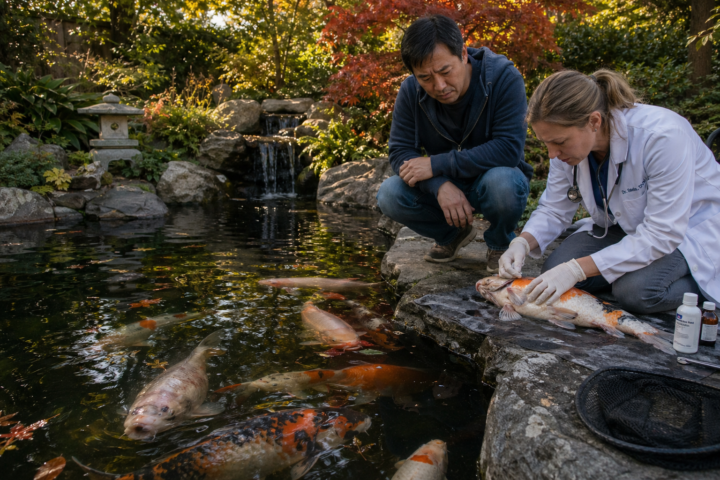
🐟 Case Study: Why Are Koi Dying Overnight?
Meet Sakura, a prized 6-year-old koi in a backyard pond in California. Her owner calls in a panic on a warm September morning. Five of his twelve koi are dead and three more are lying on the bottom gasping. The water temperature is 73°F. You arrive and notice something immediately. The surviving fish are coated in thick excessive mucus and their eyes look sunken rather than bright. You check the gills on a freshly dead fish and find white and gray mottled patches where healthy red tissue should be. The owner mentions he added five new koi from an online seller three weeks ago without quarantine. This is Koi Herpesvirus. At 73°F, the temperature is perfect for viral replication. The gills are being destroyed faster than the fish can breathe. There is no antiviral treatment. Your first move is not medication but a PCR swab of gill and kidney tissue, followed immediately by a call to state animal health authorities. KHV is an OIE-listed reportable disease. The quarantine failure three weeks ago made this inevitable. 💡 The takeaway: In fish medicine, a four week quarantine is not optional. It is the difference between one sick fish and a pond full of dead ones. For the full course on this disease, see the classroom or follow the link below: https://www.skool.com/pre-vet-skool-9535/classroom/289939ea?md=ad951c90ea3b4b87909dc49e6936a6d2
0
0
6d •
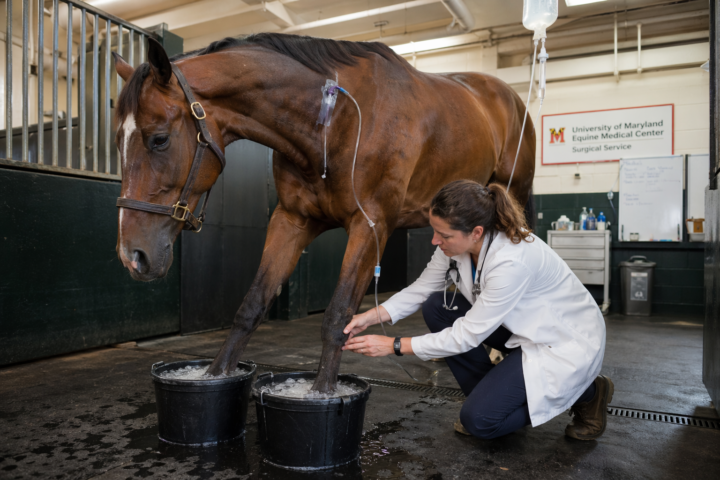
🐴 Case Study: Why Is River Suddenly Refusing to Move?
Meet River, a 7-year-old Warmblood gelding on a Maryland farm sitting along the Potomac River. It is August. His owner calls because River has been feverish and off his feed for two days. Now he has developed profuse watery diarrhea overnight and this morning she noticed he is standing with his front legs stretched forward, refusing to walk. You check his digital pulses. Both forefeet are bounding and hot. River has Potomac horse fever, caused by Neorickettsia risticii, a bacterium he ingested weeks ago inside a mayfly that landed in his water bucket on a warm summer night. Now he is fighting diarrhea, endotoxemia, and developing laminitis simultaneously. You immediately start oxytetracycline 6.6 mg/kg IV in saline, administered slowly over 45 minutes. You pack his feet in ice. You add low dose flunixin to fight the endotoxin before it destroys his laminae. By morning his fever is gone. But the feet remain the battle. 💡 The takeaway: In Potomac horse fever, winning the infection is only half the fight. Save the feet. To learn more about this disease and case, the course is in the classroom or just follow this link https://www.skool.com/pre-vet-skool-9535/classroom/eada0165?md=7e3a779ffde345f6b24741ee37e028e2
7d •
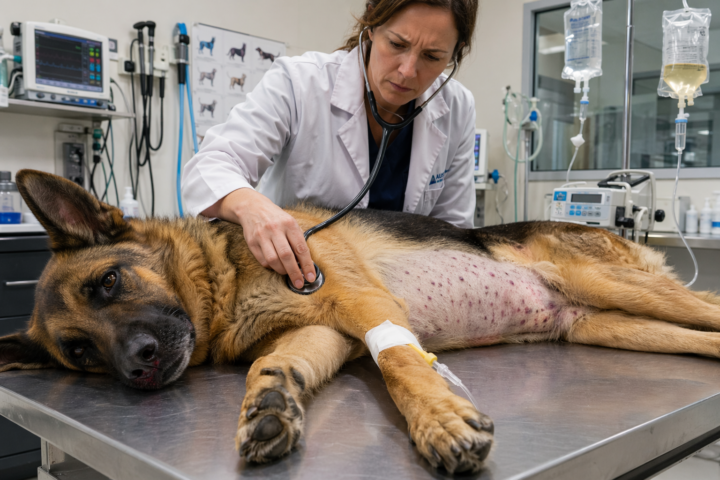
🐕 Case Study: Why Is Ranger Bleeding From His Nose?
Meet Ranger, a 4-year-old German Shepherd who comes in from rural Texas looking exhausted. His owner reports three days of fever, lost appetite, and now a nosebleed that will not stop. There are purple spots scattered across his belly. You notice his gums are pale and dotted with petechiae. Something is destroying his platelets. You run a CBC. Platelet count: 28,000 per microliter. Normal is above 200,000. You check the SNAP 4Dx test. Ehrlichia positive. This is canine monocytic ehrlichiosis, caused by Ehrlichia canis and transmitted by the brown dog tick, Rhipicephalus sanguineus. The bacteria invaded Ranger’s monocytes, triggering immune-mediated platelet destruction until his blood could barely clot. You start doxycycline immediately at 10 mg/kg twice daily for 28 days. Within 48 hours Ranger’s fever breaks and he is eager for food. German Shepherds like Ranger are especially vulnerable to the devastating chronic form of this disease. You caught this one early. 💡 The takeaway: Thrombocytopenia plus a dog from the South equals Ehrlichia until proven otherwise. For more information on this disease and other tick-borne diseases, head over to the classroom! https://www.skool.com/pre-vet-skool-9535/classroom/1f1964f8?md=9f4cee60096f4bd1abb8f3b0862d484a
3d •
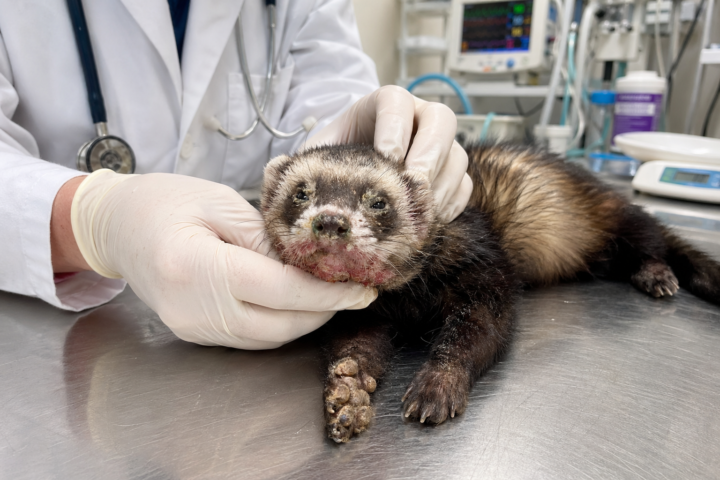
🐾 Case Study: Why Is Peanut’s Face Breaking Out?
Meet Peanut, a 10-month-old unvaccinated ferret whose owner noticed him scratching his face constantly two days ago. Today she brings him in because his chin is covered in a crusty red rash and his nose is crusted with thick yellowish discharge. You examine his feet. The footpads are thickening and roughening on both front paws. Your stomach drops. This combination, a facial rash plus footpad hyperkeratosis plus mucopurulent discharge in an unvaccinated ferret, is essentially pathognomonic for canine distemper virus. You ask about outdoor access. The owner mentions Peanut played in the backyard nine days ago. Raccoons visit that yard regularly. Nine days. Classic incubation period. You perform a conjunctival smear immediately, rolling the swab gently across the inner eyelid onto a glass slide. Under oil immersion you find what you feared: eosinophilic inclusion bodies inside the epithelial cells. You sit down with the owner. There is no cure. Nearly 100% of ferrets with CDV die. You discuss supportive care and prepare her for what comes next if neurological signs appear. 💡 The takeaway: In ferrets, vaccination is not optional. It is the difference between life and death. For a full course on this disease in ferrets see the classroom or follow this link: https://www.skool.com/pre-vet-skool-9535/classroom/f256bc88?md=233545f5a7b1454bb6f1056600ba512c
0
0
1-14 of 14
powered by

Suggested communities
Powered by