
Write something

9d •
WHY LEARNING TO INTERPRET A CoA (CERTIFICATE OF ANALYSIS) IS SO IMPORTANT...
https://youtu.be/PA4u1tclQ0E
12d •
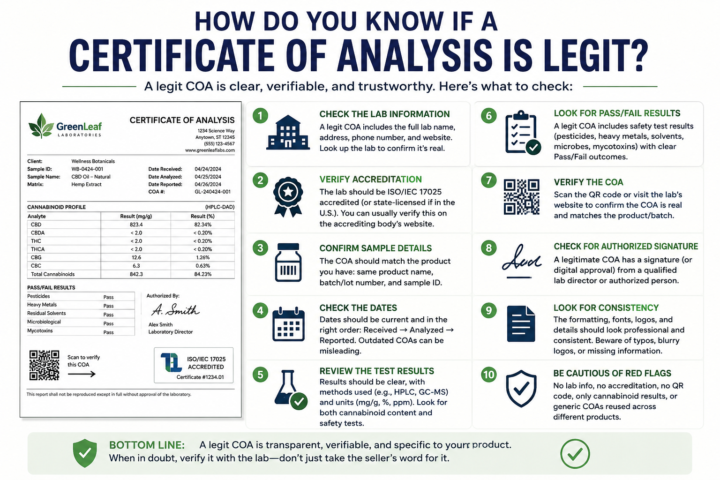
EVALUATING CoA’s FOR LEGITIMACY
When evaluating a Certificate of Analysis (COA), don't just look at the purity percentage. A COA is only as trustworthy as the laboratory and the information it provides. ✅ 1. Verify the Laboratory Exists A legitimate COA should include: - Full laboratory name - Physical address - Phone number - Website - Email contact Take 30 seconds and verify the lab online. Red flag 🚩: - No website - Generic Gmail address - No physical address - Lab cannot be found online ✅ 2. Confirm the Lab Performs Independent Testing The vendor and testing laboratory should be separate entities. Red flag 🚩: - Vendor "testing themselves" - No indication of third-party testing Independent testing reduces conflicts of interest. ✅ 3. Check for Accreditation Look for: - ISO/IEC 17025 accreditation - DEA registration (when applicable) - State licensing (when applicable) You can often verify ISO accreditation directly through the accrediting body's website. Red flag 🚩: - Accreditation logos present but no certificate number - Claims of accreditation that cannot be verified ✅ 4. Match the Lot Number The lot number on the product should exactly match the lot number on the COA. Check: - Product name - Lot number - Batch number - Sample ID Red flag 🚩: - Same COA used for multiple lots - Lot numbers don't match ✅ 5. Review the Test Date A legitimate COA should show: - Date received - Date analyzed - Date reported Red flag 🚩: - Very old testing - Future dates - Missing dates ✅ 6. Verify Testing Methodology For peptides, you should typically see methods such as: - HPLC (High Performance Liquid Chromatography) - UPLC - LC-MS/MS - Mass Spectrometry A purity result without methodology means very little. Red flag 🚩: - No test method listed - No chromatogram available when requested ✅ 7. Look at the Actual Results For peptides, look for: - Purity % - Net peptide content (mg) - Identity confirmation - Moisture content (if reported)
Jun 1 •
Reconstitution and EZ Pen/Peptipen How To.
Here’s a 32 minute instructional video I made to show steps for reconstitution and how easy it is to set up the Jade Nexus EZ Pen. There is a step by step written guide in the Skool group also. If anyone has any questions, please reach out and I’ll be happy to help. (Please ignore the million times I say “um” and “so” in the video- I’m trying to do better and my video editing software was not being cooperative- so, I just gave up!😆) EZ Pen: JADE NEXUS http://jadenexus.net/?ref=KRISTINA Discount Code: KRISTINA Peptipen: peptipen.com 10% OFF- KRISTINA10
30d •
7x Peptide Testing vs. Traditional Peptide Testing: What’s the Difference?
https://www.tiktok.com/@walter.white.pep/video/7647247828649119006?is_from_webapp=1&sender_device=pc&web_id=7647595593958802974 One of the most common questions I get is: "What does 7x testing actually mean, and is it better than traditional testing?" The answer isn't quite as simple as "more testing = better," but understanding the differences can help you make more informed decisions when choosing a peptide supplier. Traditional Peptide Testing Most reputable vendors provide a Certificate of Analysis (CoA) showing: ✅ Identity testing (confirming the peptide is what it claims to be) ✅ Purity testing (determining how much of the vial contains the intended peptide versus impurities) ✅ Sometimes quantity/content verification For many research purposes, this level of testing is considered adequate when performed by a legitimate third-party laboratory. What is 7x Testing? "7x Testing" generally refers to a more comprehensive quality control process where multiple analytical tests are performed on a peptide batch. Depending on the vendor, these tests may include: • Identity Confirmation • Purity Analysis • Peptide Content Verification • Mass Spectrometry • Heavy Metal Testing • Residual Solvent Testing • Endotoxin Testing • Sterility or Microbial Testing The exact testing panel varies by company, so it's important to ask what "7x testing" actually includes rather than assuming all vendors test for the same things. Benefits of 7x Testing ✔ Greater transparency ✔ Additional quality assurance ✔ More data available to researchers ✔ Potentially better detection of contaminants or manufacturing issues ✔ Increased confidence in batch consistency For researchers who value extensive documentation and quality control, the extra testing can provide peace of mind. Potential Drawbacks of 7x Testing ⚠ Higher product costs due to additional laboratory expenses
1-7 of 7

skool.com/peptidejunkies24
Advance your peptide research with precise, science-driven guidance, expert community talk, and access to vetted suppliers, promotions, and giveaways.
Leaderboard (30-day)
1

🔥
+10
2

+10
3

+8
4

+6
5

+5
Powered by