
Write something

Sep 25 •
Why 9 Times Out of 10 Mobility Will Always Trump Stability
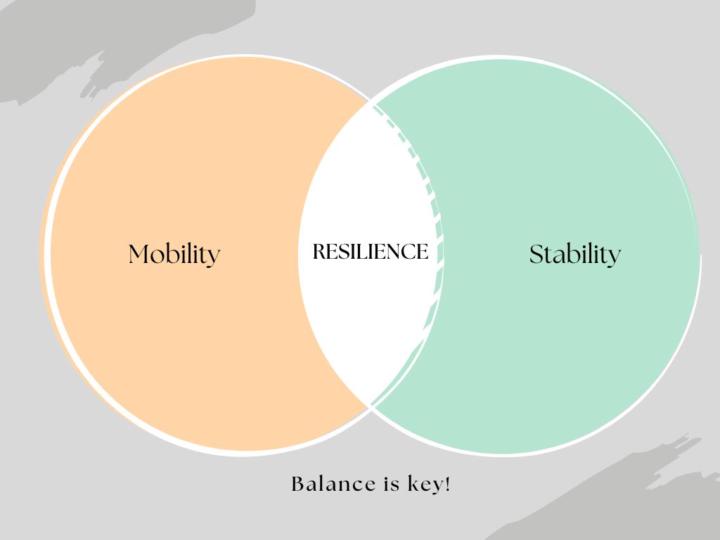
We love to talk about “stability training.” Core work, planks, balance drills — all important tools. But here’s the truth: if a joint doesn’t have adequate mobility, there’s no point in locking it down with stability drills. Think of it like this: trying to stabilize a joint without mobility is like putting concrete around a rusty hinge. You’re making it rigid, not functional. True movement requires both range of motion and control. But mobility almost always comes first. The Mobility–Stability Puzzle: Movement is seen as a hierarchy: - Mobility is the foundation — the ability of a joint to move freely through its intended range. - Stability is built on top — the control and strength to manage that range. If mobility is missing, stability can’t express itself properly. You end up with rigidity, compensation, or even pain. Picture recommendation: A simple infographic showing a pyramid with “Mobility” at the base and “Stability” on the next level above it. Caption: “Mobility creates the foundation for stability.” The Splits Analogy: Imagine someone who can drop into a full splits. Impressive, right? Now watch them get out of it. More often than not (ESPECIALLY they've never heard of Moves Method ;) ), they tuck and roll out of the position. That’s because they’ve got mobility (the ability to drop into the position) but lack stability (the ability to control their way back up using the muscles involved). If mobility and stability were in balance, that same person could press themselves back up with control — no barrel roll required. Why Mobility Comes First - Without mobility, stability = rigidity. You’re just reinforcing a limited pattern. - With mobility, stability = control. You unlock functional, adaptable movement. - Together, mobility + stability = resilience. That’s when performance and injury prevention truly thrive. Here’s the big takeaway: train mobility first, then layer stability. Otherwise, you’re just teaching your body how to be stiff, not strong.
Poll
1 member has voted
Jul 5 •
Start Here: The Mission, the Community, and Your Next Steps
Hey everyone! 👋 Welcome to this brand-new community — I’m beyond stoked to have you here. If you’re here, chances are you’re tired of random advice, temporary fixes, and endless guesswork when it comes to pain, injuries, and moving better. 💡 My mission here:To help you truly understand your body, fix nagging pain for good, and build real resilience so you can move confidently — no matter your sport, your age, or your goals. In this community, you’ll get: ✅ Step-by-step frameworks (not just random tips) ✅ Live breakdowns of your injuries and movement issues ✅ Mobility, stability, and function strategies (the same system I use with clients) ✅ Support and feedback from me and other like-minded members 🚀 What to do next 1️⃣ Introduce yourself below!Tell us: What’s your biggest struggle right now (injury, pain point, or movement goal)? 2️⃣ Check the pinned posts — This is where you’ll find starter guides and upcoming live session schedules (working in building this up) 3️⃣ Ask questions!This space is for you. No question is too small or too “basic.” Thanks for being one of the first to build this movement with me. Let’s get you moving pain-free and better than ever. See you inside! 💪🔥
2
0
1-2 of 2
powered by
skool.com/movement-based-therapy-2420
Move smarter, feel stronger, live fully. Join a community built for movement, injury prevention, and peak performance—at any age or stage.
Suggested communities
Powered by