
Write something

Nov '25 •
Cellular Reprogramming
OpenAI, in collaboration with Retro Bio, has developed a custom AI model (specifically "GPT-4b micro") that can design engineered variants of the Yamanaka factors, which are proteins used in cellular reprogramming. The Role of OpenAI and Yamanaka Factors Yamanaka Factors: These are a set of four specific proteins (OCT4, SOX2, KLF4, and c-MYC) discovered by Shinya Yamanaka in 2006. They are capable of turning mature, specialized body cells (like skin cells) back into induced pluripotent stem cells (iPSCs), which can then develop into almost any cell type. OpenAI's Contribution: Researchers at OpenAI and Retro Bio trained an AI model on protein sequences, biological text, and 3D protein structures. This model was used to design novel variants of the original Yamanaka factors. Result: The AI-designed factors achieved a 50x increase in reprogramming efficiency in laboratory settings compared to the standard proteins. This breakthrough could significantly advance regenerative medicine and drug discovery by making the process of creating stem cells faster and more efficient.
Mar 26 •
The Frequent Flyer Heart Problem
https://open.substack.com/pub/biogenesishealing/p/the-frequent-flyer-heart-problem?utm_source=share&utm_medium=android&r=z7cdu
1
0
Feb 21 •
Vagus Nerve Stimulation
https://www.nature.com/articles/s41467-026-69579-7 Ultrasound on the Vagus Nerve especially - and in other regions where Neurons encode Memories - which is categorically also happening in your *Vagus Nerve* - is one of the best neuro-interventions you can make that doesn't involve drugs or brain implants. This is even one of those things you can even if you already have a half-decent memory ! 5-Days was all it took to see a 25% improvement. Precision neuromodulation has reached a critical milestone. Recent research into Theta-burst Transcranial Ultrasound Stimulation (TB-TUS) reveals a profound capacity to recalibrate the human semantic network. Targeting the left inferior temporal gyrus with a 1 MHz carrier frequency at 6 Hz theta rhythms, the protocol mimics endogenous oscillations to facilitate long-term potentiation. The biochemical results are stark: a 12% increase in glutamate and an 8% reduction in GABA. This neurochemical shift, paired with a 0.8% increase in gray matter volume, indicates genuine structural plasticity. Participants demonstrated an 18% improvement in semantic retrieval accuracy, compounding to 25% over a five-day protocol. This represents a literal tuning of neural architecture. It provides a high-precision, non-invasive roadmap for reversing cognitive attrition in aging and neurodegenerative disorders. nature.com/articles/s4146…
2
0
Nov '25 •
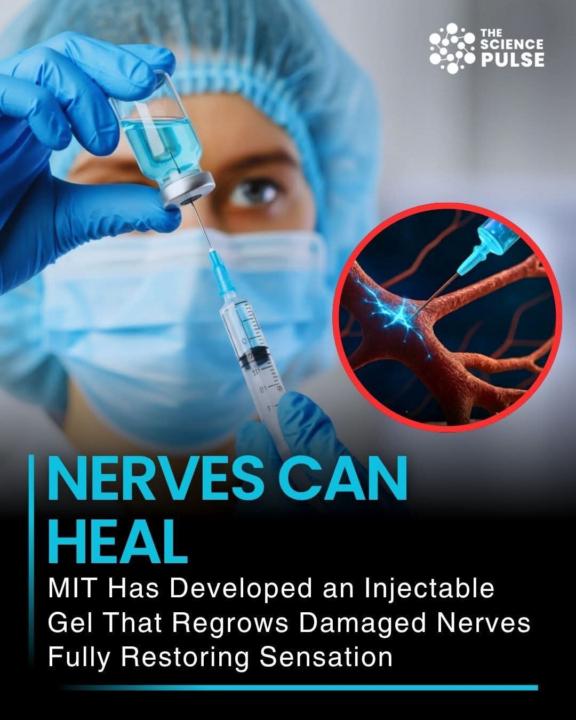
Hydrogels - What are they?
MIT’s “injectable biomaterial hydrogel” designed to guide peripheral nerve regeneration. MIT has several research groups working on nerve-healing gels, but the one this post speaks to is a peptide-based, self-assembling hydrogel that forms a scaffolding around damaged nerves. It’s still experimental, not FDA-approved, and not yet available in clinical use. What the gel actually is A biomimetic hydrogel—basically a soft, jelly-like material made of engineered peptides (short chains of amino acids). When injected, these peptides self-assemble into a nanofiber matrix that: mimics the structure of natural nerve tissue provides a protected “tunnel” for axons to regrow carries growth factors that stimulate nerve regeneration reduces inflammation and scarring (both of which block nerve repair) Why it matters Peripheral nerves grow extremely slowly and often incompletely. Traditional surgical grafts don’t always restore function. This gel removes some of the biggest barriers to regeneration by giving nerves an ideal environment to reconnect. What the research actually shows Animal studies (mostly rodents) demonstrated: faster axon regrowth stronger functional recovery restoration of sensation and movement in nerves that were previously nonfunctional significantly less scar tissue That’s impressive, but it’s still preclinical. No human trials yet. Potential future uses If it translates to humans, the applications are huge: traumatic nerve injuries (cuts, crush injuries) diabetic neuropathy post-surgical nerve damage spinal or plexus injuries (more complex, but possible) targeted nerve repair without major surgery Bottom line This is real science, extremely promising, but early-stage. It’s not something a doctor can inject today. The viral posts make it sound like it’s on the market—it's not. 🔬 Self-Assembling Hydrogels — What They Really Are These are engineered biomaterials made from peptides or polymers that automatically arrange themselves into a 3D structure after being injected into the body.
1-4 of 4
powered by

skool.com/luminary-lab-8078
Exploring regenerative intelligence through water, light, frequency, and cellular systems for human and planetary healing.
Suggested communities
Powered by