
Write something

Mar 16 •
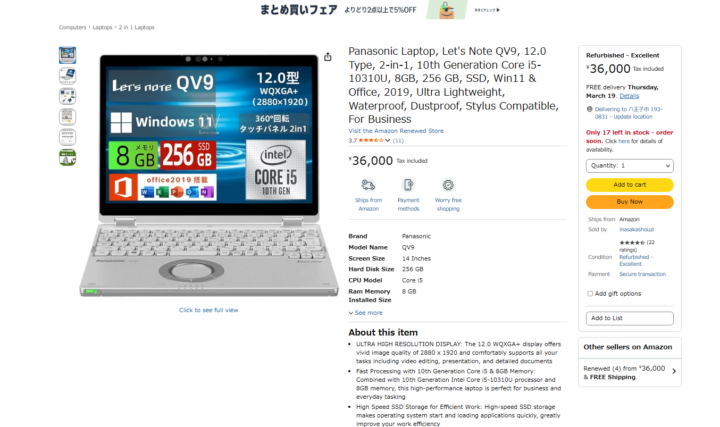
⚡ RADAR SIGNAL — Panasonic Let’s Note QV (Japan Engineering Laptop)
Japan’s Hidden Engineering Laptop Global Situation Across most of the world, people buy consumer laptops made mostly from plastic, typically priced around $400–$500 USD. These machines are designed for the mass market and often last only a few years of heavy use before they are replaced. 💻 The Radar Anomaly While scanning the Japanese market, something unusual appeared. Panasonic manufactures a line of business laptops in Japan called “Let’s Note.” These machines are built with a completely different philosophy. They are designed for professional mobility, and they stand out for three key reasons: - Magnesium alloy chassis - Ultra-light weight (under 1 kg) - 360-degree rotating display The screen folds completely backward, turning the laptop into a tablet-style device. This is particularly useful for reviewing full documents like PDFs, contracts, and technical reports, allowing them to be viewed almost like a sheet of paper rather than a narrow scrolling screen. Unlike many modern ultrabooks that focus primarily on thin design, Let’s Note machines are built for daily professional transport and long-term reliability. ⚙ Japanese Engineering The Let’s Note series has been used for years in Japanese corporate environments. Typical characteristics include: - 360° convertible display - optimized for document reading and PDF review - magnesium construction - weight under 1 kg - built for constant mobility This type of construction places the machine closer to high-end professional laptops than to typical consumer devices. 🌍 The Market Difference In Western markets, laptops built with carbon fiber or magnesium alloy chassis generally appear in professional ultrabook categories. Machines with comparable materials and construction usually sell for: $1,200 USD or more 📡 Radar Price In Japan, a renewed Panasonic Let’s Note QV appeared for: ¥35,000 Approximately $219 USD. (FX reference: ¥159.56 / USD — March 2026) 🔎 Why This Happens
0
0
Mar 8 •
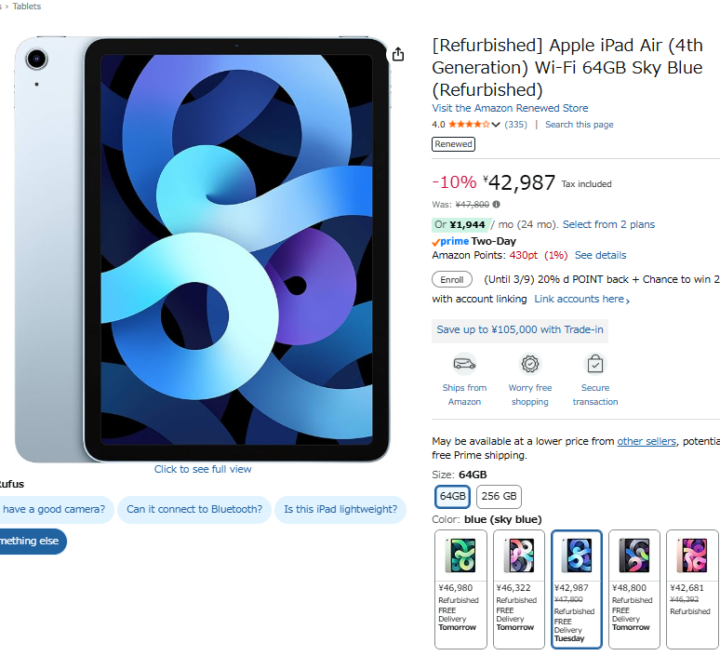
⚡ RADAR SIGNAL — iPad Air (4th Gen) JDM Edition
At first glance, an iPad Air looks identical everywhere. It isn’t. The iPad is a global product designed in California, but because it connects to networks and includes cameras, it must comply with the legal and technical regulations of the country where it is sold. That means the version distributed for Japan carries specific regulatory and engineering characteristics tied to the Japanese domestic market. That is the unit detected by the Radar. Global Price$349 – $379 USD (Amazon US / eBay average) Radar Price¥42,987 ≈ $287 USD Original listing detected by the Radar: https://amzn.to/4rnmqLo 🔎 JDM FORCE CHECK J/A SKU — Proof of Origin The model identifier ending in J/A confirms the device was originally allocated to Apple Japan’s domestic market. This means the hardware passed through the distribution ecosystem serving Apple Japan, including the supply chain used by Apple Stores such as Ginza and Omotesando in Tokyo. The camera sound is only the symptom. The SKU is the real proof of origin. Camera Shutter — The JDM Signature Apple devices sold in Japan maintain an audible camera shutter even in silent mode. This exists due to privacy regulations designed to prevent covert photography. In practice, this detail has a useful implication. For parents, it means the device cannot silently take photos, adding a layer of transparency when used by younger users. PSE Certification — Higher Electrical Safety Standard Electronics sold in Japan must comply with PSE certification, regulated by the Japanese Ministry of Economy, Trade and Industry (METI). Japan enforces one of the strictest electrical safety standards in the world. The Radar looks for devices built to meet the highest regulatory standard, not the minimum legal requirement. Cellular Network Engineering The cellular variant of the iPad Air (model A2325) includes support for Japanese carrier bands such as Band 11 and Band 21. These operate in some of the most saturated mobile environments on the planet, including central Tokyo.
1-2 of 2
powered by
skool.com/japan-market-radar-1793
Price signals from Japan: JDM electronics, gadgets and collectibles often cheaper than global markets. Radar tracking real opportunities.
Suggested communities
Powered by