
Write something
Pinned

Mar 8 •
🛡️ RADAR PROOF — This Is Not a Deals Forum
RADAR PROOF — How Signals Are Verified Anyone can post a "deal" on the internet. What makes a radar signal different is verification. Before a signal appears on the radar, it is checked against the original market listing inside Japan. This ensures the signal comes from a real market movement and not from recycled deal posts. These are not rumors, blog headlines, or recycled deal posts. They are live signals detected directly from the source. 📡 What the Radar Actually Detects When inventory rotations, regional pricing, and JDM distribution collide, price anomalies appear. That is what the radar detects. Typical signals include: ⚡ Tech inventory rotations ⚡ Renewed corporate equipment releases ⚡ JDM product price divergence ⚡ domestic clearance cycles These events often happen before the global market notices. 🔎 Why the Analysis Lives on My Websites How the Radar Works Signals appear here when something unusual happens inside the Japanese domestic market. This can include: • sudden inventory rotations • domestic price divergences • corporate upgrade cycles • clearance events inside Japan These movements often occur before they become visible in global marketplaces. The radar highlights the anomaly so the community can see where the market is moving in real time. This allows readers to verify the opportunity directly. 🌏 The Language Barrier Advantage Many of these opportunities exist because they live inside the Japanese domestic market infrastructure. They often remain invisible to the English-speaking internet. The radar navigates: • Japanese marketplaces • domestic inventory rotations • JDM product listings to reach the source that global search algorithms rarely surface. 🛡️ Verification Protocol Every signal referenced in the analysis passes through a simple filter: Verified Seller Preference for Amazon Japan direct inventory or established Japanese corporate sellers. JDM Specification Check Confirmation that the product corresponds to Japanese Domestic Market configuration.
0
0

Pinned
Mar 8 •
COMMUNITY RULES — Keep the Radar Clean
Japan Market Radar is a free community, but it is curated. The goal is simple: signal over noise. This space focuses on real observations from the Japanese domestic market, not random discussions. What belongs here ✅ Japan market price sign ✅ Renewed / refurbished market insights ✅ Useful context about Japanese distribution or pricing ✅ Questions directly related to the signals What does NOT belong here ❌ Random off-topic discussions ❌ Meme posting ❌ Low-effort screenshots with no explanation ❌ Affiliate spam ❌ Political debates ❌ Endless arguments with no market value Posting standard If you share a signal, include at least: • the product or category • why the signal matters • Japan price vs outside price (if possible) • useful context Comment standard Comments should help clarify: • price differences • JDM variations • durability or resale value • sourcing logic Low-value noise may be removed. Important This community is free, but it is not chaotic. The purpose is to keep the radar useful for people who want to understand how the Japanese market really behaves.
0
0
Pinned
Mar 8 •
WELCOME TO JAPAN MARKET RADAR
Operated from inside Japan with 36 years of real market observation. This community does not chase random deals. It detects price signals inside the Japanese domestic market. When corporate inventory rotations, JDM distribution, and clearance cycles collide, unusual price differences appear. That is what this radar tracks. What the Radar detects ⚡ TECH SIGNALS Electronics, cameras, audio and renewed devices rotating through Japan’s supply chains. ⚡ WATCH SIGNALS Seiko, Casio and other Japanese watches where domestic pricing diverges from global markets. ⚡ SKINCARE SIGNALS Japanese cosmetic brands often priced very differently inside Japan compared with overseas markets. ⚡ MATCHA SIGNALS Real Japanese matcha vs exported or re-packaged products sold abroad. ⚡ JDM SIGNALS Products designed specifically for the Japanese domestic market. ⚡ RENEWED SIGNALSC orporate-grade refurbished devices from Japan’s renewal ecosystem. How the Radar works Posts here show the signal. The full breakdown usually lives on our main hubs: 👉 DiscoverJapanSites.com 👉 DiscoverRenewed.com There you will find the full context, analysis and sourcing information. Why Japan behaves differently Japan’s domestic market follows its own rules: • corporate upgrade cycles • distributor inventory rotations • JDM-only product lines • aggressive clearance events When these forces align, price gaps appear. The rule of the Radar If you see a ⚡ RADAR SIGNAL it means something unusual is happening inside the Japanese market. Many of these signals are temporary.
0
0
Mar 16 •
⚡ RADAR SIGNAL — Fujifilm X100VI (Global Scarcity vs Japan Market)
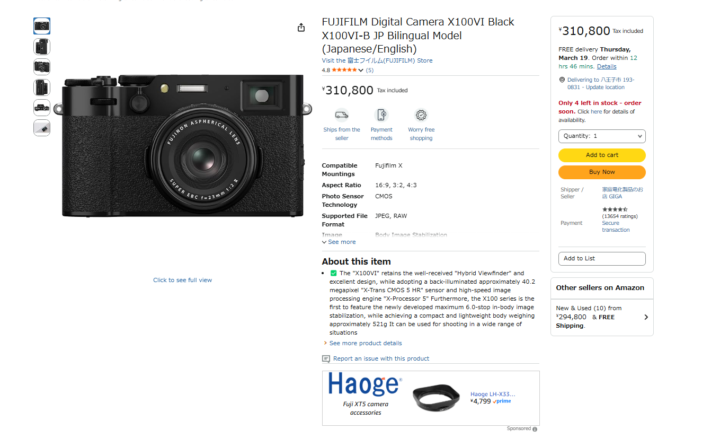
The Fujifilm X100VI has become one of the most difficult cameras to obtain in the global photography market. Across the United States and Europe, the camera is frequently sold out, forcing buyers into secondary markets just to secure one. This is where the phenomenon begins. 🌍 The Global Panic Market Because of limited supply and massive demand, the X100VI has developed what can only be described as a panic resale market. On resale platforms and secondary retailers, new units frequently appear between: $2,500 — $2,800 USD These prices are not driven by production cost. They are driven by scarcity and hype, amplified by social media and the sudden global popularity of the X100 series among photographers and creators. Buyers are chasing availability, not rational pricing. 🇯🇵 What the Radar Detected in Japan While scanning the Japanese domestic market, the Radar detected new units listed around: ¥310,800 Using the current exchange environment near: ¥159.565 / USD This places the camera around: ≈ $1,950 USD 📊 The Real Market Difference Global panic market$2,500 — $2,800 Radar price in Japan (new unit) ≈ $1,950 Potential difference: $550 — $850 🇯🇵 The JDM Layer Japanese-market cameras belong to the JDM (Japanese Domestic Market) distribution channel. These units are part of the same Made in Japan production line, assembled in Fujifilm’s facilities in Japan. Among photographers and collectors, Made in Japan cameras often carry a stronger resale perception in the international used market. Historically, cameras associated with Japanese assembly lines can command 10–15% higher resale value depending on model and condition. 🌐 Language Limitation (and the Reality) Japanese-market units typically ship with Japanese and English menus. For most international users, English menus are already sufficient. Fujifilm Japan offers an official language expansion service for approximately ¥5,500 (≈ $35 USD at ¥159.565/USD) when the camera is serviced within Japan.
0
0
Mar 16 •
⚡ RADAR SIGNAL — Panasonic Let’s Note QV (Japan Engineering Laptop)
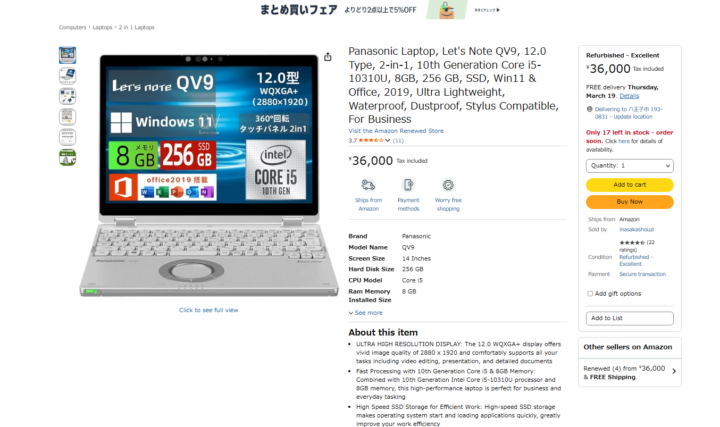
Japan’s Hidden Engineering Laptop Global Situation Across most of the world, people buy consumer laptops made mostly from plastic, typically priced around $400–$500 USD. These machines are designed for the mass market and often last only a few years of heavy use before they are replaced. 💻 The Radar Anomaly While scanning the Japanese market, something unusual appeared. Panasonic manufactures a line of business laptops in Japan called “Let’s Note.” These machines are built with a completely different philosophy. They are designed for professional mobility, and they stand out for three key reasons: - Magnesium alloy chassis - Ultra-light weight (under 1 kg) - 360-degree rotating display The screen folds completely backward, turning the laptop into a tablet-style device. This is particularly useful for reviewing full documents like PDFs, contracts, and technical reports, allowing them to be viewed almost like a sheet of paper rather than a narrow scrolling screen. Unlike many modern ultrabooks that focus primarily on thin design, Let’s Note machines are built for daily professional transport and long-term reliability. ⚙ Japanese Engineering The Let’s Note series has been used for years in Japanese corporate environments. Typical characteristics include: - 360° convertible display - optimized for document reading and PDF review - magnesium construction - weight under 1 kg - built for constant mobility This type of construction places the machine closer to high-end professional laptops than to typical consumer devices. 🌍 The Market Difference In Western markets, laptops built with carbon fiber or magnesium alloy chassis generally appear in professional ultrabook categories. Machines with comparable materials and construction usually sell for: $1,200 USD or more 📡 Radar Price In Japan, a renewed Panasonic Let’s Note QV appeared for: ¥35,000 Approximately $219 USD. (FX reference: ¥159.56 / USD — March 2026) 🔎 Why This Happens
0
0
1-9 of 9
powered by
skool.com/japan-market-radar-1793
Price signals from Japan: JDM electronics, gadgets and collectibles often cheaper than global markets. Radar tracking real opportunities.
Suggested communities
Powered by