Activity
Mon
Wed
Fri
Sun
Aug
Sep
Oct
Nov
Dec
Jan
Feb
Mar
Apr
May
Jun
Jul
What is this?
Less
More
Owned by Ricardo
Price signals from Japan: JDM electronics, gadgets and collectibles often cheaper than global markets. Radar tracking real opportunities.
Japan Market Intelligence. A premium community analyzing signals and structural opportunities inside the Japanese domestic market.
Memberships
Skoolers
165k members • Free
10 contributions to Japan Market Radar

5h •
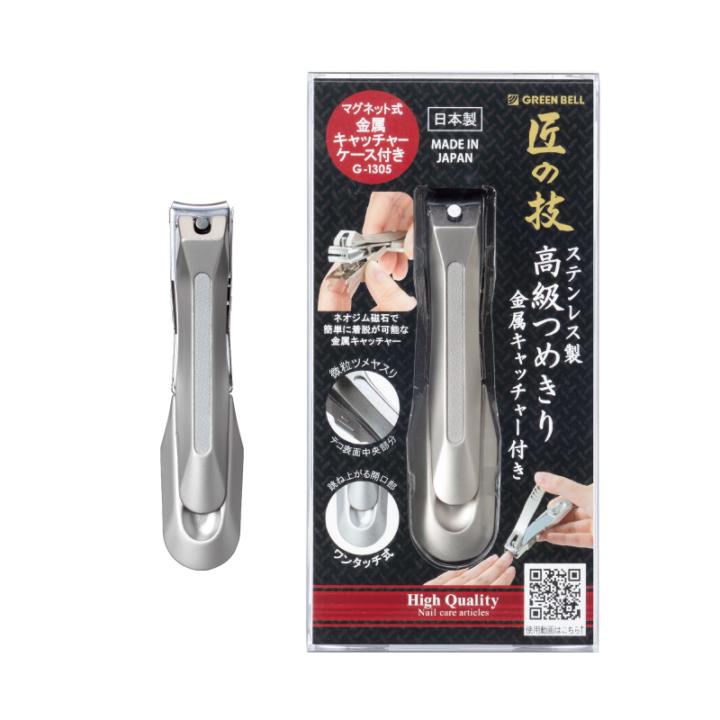
⚡ RADAR SIGNAL — Green Bell: From JDM Utility to Global Premium
⚡ RADAR SIGNAL — Green Bell: When a Nail Clipper Becomes a Precision Tool THE SURPRISE Most people treat a nail clipper as a disposable object. They buy one for a few dollars, leave it in a bathroom drawer and replace it when the blades begin to feel dull, require more pressure or leave rough edges behind. Green Bell approaches the same object differently. In Japan, the nail clipper is not treated as one generic product. It exists as an entire category of cutting tools, with different blade shapes, sizes, levers, nail catchers, files and designs developed for specific hands, nails and uses. The anomaly is not simply that Japan makes a sharper nail clipper. The anomaly is that the Japanese domestic market preserves a deep category of precision tools that the international channel reduces to only a few premium references. IS THIS ONLY FOR PROFESSIONALS? A reasonable buyer may ask: Is this a professional tool for manicurists, or does it make sense for an ordinary person? The answer lies somewhere between both ideas. A Green Bell nail clipper is not necessarily a salon instrument. It is a domestic tool built with some of the same priorities that professionals value: — Controlled pressure — Stable cutting geometry — Defined blade material — A clean finishing stage — Different tools for different types of nails The comparison is similar to a Japanese kitchen knife. A professional chef may exploit its full performance, but the knife is not useless in the hands of someone who cooks at home. In fact, the ordinary user may value control even more because most people cut their own nails without a manicurist correcting the angle, pressure or final shape. However, precision must not be confused with a medical guarantee. A sharp nail clipper does not automatically prevent ingrown toenails. Medical guidance focuses mainly on technique: toenails should be cut straight across, not rounded deeply at the corners and not cut too short. A better tool cannot replace that technique.
0
0
Mar 16 •
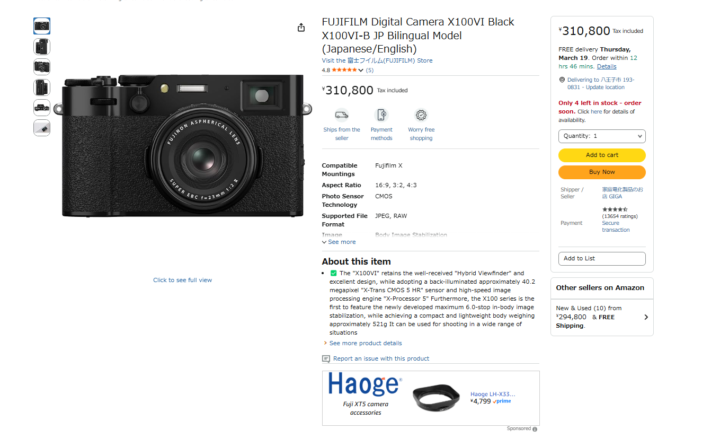
⚡ RADAR SIGNAL — Fujifilm X100VI (Global Scarcity vs Japan Market)
The Fujifilm X100VI has become one of the most difficult cameras to obtain in the global photography market. Across the United States and Europe, the camera is frequently sold out, forcing buyers into secondary markets just to secure one. This is where the phenomenon begins. 🌍 The Global Panic Market Because of limited supply and massive demand, the X100VI has developed what can only be described as a panic resale market. On resale platforms and secondary retailers, new units frequently appear between: $2,500 — $2,800 USD These prices are not driven by production cost. They are driven by scarcity and hype, amplified by social media and the sudden global popularity of the X100 series among photographers and creators. Buyers are chasing availability, not rational pricing. 🇯🇵 What the Radar Detected in Japan While scanning the Japanese domestic market, the Radar detected new units listed around: ¥310,800 Using the current exchange environment near: ¥159.565 / USD This places the camera around: ≈ $1,950 USD 📊 The Real Market Difference Global panic market$2,500 — $2,800 Radar price in Japan (new unit) ≈ $1,950 Potential difference: $550 — $850 🇯🇵 The JDM Layer Japanese-market cameras belong to the JDM (Japanese Domestic Market) distribution channel. These units are part of the same Made in Japan production line, assembled in Fujifilm’s facilities in Japan. Among photographers and collectors, Made in Japan cameras often carry a stronger resale perception in the international used market. Historically, cameras associated with Japanese assembly lines can command 10–15% higher resale value depending on model and condition. 🌐 Language Limitation (and the Reality) Japanese-market units typically ship with Japanese and English menus. For most international users, English menus are already sufficient. Fujifilm Japan offers an official language expansion service for approximately ¥5,500 (≈ $35 USD at ¥159.565/USD) when the camera is serviced within Japan.
0
0
Mar 16 •
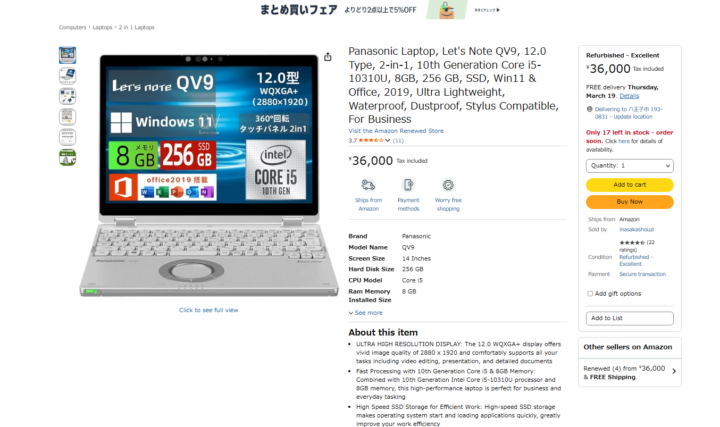
⚡ RADAR SIGNAL — Panasonic Let’s Note QV (Japan Engineering Laptop)
Japan’s Hidden Engineering Laptop Global Situation Across most of the world, people buy consumer laptops made mostly from plastic, typically priced around $400–$500 USD. These machines are designed for the mass market and often last only a few years of heavy use before they are replaced. 💻 The Radar Anomaly While scanning the Japanese market, something unusual appeared. Panasonic manufactures a line of business laptops in Japan called “Let’s Note.” These machines are built with a completely different philosophy. They are designed for professional mobility, and they stand out for three key reasons: - Magnesium alloy chassis - Ultra-light weight (under 1 kg) - 360-degree rotating display The screen folds completely backward, turning the laptop into a tablet-style device. This is particularly useful for reviewing full documents like PDFs, contracts, and technical reports, allowing them to be viewed almost like a sheet of paper rather than a narrow scrolling screen. Unlike many modern ultrabooks that focus primarily on thin design, Let’s Note machines are built for daily professional transport and long-term reliability. ⚙ Japanese Engineering The Let’s Note series has been used for years in Japanese corporate environments. Typical characteristics include: - 360° convertible display - optimized for document reading and PDF review - magnesium construction - weight under 1 kg - built for constant mobility This type of construction places the machine closer to high-end professional laptops than to typical consumer devices. 🌍 The Market Difference In Western markets, laptops built with carbon fiber or magnesium alloy chassis generally appear in professional ultrabook categories. Machines with comparable materials and construction usually sell for: $1,200 USD or more 📡 Radar Price In Japan, a renewed Panasonic Let’s Note QV appeared for: ¥35,000 Approximately $219 USD. (FX reference: ¥159.56 / USD — March 2026) 🔎 Why This Happens
0
0
Mar 12 •
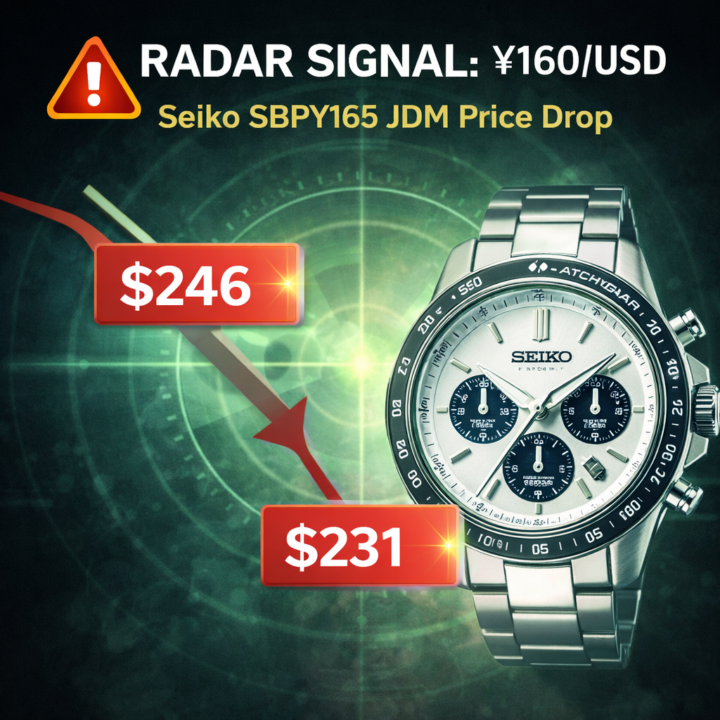
⚡ RADAR SIGNAL — Critical Threshold ¥160 / USD
Markets move fast. Price tags in Tokyo do not. A few days ago the Radar detected the Seiko SBPY165 (JDM) at a domestic price of ¥36,960. At that moment, with USD/JPY around ¥150, the signal already indicated a favorable entry point for international buyers. But the environment has shifted. The exchange rate has now moved toward the ¥160 per dollar zone. And that changes the equation. 🚨 The ¥160 Distortion When a currency weakens this quickly, a temporary distortion appears. Japanese retailers continue selling products at the same yen price. But the purchasing power of foreign currencies suddenly increases. The product did not become cheaper. The currency did. Impact on the Radar Just a short time ago: Exchange rate around ¥150 Real cost of the Seiko JDM: ≈ $246 At the ¥160 zone: Real cost becomes: ≈ $231 Now compare that with the global market. Typical international price range: $320 – $350 The exchange-rate distortion alone can create a gap approaching $100+ depending on the market and timing. ⚠️ Why the ¥160 Level Matters Currency levels around ¥160 are historically unstable. When the yen reaches this zone, two forces often emerge simultaneously: 1️⃣ Policy Risk Authorities in Japan begin monitoring currency volatility closely. Rapid depreciation can trigger intervention or policy adjustments. 2️⃣ Market Reaction When the yen becomes extremely weak, international resellers and exporters begin scanning Japanese domestic inventory for arbitrage opportunities. The result is simple: the most attractive JDM stock tends to disappear quickly. Radar Verdict The ¥160 zone does not guarantee a permanent advantage. But it often represents a moment when the currency differential reaches one of its most favorable levels for international buyers. In practical terms: the Japanese market itself has not changed. But the cost of accessing that market has. For buyers watching the JDM space, moments like this are exactly what the Radar is built to detect.
0
0
Mar 9 •
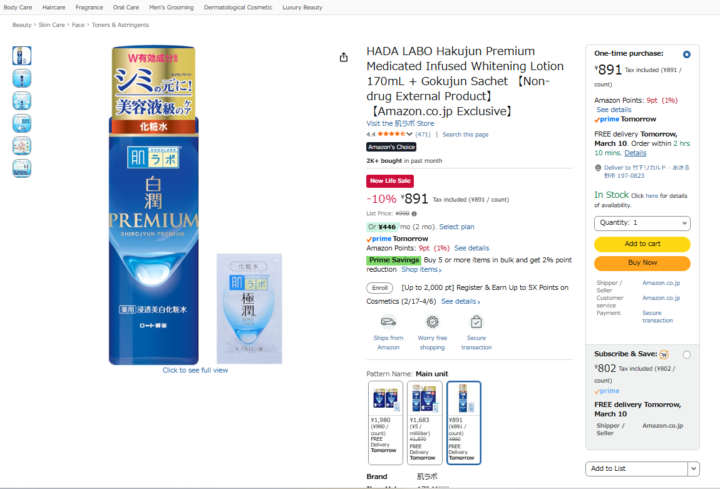
⚡ RADAR SIGNAL — Hada Labo Shirojyun Premium (Japan Skincare)
The radar detected an interesting anomaly in the Japanese skincare market. A product that costs less than $6 in Japan commonly sells internationally for $18–$22 USD. It is not a special export version. It is the same formulation sold in the Japanese domestic market. The difference is where in the supply chain you enter the market. Product Hada Labo Shirojyun Premium Whitening Lotion (Refill) Radar Price — Amazon Japan ¥851 ≈ $5.70 USD Global Market Price $18 – $22 USD (YesStyle / Amazon US) View product in Japan https://amzn.to/4ujcQMa The difference is not the formulation. It is how the global skincare distribution system works. The Japanese regulatory standard most people never mention In Japan this product is not sold as a simple cosmetic. It is classified as Quasi-Drug (医薬部外品). This category means the formula must meet Japanese regulatory standards for active ingredients before it can be marketed with functional claims. It sits between cosmetics and pharmaceuticals in Japan’s regulatory system — a standard that is part of Japan’s unique regulatory framework for functional skincare products. The freshness factor Another overlooked difference is inventory rotation inside Japan. Hada Labo is one of the best-selling moisturizers in the Japanese domestic market. Because of that, stock moves extremely quickly through pharmacies and online distribution. Hyaluronic acid formulas are sensitive to heat exposure and long storage periods. Products sold through international import channels may spend months moving through shipping containers, warehouses, and distribution networks before reaching store shelves. The radar detects high-rotation domestic inventory from Amazon Japan — the same stock that consumers in Tokyo purchase for daily use. The truth about the price The product itself is not “cheap”. The international price simply reflects the entire distribution chain: Importer Distributor Retail markup
0
0
1-10 of 10
@ricardo-takeshita-5842
Japan-based. Founder of DiscoverJapanSites.
Strategic buying in Japan’s domestic market — timing, JDM insight, currency advantage.
Active 5h ago
Joined Mar 8, 2026