
Write something

May 15 •
🔪 EDC Knife or Weapon: The Legal Linguistic Trap
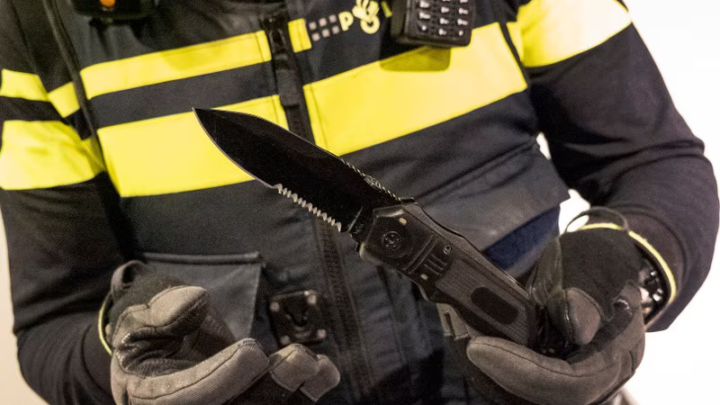
The Dutch police recently announced a “record number” of 2,300 weapon seizures from minors in 2025, claiming a surge from 1,800 in 2022. However, a closer look at their own data and imagery reveals a process of statistical laundering that criminalizes utility tools and targets marginalized youth through demographic profiling. The Example: A Tool Framed as a Threat The police often use professional photography to illustrate these “dangerous weapons”. In one prominent image, an officer holds a black folding knife. An OSINT analysis identifies this object as the Walther Emergency Rescue Knife (ERK). Legal Status: This is a commercially available tool sold legally in stores. Function: It is specifically designed as a life-saving tool, featuring a glass breaker and a belt cutter for emergency situations. Technical Compliance: According to the official Customs (Douane) flowchart, this knife is legally NOT a weapon because it has only one cutting edge and is under 28 cm in length. By using a rescue tool to represent “prohibited weapons,” the police perform “Linguistic Capture”—redefining a neutral utility object as a criminal instrument before any legal investigation into its use has occurred. Statistical Laundering and Enforcement Intensity The police admit they do not know the “true scope” of weapon possession among youth; their numbers only reflect how often they choose to seize items. Furthermore, they acknowledge that the “increase” is partly due to changes in counting methods and “increased attention” from officers. The Trap: This creates an unfalsifiable loop. Any seizure—even of a legal rescue tool—is used as evidence that a “weapon problem” exists, which in turn justifies more seizures. This isn’t a measure of crime; it is a measure of enforcement intensity. Legal Discrimination: The Double Standard The sources highlight a deep systemic bias in how the law is applied. Under Category IV sub 7 of the Weapons Act, a legal tool only becomes a “weapon” based on the “nature and circumstances” of its discovery. This grants police total discretion to decide who is a criminal:
May 11 •
Welcome! Ask me anything
👋 A huge welcome to all the new members! I’m so glad you’re here! I built this space to share what I’m learning, what I’m working on, and the OSINT rabbit holes and questions I’m chewing on. The more I hear from you, the better it gets. To kick things off: what’s one thing you’d love to see more of here? Could be a topic, a type of OSINT deep-dive, a resource, a specific question, anything goes. Drop your thoughts below 👇 or send me a message!
May 11 •
📈 OSINT everything?
Shiny Hunters breached Dutch universities. Real names, social security numbers, dates of birth.all sitting in leaked databases now. This adds to a growing pool of stolen data accessible to OSINT professionals and hackers alike. Earlier this year, Odido got hit. KPN got hit in December. Prior other universities got hit. So where’s the line between legitimate open source intelligence and accessing stolen data? Traditionally OSINT meant publicly available information: Google searches, government registers, the Wayback Machine. But now leaked databases from telecom breaches, university data dumps, they’re becoming part of the landscape. If you’re doing OSINT research or investigations, how do you even know if your sources are legitimately public or stolen? The answer matters, because this trend isn’t slowing down.
May 11 •
Washington’s Deepfake Law Can’t Be Hamstrung by Subjectivity
On June 11, 2026, Washington’s Substitute Senate Bill 5886 takes effect. It bans AI deepfakes that “convincingly mimic” a real person without consent. The problem: recognizability is subjective. Take Sean Strickland’s face altered into Derek’s in the famous curb scene from American History X. Run it through Yandex Images and among the top results are a couple of actual Sean Strickland images, but also fifteen other unrelated faces that look similar. So when a judge says it’s “recognizable,” they’re making a claim technology itself can’t distinguish from anyone else in that results set. Satire and parody are First Amendment protected speech. Courts haven’t figured out where deepfakes land. The law exposes creators to defamation, right of publicity, and fraud claims all built on a recognizability standard that doesn’t hold up technologically or constitutionally.
1
0

Apr 21 •
⚓️ €5 tracker, €500M warship, zero surprises for anyone doing OSINT.
Last week, Dutch broadcaster Omroep Gelderland tracked the location of Zr. Ms. Evertsen, a Dutch air-defense frigate escorting France’s Charles de Gaulle carrier in the eastern Mediterranean, by mailing a generic Bluetooth tracker (basically a cheap AirTag clone, the kind you buy on AliExpress for five euros) inside a greeting card via military postal service. The tracker piggybacked on Apple’s Find My network, relaying its position through any nearby iPhone. From the sorting center in the Netherlands to Crete to 24 hours at sea, the frigate’s route was mapped in real time. The security establishment panicked. Defensie banned greeting cards containing batteries from being sent to the ship. The minister briefed parliament. But this isn’t news. It’s confirmation.The Evertsen was trackable from the moment it left Den Helder. You could find that ship without the tracker. Most military vessels operating outside active conflict zones are already fully exposed through public infrastructure: AIS broadcasts (MarineTraffic, VesselFinder), crew social media leakage (Strava, LinkedIn), port webcams, satellite imagery, and vessel registries. The Bluetooth story got traction because it’s visceral. A postcard, five euros, a journalist. It feels like a breach because it is one. But it’s a symptom. The disease is operational security built on the assumption that a modern warship can hide in the most observed maritime zone on the planet. It can’t. For compliance and intel professionals: this is a live case study in exposure collapse. The infrastructure
1-15 of 15
powered by
skool.com/huisvestnl-3698
Get started in OSINT and learn how to find out about anything and anyone online, professionally.
Suggested communities
Powered by