Activity
Mon
Wed
Fri
Sun
Aug
Sep
Oct
Nov
Dec
Jan
Feb
Mar
Apr
May
Jun
What is this?
Less
More
Owned by Cultro
Get started in OSINT and learn how to find out about anything and anyone online, professionally.
Memberships
A2B - Go From App to Business
107 members • Free
CC Strategic AI
3.2k members • $27/month
Vibe Labs
1.3k members • Free
Cyber RedFlag
2 members • Free
Heroic Intelligence Map Guild
5 members • Free
49 contributions to OSINT Detective Skool

May 15 •
🔪 EDC Knife or Weapon: The Legal Linguistic Trap
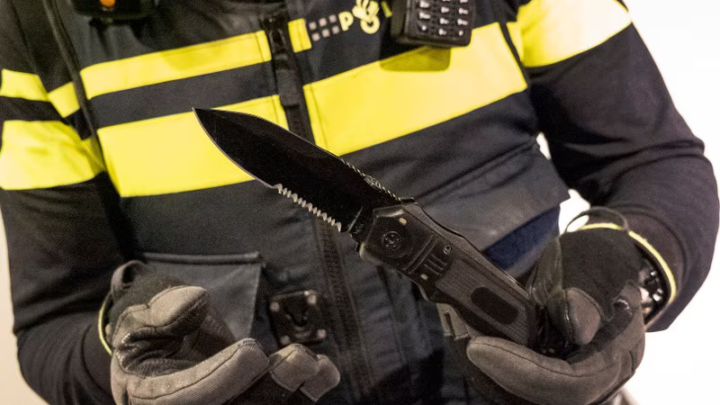
The Dutch police recently announced a “record number” of 2,300 weapon seizures from minors in 2025, claiming a surge from 1,800 in 2022. However, a closer look at their own data and imagery reveals a process of statistical laundering that criminalizes utility tools and targets marginalized youth through demographic profiling. The Example: A Tool Framed as a Threat The police often use professional photography to illustrate these “dangerous weapons”. In one prominent image, an officer holds a black folding knife. An OSINT analysis identifies this object as the Walther Emergency Rescue Knife (ERK). Legal Status: This is a commercially available tool sold legally in stores. Function: It is specifically designed as a life-saving tool, featuring a glass breaker and a belt cutter for emergency situations. Technical Compliance: According to the official Customs (Douane) flowchart, this knife is legally NOT a weapon because it has only one cutting edge and is under 28 cm in length. By using a rescue tool to represent “prohibited weapons,” the police perform “Linguistic Capture”—redefining a neutral utility object as a criminal instrument before any legal investigation into its use has occurred. Statistical Laundering and Enforcement Intensity The police admit they do not know the “true scope” of weapon possession among youth; their numbers only reflect how often they choose to seize items. Furthermore, they acknowledge that the “increase” is partly due to changes in counting methods and “increased attention” from officers. The Trap: This creates an unfalsifiable loop. Any seizure—even of a legal rescue tool—is used as evidence that a “weapon problem” exists, which in turn justifies more seizures. This isn’t a measure of crime; it is a measure of enforcement intensity. Legal Discrimination: The Double Standard The sources highlight a deep systemic bias in how the law is applied. Under Category IV sub 7 of the Weapons Act, a legal tool only becomes a “weapon” based on the “nature and circumstances” of its discovery. This grants police total discretion to decide who is a criminal:
May 11 •
Welcome! Ask me anything
👋 A huge welcome to all the new members! I’m so glad you’re here! I built this space to share what I’m learning, what I’m working on, and the OSINT rabbit holes and questions I’m chewing on. The more I hear from you, the better it gets. To kick things off: what’s one thing you’d love to see more of here? Could be a topic, a type of OSINT deep-dive, a resource, a specific question, anything goes. Drop your thoughts below 👇 or send me a message!
1 like • May 13
@Samee Ul Bari Hey Samee, good question. Jobs in OSINT really depend on your background, education, and certifications. A few directions to consider: Private investigator — often you don’t need a degree, but you do need licensing. Check the laws and regulations where you live or want to operate. Compliance at a bank — customer due diligence under anti-money laundering regulations. That includes UBO trails, adverse media checks, and bad press research. Can be straightforward or require deep investigation depending on the case. Law enforcement — police and detective work, becoming an OSINT professional within a law enforcement agency. Journalism and investigative reporting — outlets like Bellingcat built their reputation on OSINT. Freelance investigative journalism is a real path, especially around conflict zones, corruption, and corporate accountability. Cybersecurity and threat intelligence — companies hire OSINT analysts to track threat actors, monitor dark web chatter, and investigate phishing campaigns. Strong overlap with infosec roles. Corporate security and due diligence firms — Kroll, Control Risks, K2 Integrity. They hire OSINT analysts for M&A due diligence, executive protection research, and litigation support. Insurance fraud investigation — insurers hire OSINT specialists to verify claims, especially for disability, workers’ comp, and high-value property claims. Human trafficking and missing persons NGOs — groups like Trace Labs run CTF-style events where OSINT volunteers help find missing people. Good for skill-building and networking. Geospatial intelligence (GEOINT) — overlaps with OSINT, especially around satellite imagery analysis. Niche but growing. If you haven’t already, hit up your local job site and search “OSINT” or “investigator” to see what’s available where you are.
Feb 2 •
🧽 Content Removal: How to Remove Unwanted Content from the Web
🥀 Your past doesn’t have to haunt your digital present. Maybe it’s an intimate photo shared without your consent. Perhaps it’s outdated information that no longer represents who you are. Or it could be content that violates your privacy, defames your character, or infringes on your copyright. Whatever the case, unwanted content online can derail job opportunities, damage relationships, and cause immense emotional distress. 🦾 The good news? You’re not powerless. The internet may feel permanent, but there are proven pathways to reclaim your digital narrative. This guide cuts through the confusion and shows you exactly how to remove harmful content from search engines, social media platforms, and websites, step by step. Visit https://www.cultrodistro.com/tools/browsing for the direct links. 👙 Non-Consensual Intimate Content Stop NCII specializes in removing intimate images from partner sites including Pornhub, OnlyFans, and major social media platforms. They create a digital fingerprint of your images without viewing them, then share it with platforms for automatic detection and removal. Google offers several removal pathways: 📩 Personal Information - Remove doxxing content, financial information, contact details, and images containing personal data from search results. 📩 Legal Issues - Submit removal requests for content that violates laws in your jurisdiction, including defamatory or privacy-violating material. 📩Outdated Content - Remove information that’s been updated or deleted from the original source but still appears in Google’s cache or search results. ©️ DMCA Takedown Requests For copyright infringement, file a DMCA takedown notice directly with platforms (free) or through paid services. Include identification of your copyrighted work, location of infringing material, contact information, and a good faith statement. 👨🏻💼 Contact Website Owners Directly Use WHOIS databases to find website owner contact information. A direct removal request is often the fastest solution. For international domains, the IANA Root Zone Database provides information about top-level domain operators.

0 likes • Feb 3
@Marita Johnson You’re welcome!
0 likes • May 12
@M Smith you’re welcome!
May 11 •
📈 OSINT everything?
Shiny Hunters breached Dutch universities. Real names, social security numbers, dates of birth.all sitting in leaked databases now. This adds to a growing pool of stolen data accessible to OSINT professionals and hackers alike. Earlier this year, Odido got hit. KPN got hit in December. Prior other universities got hit. So where’s the line between legitimate open source intelligence and accessing stolen data? Traditionally OSINT meant publicly available information: Google searches, government registers, the Wayback Machine. But now leaked databases from telecom breaches, university data dumps, they’re becoming part of the landscape. If you’re doing OSINT research or investigations, how do you even know if your sources are legitimately public or stolen? The answer matters, because this trend isn’t slowing down.
1 like • May 11
@M Smith True, structural fix would be eliminating data brokers and credit agencies entirely. But while we wait for that to happen, there are immediate steps. Sites like Have I Been Pwned let you check if your data’s in known breaches. Same with similar tools, you can at least see what’s been compromised and act accordingly. Not a solution, but damage control in the meantime.
1 like • May 12
@M Smith check out my main site https://www.cultrodistro.com for the very best resources.
May 11 •
🕵🏽♂️ /HelpMeFind
Often people ask, where do I start with OSINT? I could tell you to use Google better, or hand you a list of tools. But honestly, the skills that made me a skilled OSINT practitioner came from reading Wikipedia as a kid, picking up bits of knowledge about nearly everything. When I wonder something, I have reference points to fall back on. But everyone’s got a different background, different education, different skillset. Nobody’s better than anybody else when you account for all that. The real way to test your OSINT skills in practice? Head to r/HelpMeFind on Reddit. People post questions there asking for help locating things. Could be literally anything: commercial products, old vintage items, video games, car parts, lost family members, family history, obscure media. It’s up to you to find it. Real queries, real people, real practice. No simulations, no textbook scenarios. Just genuine investigations where someone actually needs the answer. Here’s one of mine: a user was looking for a Russian artist’s interactive website with rooms and levels. Found it in seconds. That’s the game. Sharpen the toolkit. Start digging. https://www.reddit.com/r/HelpMeFind/s/5X1RdBES0w
1-10 of 49

Active 21h ago
Joined Aug 19, 2025