
Write something

4d •
Hello.
I am currently working in the field of AI and Full Stack. My long-term contract with Exa company in the U.S. expired 3 months ago, and I am currently seeking new remote work opportunities. With 7 years of experience as an engineer, expanding my reach beyond Japan to the global market is very important to me. I already have experience working remotely and have a proven track record of collaborating effectively with companies, so I look forward to connecting with individuals and companies interested in product launches or system improvements. Thank you.
0
0

Jan 17 •
Welcome to GSD 🧑🏼💻
Early days on this here Skool community so expect things to get a nice tune up shortly. In the meantime, thank you for being here and the endless support for GSD. Please head over to Introductions and introduce yourself to the community. Cheers, Lex


Mar 15 •
my story
I’m 47, and not too long ago I was working in a restaurant making about $500 a month. It covered the bills, but deep down I knew I wanted more out of life. Things began to change when my sister introduced me to the world of online business. With her guidance, I stayed consistent, learned the process, and eventually built my own business from the ground up. Today, it’s generating around $30k a month. But for me, it’s about more than just the income. What truly motivates me is legacy. One of my biggest fears is leaving this world without giving my children and grandchildren a strong foundation and real opportunities. That’s why I’m committed to teaching them the skills to build businesses of their own and create their own paths. For me, it’s not just about making money — it’s about building something that can last for generations.

27d •
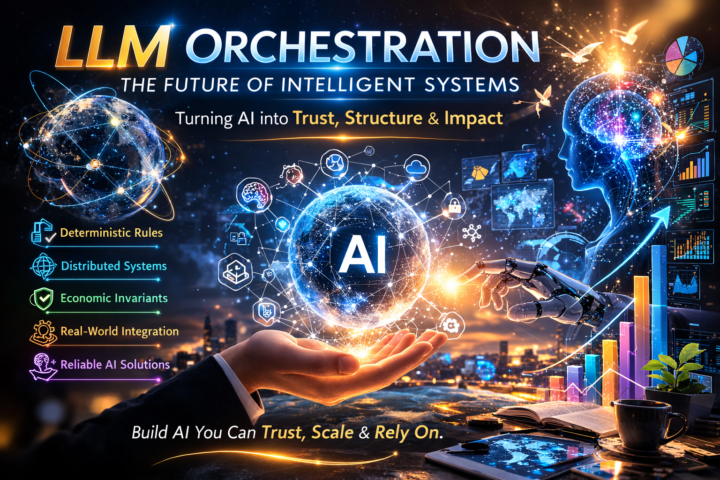
!!!! The Advantage of Integrating Multi-Modal Models, LLM Orchestration, RAG Pipelines, and Multi-Agent Architecture !!!!
Modern AI systems require more than isolated models to handle complex tasks. The integration of multi-modal models, LLM orchestration, retrieval-augmented generation (RAG), and multi-agent architectures creates a powerful framework for building scalable, intelligent, and production-ready systems. -Multi-Modal Models Multi-modal models process text, images, voice, and structured data simultaneously, providing a richer understanding of context. This capability allows AI systems to interpret complex scenarios and make more informed decisions. -LLM Orchestration LLM orchestration manages reasoning and decision-making across multiple prompts or agents. Combined with multi-modal inputs, it ensures that insights from various data types are interpreted cohesively and translated into actionable outputs. -RAG Pipelines RAG pipelines enhance generative models by retrieving relevant external knowledge. By integrating multi-modal inputs, RAG pipelines ensure responses are accurate, context-aware, and grounded in up-to-date information, whether the input is text, images, or structured data. -Multi-Agent Architecture Multi-agent architecture assigns tasks to specialized agents and coordinates them efficiently. This approach scales system performance, improves reliability, and enables complex workflows that a single agent could not handle effectively. -Synergy Across Technologies Multi-modal models supply rich, cross-domain data. LLM orchestration interprets and reasons across these inputs. RAG pipelines provide relevant external knowledge to support decision-making. Multi-agent architecture manages distributed execution and ensures scalability. This integration allows AI systems to perceive, reason, retrieve, and act across multiple data types, bridging the gap between experimental prototypes and real-world, production-grade applications. Conclusion By combining multi-modal models, LLM orchestration, RAG pipelines, and multi-agent architectures, organizations can build AI systems that are accurate, versatile, scalable, and context-aware. This approach represents the next step in creating robust, intelligent solutions for complex, real-world challenges.
28d •
🚀 New Lecture: Multi-Agent Architecture (Production Systems)
Today I’m starting a lecture on Multi-Agent Architecture, focusing on how modern AI systems move beyond single LLM prompts and into coordinated agent ecosystems. In real-world AI products, the challenge isn’t generating text — it’s orchestrating multiple agents that can plan, reason, and execute tasks reliably. In this session we’ll break down: • Core architecture patterns for multi-agent systems • Agent orchestration, routing, and task decomposition • Tool usage and memory management • Building reliable pipelines instead of fragile prompt chains • Real production use cases from modern AI systems The goal is simple: move from demos to production-grade AI architectures. If you're building with LLMs, AI agents, or automation pipelines, understanding multi-agent design patterns will be one of the most important skills going forward. More details and implementation walkthrough coming in the lecture. Let’s build systems that actually scale. ⚙️
0
0
1-30 of 45
skool.com/gsd
A light-weight and powerful meta-prompting, context engineering and spec-driven development system for Claude Code by TÂCHES.
Leaderboard (30-day)
1
+5
2

+4
3

+4
4

+3
5

+3
Powered by