Activity
Mon
Wed
Fri
Sun
May
Jun
Jul
Aug
Sep
Oct
Nov
Dec
Jan
Feb
Mar
Apr
What is this?
Less
More
Memberships
Human AI Alliance
522 members • $9/month
L'Alliance 🤝
273 members • Free
AI SoftLife Society
713 members • Free
Learning Pretty Academy + AI
397 members • Free
Poised 4 Profits in AI™©️
241 members • Free
Future Proof
354 members • Free
The Prompt Playground
733 members • Free
OpenClaw and Autonomous AI
130 members • Free
AI & Free Intelligence
207 members • Free
4 contributions to GET SHIT DONE

27d •
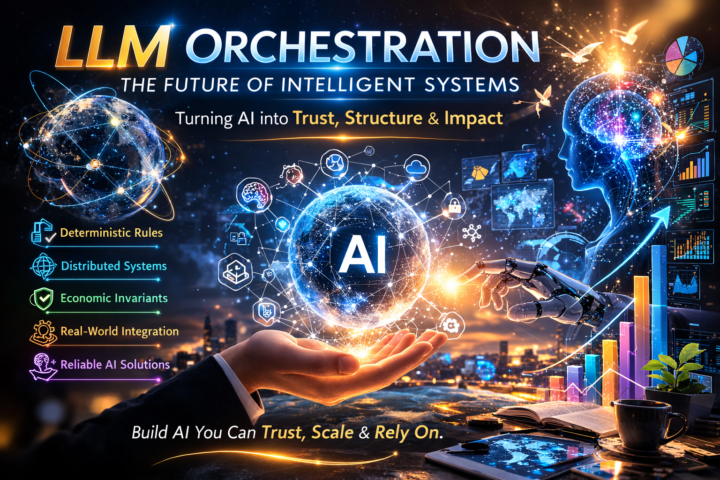
!!!! The Advantage of Integrating Multi-Modal Models, LLM Orchestration, RAG Pipelines, and Multi-Agent Architecture !!!!
Modern AI systems require more than isolated models to handle complex tasks. The integration of multi-modal models, LLM orchestration, retrieval-augmented generation (RAG), and multi-agent architectures creates a powerful framework for building scalable, intelligent, and production-ready systems. -Multi-Modal Models Multi-modal models process text, images, voice, and structured data simultaneously, providing a richer understanding of context. This capability allows AI systems to interpret complex scenarios and make more informed decisions. -LLM Orchestration LLM orchestration manages reasoning and decision-making across multiple prompts or agents. Combined with multi-modal inputs, it ensures that insights from various data types are interpreted cohesively and translated into actionable outputs. -RAG Pipelines RAG pipelines enhance generative models by retrieving relevant external knowledge. By integrating multi-modal inputs, RAG pipelines ensure responses are accurate, context-aware, and grounded in up-to-date information, whether the input is text, images, or structured data. -Multi-Agent Architecture Multi-agent architecture assigns tasks to specialized agents and coordinates them efficiently. This approach scales system performance, improves reliability, and enables complex workflows that a single agent could not handle effectively. -Synergy Across Technologies Multi-modal models supply rich, cross-domain data. LLM orchestration interprets and reasons across these inputs. RAG pipelines provide relevant external knowledge to support decision-making. Multi-agent architecture manages distributed execution and ensures scalability. This integration allows AI systems to perceive, reason, retrieve, and act across multiple data types, bridging the gap between experimental prototypes and real-world, production-grade applications. Conclusion By combining multi-modal models, LLM orchestration, RAG pipelines, and multi-agent architectures, organizations can build AI systems that are accurate, versatile, scalable, and context-aware. This approach represents the next step in creating robust, intelligent solutions for complex, real-world challenges.
1 like • 25d
@Jessi Willey Can you chatting in telegram or whatsapp ? my telegram is @kingsudo7 whatsapp +81 80-2650-2313 I would like to discuss future collaboration with experts in the same field.
28d •
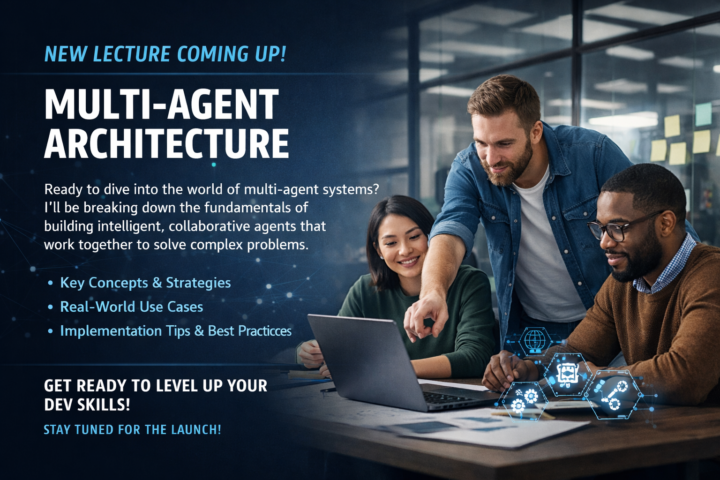
🚀 New Lecture: Multi-Agent Architecture (Production Systems)
Today I’m starting a lecture on Multi-Agent Architecture, focusing on how modern AI systems move beyond single LLM prompts and into coordinated agent ecosystems. In real-world AI products, the challenge isn’t generating text — it’s orchestrating multiple agents that can plan, reason, and execute tasks reliably. In this session we’ll break down: • Core architecture patterns for multi-agent systems • Agent orchestration, routing, and task decomposition • Tool usage and memory management • Building reliable pipelines instead of fragile prompt chains • Real production use cases from modern AI systems The goal is simple: move from demos to production-grade AI architectures. If you're building with LLMs, AI agents, or automation pipelines, understanding multi-agent design patterns will be one of the most important skills going forward. More details and implementation walkthrough coming in the lecture. Let’s build systems that actually scale. ⚙️
0
0
Mar 16 •
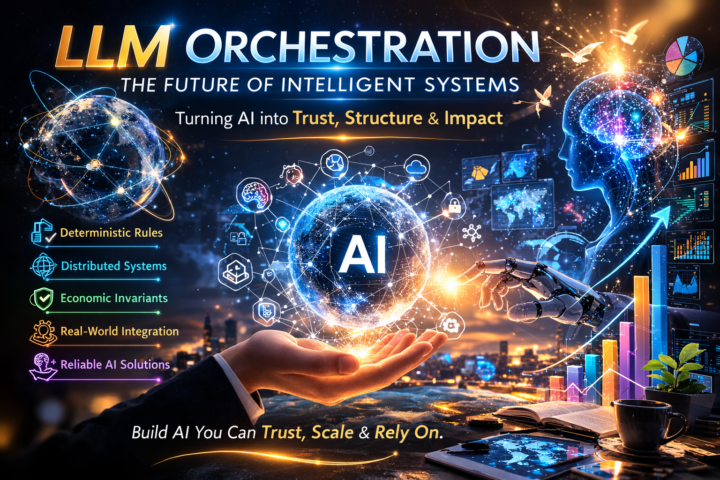
🚀 Why LLM Orchestration Expertise Matters
In today’s AI-driven world, having access to an LLM isn’t enough. The real value comes from orchestrating LLMs within complex systems—making sure they operate safely, reliably, and in alignment with real-world rules. I’ve had the privilege of working on projects like IOUBI, where the challenge isn’t just generating text, but enforcing economic invariants, reconciling distributed ledgers, and handling edge-case conflicts in real-time systems. This kind of work requires: Turning multi-document specifications into deterministic, operational rules for AI Coordinating AI reasoning across layers (local, L3, L2) in distributed systems Ensuring outputs respect both client intent and real-world feasibility Bridging human expertise and AI to produce actionable, verifiable results Please feel free to let me know anytime if you need help.
0 likes • Mar 19
Hey bro I build AI systems using LLM orchestration,RAG pipeline, muti modal models and muti agent architecture combined full stack development and automation integration are you looking for dev? Hope we get a chance to work together
Mar 15 •
For the future
I am looking for someone to collaborate with. I do not care where you live. I build AI systems using LLM orchestration, RAG pipeline, multi-modal models, and multi-agent architecture combined full-stack development and automation integration. If you need my help, I will gladly assist for our collaboration. My Discord ID is @ur_sa. Let's further develop our collaboration here.
3
0

1-4 of 4

Active 3h ago
Joined Feb 1, 2026
Powered by