
Write something

Jan 21 •
The Problem of Cheating in Online Chess: How Platforms Are Tackling It
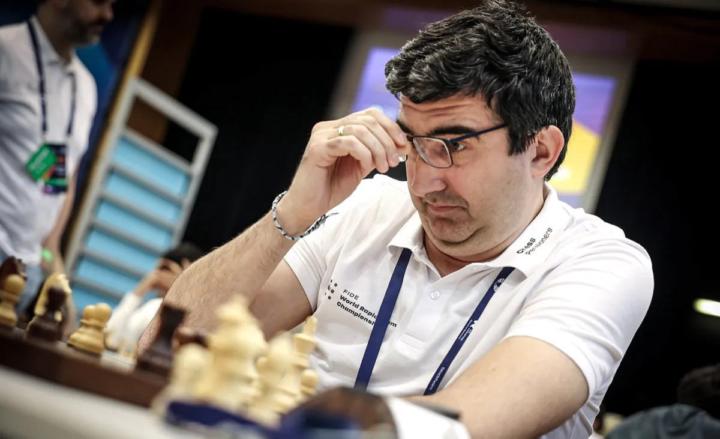
Types of Cheating: Online chess, unfortunately, attracts those looking for an easy win. The most common form of cheating is using a chess engine (a computer program) during a game. 💻 In simple terms, the cheater peeks at the moves suggested by the computer, playing almost like a Terminator disguised as a human. Other dishonest methods include receiving hints from another person (e.g., a stronger player nearby or via voice chat) or using prohibited materials during a game (from opening databases to personal "cheat sheets"). Some get creative with absurd tricks: rumors have spread about second screens, buttons in shoes – cheaters' imagination is as boundless as their audacity. 🙃 Anti-Cheat Systems: Technical Methods – How do platforms catch cheaters? Here, a combination of mathematics and artificial intelligence comes to the rescue. 🕵️♀️ Special algorithms analyze every game: they compare a player's moves with the best options according to the strongest chess programs. If the match with computer moves is excessively high (especially in complex positions), the system raises a red flag. Additionally, statistics are considered: whether a player performs significantly above their usual level, makes no mistakes at all, or how they allocate time for moves. For example, if a player finds complex tactical resources in seconds but spends a minute on simple moves – something's fishy. ⚡️ Machine learning methods are also employed: major platforms train neural networks to recognize unnatural playing styles. It's known that Lichess implemented a system called "Irwin," while Chess.com has been refining its detector for years. These digital detectives are constantly learning and getting smarter, catching even clever violators who try to mimic human play (e.g., by intentionally making weak moves to confuse the system). But the algorithms aren't fools either! Organizational Measures: Robots and algorithms alone aren't enough – people step in too. Chess platforms create entire Fair Play departments, where specialists (often experienced chess players and statisticians) manually review suspicious games. If an algorithm flags something, a live team studies the game in detail: were the moves too perfect, is there a pattern of dishonest play? Consistency matters: usually, no one gets banned over a single game – they look at the broader pattern. Once evidence accumulates, the violator's account is blocked. ⛔️ On Chess.com, for example, hundreds of accounts are closed daily for cheating. Violators face a lifetime ban on the platform, and in official tournaments – results annulment and public scandal. Tournament organizers also take precautions: in major events, players are required to turn on webcams, share their screens, and sometimes install special monitoring software to prevent running an engine in the background.
1
0
Jan 21 •
The Most Unusual Technologies in Chess: From Sensors to AR
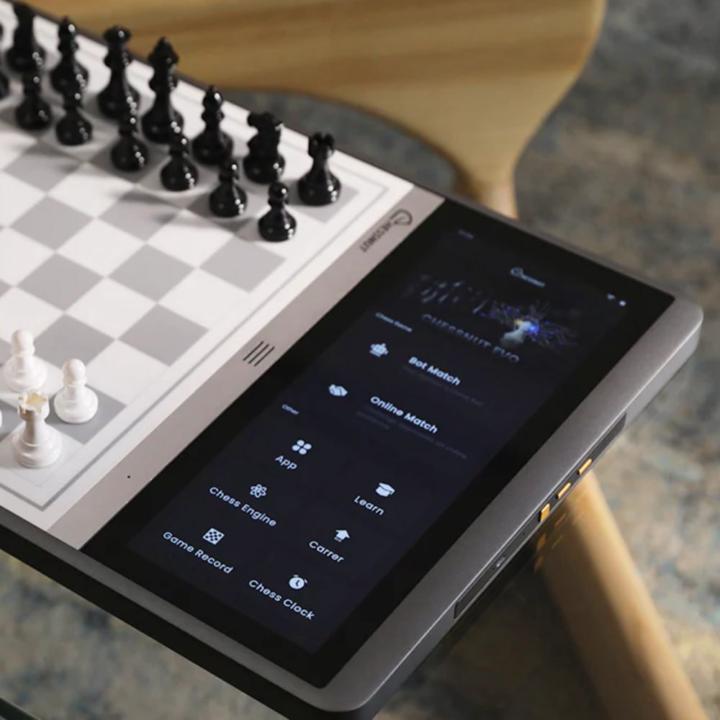
New Innovations: Chess is an ancient game that keeps pace with technology. Today, we use electronic boards with sensors, live online move broadcasts, and even robot referees. Sensors and Biometrics: Some tournaments are testing sensors that track a player's physical state. They measure heart rate, stress levels, even micro-expressions – true telemetry at the chessboard! Imagine: a tense attack, and the grandmaster's heart rate hits 160 – almost like a marathon runner's. Such data adds drama for viewers and helps understand who is under more pressure. (If I ever start streaming, I'll definitely do this.) Artificial Intelligence: AI has long become a chess player's best coach. Supercomputers and engines (Stockfish, AlphaZero) show incredible moves and teach us new strategies. Game analysis is now half-trusted to machines – no serious player can manage without computer preparation. Moreover, AI monitors for cheaters in online chess by detecting unnaturally precise play. So, artificial intelligence in chess is both a guru and a police officer. VR and AR in the Game: Virtual reality already allows you to play a game on a cosmic board somewhere on Mars (virtually, of course). By putting on VR glasses, you can find yourself in a lavish hall playing against a Magnus Carlsen avatar. Augmented Reality (AR) is also on the horizon: educational apps show hints directly on your physical board through your phone's camera. You can analyze a game while looking at holographic pieces on your table. Learning chess is becoming as engaging as playing a video game! The Chess of the Future: Technology is changing the game, but not its essence. In the future, anyone might summon a holographic opponent at home or compete in a tournament without ever leaving their room, with a full sense of presence. Chess will become even more accessible to every corner of the planet. The main thing is that all these gadgets are used for the good of the game, not for secret hints. The irony is that for all the futurism of technology, the knight's move remains unchanged – it moves in an "L" shape now, just as it always did. 😉
1
0
Jan 21 •
Doping in Chess: Myth or Reality?
What could chess players potentially use? Theoretically, brain stimulants. For example, modafinil or Ritalin to enhance concentration, or beta-blockers to calm nerves. Though, good old coffee is also considered legal "doping" and is beloved by many grandmasters. Have there been real cases? Rarely, but yes. The most high-profile case involved Ukrainian Grandmaster Vasyl Ivanchuk in 2008, who refused to take a doping test after a game. Formally, this was treated as a positive result, and he even faced a potential two-year disqualification. Another known case is an Austrian female chess player who received a ban for a prohibited substance. But overall, doping scandals in chess are exceptionally rare. Anti-doping rules: Chess follows WADA (World Anti-Doping Agency) rules – surprisingly, players in top tournaments can be tested. FIDE aims to meet Olympic standards, so even chess players sometimes have to provide samples (imagine: right after a game, instead of a press conference, you're handed a sample jar for analysis!). Modern examples and scandals: In recent years, there has been almost no talk about doping in chess – far louder are the discussions about cheating using computer assistance. However, scientists have studied "chess doping": it turns out stimulants can slightly improve game quality (though they may slow down thinking speed – a dangerous trade-off in time trouble!). No top grandmaster has ever been caught doping, and the biggest scandals nowadays are more about iPhones in bathrooms than pills. Conclusion: Does doping have a real effect in chess? At best, minimal. Chess is an intellectual marathon, but there is no miracle genius pill. Most players rely on training, a clear head, and liters of coffee rather than pharmacology. Therefore, doping in chess is more myth than reality (though they'll still ask you to get tested!). P.S. My personal experiment: L-theanine + coffee delivered excellent results in blitz tournaments in Bali. This is not a recommendation; please consult your doctor.
1
0

Jan 21 •
The History of Chess Clocks: How Time Control Changed the Game
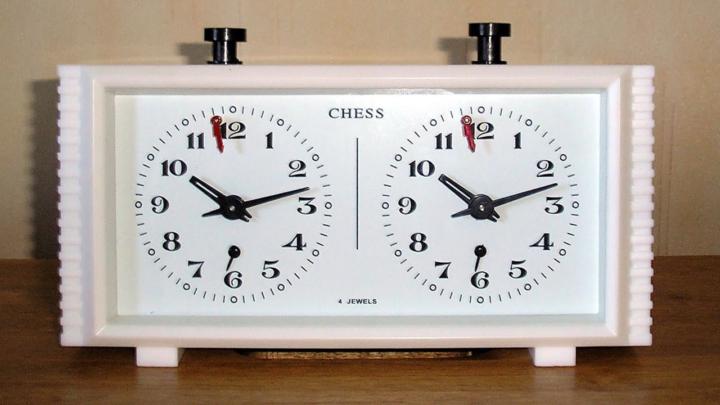
Imagine chess with no time limits. That’s exactly how the earliest tournaments were played: games could drag on for hours (sometimes 8–10 hours per game!), and particularly slow players could try anyone’s patience. For example, one game between the famous Howard Staunton and Pierre Saint-Amant in 1843 lasted about 14 hours – a true test of endurance! Unsurprisingly, by the mid-19th century, the idea of time limits began to emerge. The French player Saint-Amant himself proposed introducing restrictions back in 1836, but the idea wasn’t supported at the time. It wasn’t until the 1860s that experiments began: first with hourglasses and pocket watches. In 1861, at a tournament in London, a set of two pendulum clocks was used for the first time. And in 1883, the classic dual mechanical chess clock with a toggle button appeared – a design that would remain largely unchanged for the next century. Time control radically transformed chess. On one hand, it disciplined players: no more dragging games until midnight. On the other hand, it added a new layer of tension: the race against the clock, the notorious time trouble, when the brain operates at its absolute limit. Over time, different fast-play formats emerged: blitz (e.g., 5 minutes per game) and even ultra-fast bullet (1 minute per game!). Nowadays, the ability to calculate variations quickly is just as important as the ability to think deeply. Interesting Fact: Initially, exceeding the time limit… didn’t result in an instant loss, but incurred a fine! Essentially, extra time could be “bought” with money. That trick wouldn’t work today – the flag falls, you lose, end of story. ❤️🔥 – And they say time can’t be bought! 🐕🦺 – [Meme reference to buying time when losing to an older player]
1
0
Jan 13 •
The Most Expensive Chess Sets in the World
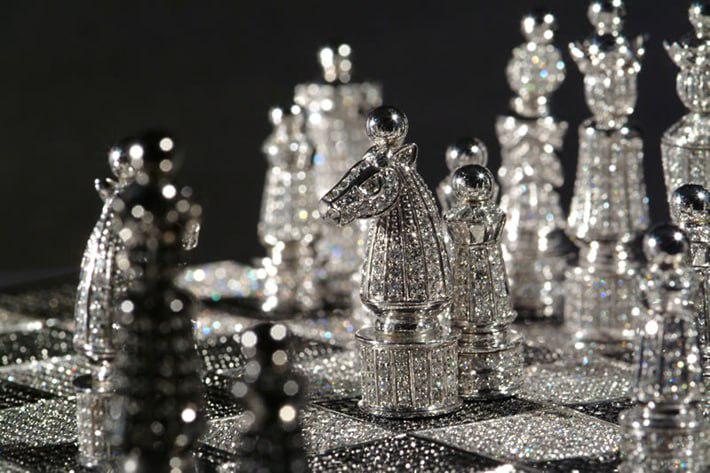
Chess sets have always attracted public attention, so why not take a look at the most expensive chess sets in the world? These masterpieces impress not only with their price tags, but also with their design and use of precious materials (although, in my subjective opinion, some of them are nothing but pure bad taste). 1. Royal Diamond Chess Set — $500,000Created by Bernard MacQuaid. The set features pieces made of 14-karat white gold, decorated with 9,900 diamonds. Personally, I find it to be complete bad taste — it looks like children’s toys covered in rhinestones. 2. The Art of War Chess Set — $700,000This magnificent chess set made of rhodium and gold, created in 2008 by designer Victor F. Sharstein, is valued at $700,000. Every gold and rhodium element is handmade and inlaid with precious stones. 3. Game of Kings Chess Set — $3 million(to be continued in the comments)
0
0
1-8 of 8
powered by
skool.com/gca-chess-library-3479
• Studios with openings and traps from videos
• Training, biohacking, articles, tournaments
Suggested communities
Powered by