Activity
Mon
Wed
Fri
Sun
Jul
Aug
Sep
Oct
Nov
Dec
Jan
Feb
Mar
Apr
May
Jun
What is this?
Less
More
Owned by Gorenshtein
• Studios with openings and traps from videos • Training, biohacking, articles, tournaments
Memberships
36 contributions to GCA: Chess library

Jan 21 •
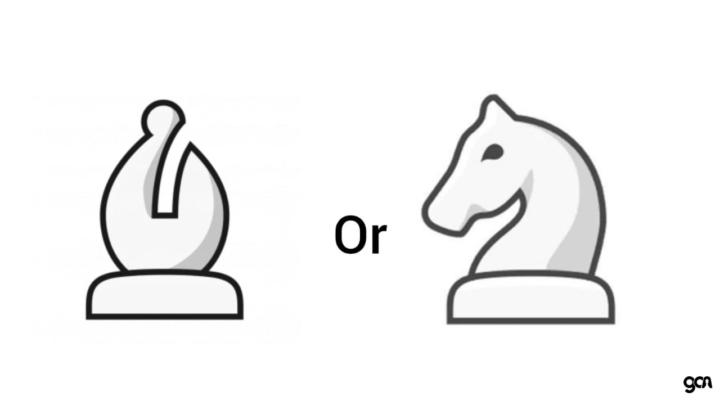
🐴 Bishop or Knight — Which to Keep in the Endgame?
One jumps over heads, the other shoots along diagonals. They’re compared to a katana and a battle‑axe. But who is truly stronger in a real game — the 🐴 knight or the 🐘 bishop? 🧩 Everything depends on the position and the stage of the game. Here’s how their strength differs: 🔹 Opening: The knight enters the stage first. Its path is clear — c3/f3 or c6/f6. The bishop needs space: until the center clears, it waits. 🗣 “Knights are developed first, bishops — when there’s a target.” 💡 For beginners — a reliable rule: bring out your knights first. 🔹 Middlegame: ▪️ In open positions, the bishop shines: it maneuvers quickly, attacks on both flanks, works well in pairs. ▪️ In closed positions, it’s the knight’s time! It hops over pawns, finds holes in the defense, and sets up outpost shows. 💣 Combo: Two bishops in an open position — almost a weapon of mass destruction. 🎯 The bishop strikes fast, but only on its color. The knight is slower, but can reach any square (not immediately, but it will). 🔹 Endgame: ▪️ Pawns on one flank? The knight rules. It’s mobile in a small area, while the bishop loses its “long‑range advantage” here. ▪️ Pawns on both flanks? Choose the bishop. It reaches the needed sector faster and doesn’t tire. ▪️ Short on time? Opponents more often blunder against knights — forks are hard to calculate in time trouble. 📊 Pro statistics: In practical games (without the bishop‑pair), the knight wins more often (~55%). But this isn’t a “law,” just a trend — the specific position matters more. 🧠 Conclusion: The bishop — ideal in spacious battles. The knight — the god of chaos and outposts. Before exchanging minor pieces, ask yourself 4 questions: 🔹 Where are the pawns? 🔹 Is the board open? 🔹 Which piece is more active? 🔹 How much time is left? And remember: an active knight is better than a passive bishop, and vice versa. 🎭 In the end, it’s not the piece that decides — it’s your choice. So which one will you keep on the board? 🔥 — Team Knight ❤️🔥 — Team Bishop
1
0
Jan 21 •
The Problem of Cheating in Online Chess: How Platforms Are Tackling It
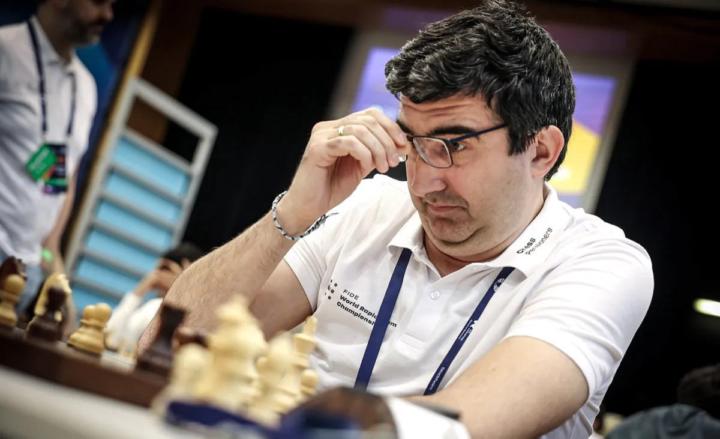
Types of Cheating: Online chess, unfortunately, attracts those looking for an easy win. The most common form of cheating is using a chess engine (a computer program) during a game. 💻 In simple terms, the cheater peeks at the moves suggested by the computer, playing almost like a Terminator disguised as a human. Other dishonest methods include receiving hints from another person (e.g., a stronger player nearby or via voice chat) or using prohibited materials during a game (from opening databases to personal "cheat sheets"). Some get creative with absurd tricks: rumors have spread about second screens, buttons in shoes – cheaters' imagination is as boundless as their audacity. 🙃 Anti-Cheat Systems: Technical Methods – How do platforms catch cheaters? Here, a combination of mathematics and artificial intelligence comes to the rescue. 🕵️♀️ Special algorithms analyze every game: they compare a player's moves with the best options according to the strongest chess programs. If the match with computer moves is excessively high (especially in complex positions), the system raises a red flag. Additionally, statistics are considered: whether a player performs significantly above their usual level, makes no mistakes at all, or how they allocate time for moves. For example, if a player finds complex tactical resources in seconds but spends a minute on simple moves – something's fishy. ⚡️ Machine learning methods are also employed: major platforms train neural networks to recognize unnatural playing styles. It's known that Lichess implemented a system called "Irwin," while Chess.com has been refining its detector for years. These digital detectives are constantly learning and getting smarter, catching even clever violators who try to mimic human play (e.g., by intentionally making weak moves to confuse the system). But the algorithms aren't fools either! Organizational Measures: Robots and algorithms alone aren't enough – people step in too. Chess platforms create entire Fair Play departments, where specialists (often experienced chess players and statisticians) manually review suspicious games. If an algorithm flags something, a live team studies the game in detail: were the moves too perfect, is there a pattern of dishonest play? Consistency matters: usually, no one gets banned over a single game – they look at the broader pattern. Once evidence accumulates, the violator's account is blocked. ⛔️ On Chess.com, for example, hundreds of accounts are closed daily for cheating. Violators face a lifetime ban on the platform, and in official tournaments – results annulment and public scandal. Tournament organizers also take precautions: in major events, players are required to turn on webcams, share their screens, and sometimes install special monitoring software to prevent running an engine in the background.
1
0
Jan 21 •
Chess960: What it is and how it differs from classical chess?
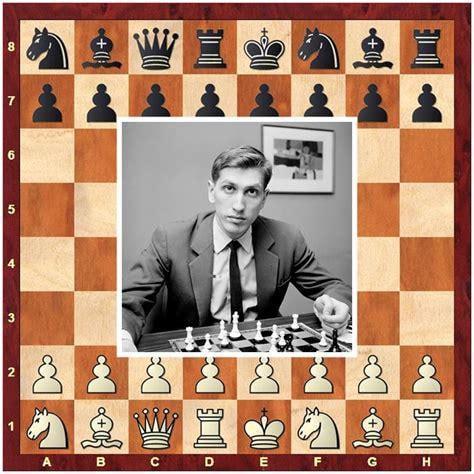
Origin Story: Chess960, also known as Fischer Random Chess, was invented by former world champion Bobby Fischer in 1996. Legend has it that Fischer grew tired of memorized openings and decided to shake up the chess world with a random starting setup. The name "960" comes from the number of possible starting positions – no more dull, repetitive openings; every game is a lottery! Main Rules and Differences: At the start of the game, pieces are placed randomly on the back rank (mirrored for White and Black) according to specific rules (the king must always be placed between the two rooks to allow for castling). As a result, familiar opening patterns vanish – there's no Ruy Lopez or Sicilian Defense in their traditional forms. You have to think for yourself from the very first move. Castling in Chess960 is possible, but it's executed relative to the king's and rook's final positions (another little surprise for the uninitiated). Otherwise, all standard chess rules apply: the goal is to checkmate the opponent's king. Advantages of Chess960: The main benefit is the removal of theoretical burden. You don't need to memorize entire opening encyclopedias: even a grandmaster can't prepare all 960 possible setups at home. This fosters creativity and flexible thinking – the player who navigates unfamiliar positions better wins, not the one with the thickest opening notebook. Strategy is built on general principles and understanding, not on long, memorized lines. For amateurs, it's a true delight: you can play a friend without fearing they'll crush you with book knowledge in the opening. Impact on Playing Style and Preparation: In Chess960, improvisation is required from the very first moves. Players admit it feels like returning to childhood, when they didn't know any theory – every move is full of mysteries. 😅 The style of play shifts toward creativity: universal skills like tactics, strategy, and positional understanding are highly valued, as there's no reliance on home preparation. Preparation for games is also unique: instead of analyzing the opponent's specific lines, players train general principles and the quick evaluation of unfamiliar positions. This format is excellent for sharpening the mind and teaching independent thinking, without leaning on pre-learned theory.
1
0
Jan 21 •
The London System: Why Has It Become So Popular Lately?
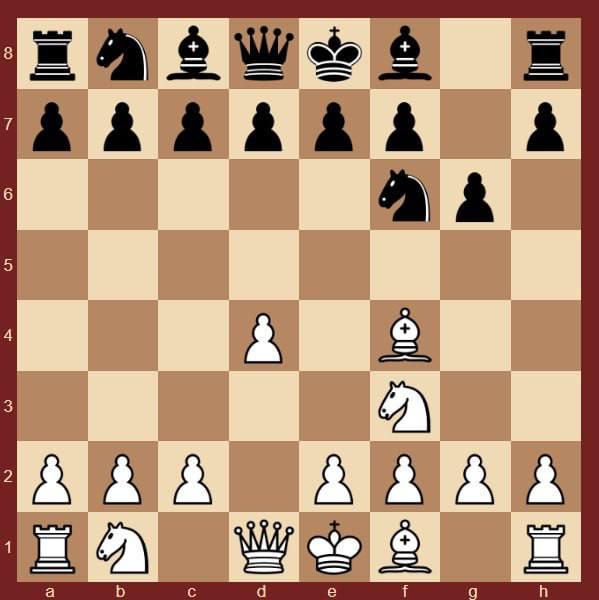
The Idea Behind the Opening: The London System is an opening where White builds an impenetrable fortress from the very first moves. The bishop goes to f4 (the main "trick" of the London), pawns are placed on d4, e3, c3, knights usually on f3 and d2. The result is a flexible and solid position without weaknesses. White doesn't rush into an immediate attack but calmly develops pieces, preparing to respond to any moves by Black. It's like setting up a defense and telling the opponent: "Alright, now figure out how to break through." Advantages for Different Skill Levels: For beginners, the London System is a true godsend. You don't need to memorize hundreds of theoretical moves: you build a familiar structure and achieve a solid game. Made a mistake in the move order? Not a big deal, the position remains resilient. For advanced players, the "London" is also appealing: there's less risk of falling into the opponent's home preparation, and opening traps are minimized. And if the opponent gets careless, you can shift from quiet play to a lightning-fast attack – the London also has sharp variations. Which Top Players Use the London? Just 15 years ago, only a handful of players experimented with this opening, but now even world champions are happy to employ it. Magnus Carlsen occasionally plays the London System, especially in rapid games – and very successfully. Grandmaster Gata Kamsky famously loved the London long before it became mainstream, and he helped breathe new life into the opening. Other elite players have joined in: from Vladimir Kramnik to Hikaru Nakamura – all have tested the "London" in tournaments. When you see such a weapon earning points, it's hard to resist. Modern Trends: In online chess, the London System has become almost the trendiest opening. Popular streamers and coaches recommend it to beginners because it's easier to grasp one systematic approach than tons of theory from, say, the Ruy Lopez. As a result, on Chess.com and Lichess, every second player with White chooses the London – a kind of chess hit. Jokers even call it the "London Invasion". 😊 However, the results speak for themselves: the opening is genuinely effective. Simplicity + Reliability = Popularity – that's the formula for its success.
1
0
Jan 21 •
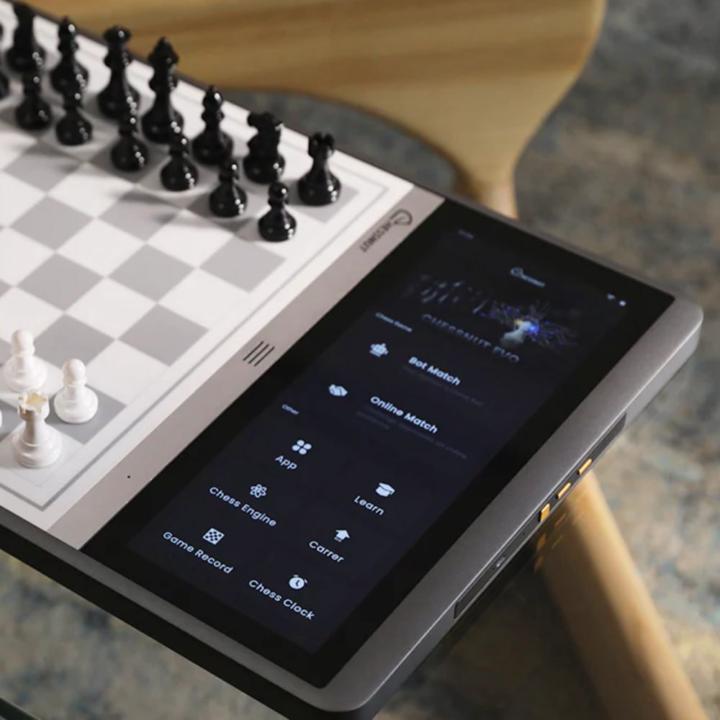
The Most Unusual Technologies in Chess: From Sensors to AR
New Innovations: Chess is an ancient game that keeps pace with technology. Today, we use electronic boards with sensors, live online move broadcasts, and even robot referees. Sensors and Biometrics: Some tournaments are testing sensors that track a player's physical state. They measure heart rate, stress levels, even micro-expressions – true telemetry at the chessboard! Imagine: a tense attack, and the grandmaster's heart rate hits 160 – almost like a marathon runner's. Such data adds drama for viewers and helps understand who is under more pressure. (If I ever start streaming, I'll definitely do this.) Artificial Intelligence: AI has long become a chess player's best coach. Supercomputers and engines (Stockfish, AlphaZero) show incredible moves and teach us new strategies. Game analysis is now half-trusted to machines – no serious player can manage without computer preparation. Moreover, AI monitors for cheaters in online chess by detecting unnaturally precise play. So, artificial intelligence in chess is both a guru and a police officer. VR and AR in the Game: Virtual reality already allows you to play a game on a cosmic board somewhere on Mars (virtually, of course). By putting on VR glasses, you can find yourself in a lavish hall playing against a Magnus Carlsen avatar. Augmented Reality (AR) is also on the horizon: educational apps show hints directly on your physical board through your phone's camera. You can analyze a game while looking at holographic pieces on your table. Learning chess is becoming as engaging as playing a video game! The Chess of the Future: Technology is changing the game, but not its essence. In the future, anyone might summon a holographic opponent at home or compete in a tournament without ever leaving their room, with a full sense of presence. Chess will become even more accessible to every corner of the planet. The main thing is that all these gadgets are used for the good of the game, not for secret hints. The irony is that for all the futurism of technology, the knight's move remains unchanged – it moves in an "L" shape now, just as it always did. 😉
1
0
1-10 of 36
@gorenshtein-chess-academy-8635
An online chess school that provides all useful materials from videos
Active 84d ago
Joined Jan 11, 2026