
Write something

24d •
Happy Monday!
What is the workout game plan this week? What is our intentions to complete by this Friday??
0
0


Jun 1 •
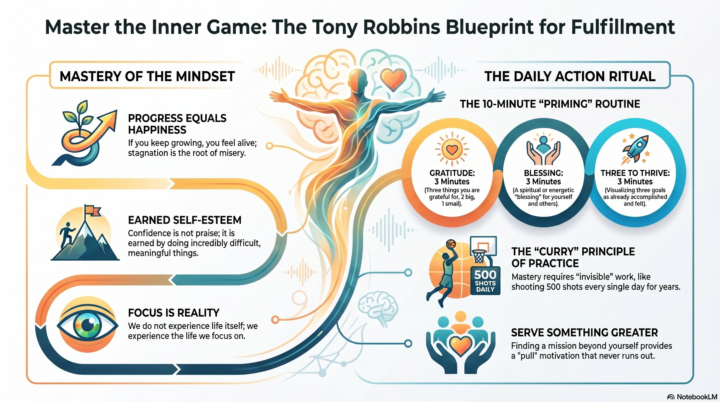
The Hard Truth About Self Esteem (T. Robbins)
The Hard Truth About Self-Esteem and Why Success is the Ultimate Failure: Insights from Tony Robbins 1. Introduction: The Universal Call to Grow Every human being—regardless of status, intelligence, or spiritual standing—will eventually encounter a season of extreme stress. In the architecture of a high-performance life, these moments are not tragedies to be avoided; they are the "hero’s journey." While the masses attempt to resist this pressure, the strategist recognizes it for what it truly is: a "call to grow." To navigate the "winters" of life, you must master the inner game of focus, meaning, and fulfillment. This is the only way to transform life's inevitable volatility into a catalyst for personal evolution. Realize this truth now: You do not experience life; you experience the life you focus on. Life is not happening to you; it is happening for you. 2. Stop Seeking Praise: The Case for Earned Self-Esteem One of the most debilitating delusions in modern culture is the idea that self-esteem is a gift to be granted through external praise or "virtue signaling." Let’s be clear: self-esteem is not something you receive; it is something you earn. It is strictly a private transaction between you and your soul, forged by doing incredibly difficult things that require you to push past your perceived limits. When you rely on external validation, you hand your power to the audience. When you earn your own respect through private discipline, you reclaim it. True self-esteem is not about telling the world what you've done; it’s what you know to be true inside when no one is watching. The most effective way to kill the "bullshit" of self-doubt is to find something you care about more than yourself. By serving a mission beyond your own ego, you gain an energy and a level of ownership that others can feel. "Self-esteem is earned. It's only earned by you with yourself. You're not going to get self-esteem because everybody praises you." 3. The "Ultimate Failure": Why Success Isn't the Goal
0
0
1-30 of 64

Leaderboard (30-day)
1

+1
Powered by