

2d •
Angola, where prisoners labor picking cotton on plantations
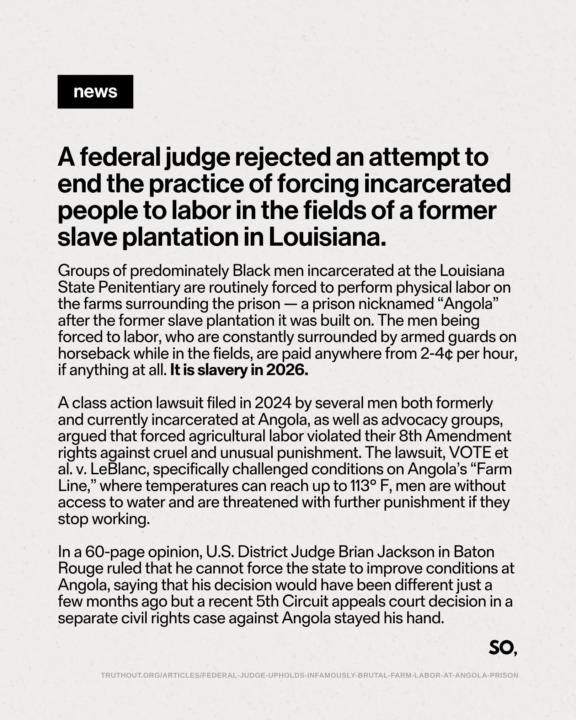
Most people learn about slavery as something that ended in 1865. What they are often not taught is that the 13th Amendment abolished slavery except as punishment for a crime. That exception matters. This week, a federal judge rejected an effort to end Angola Prison's notorious "farm line" labor system in Louisiana. Angola sits on the site of a former plantation and is named after the homeland of many of the enslaved Africans who were forced to labor there. Today, incarcerated people—predominantly Black men—continue to work the fields under armed supervision for pennies per hour, if they are paid at all. The lawsuit argued that forcing people to perform agricultural labor in extreme heat, under threat of punishment, violated the Constitution's prohibition against cruel and unusual punishment. The judge acknowledged the conditions were severe, but said a recent appeals court decision limited what relief he could provide. For me, this isn't just a prison story. It's a history story. It's a capitalism story. It's a race story. It's a story about how systems evolve rather than disappear. You don't have to agree with every argument made by advocates to wrestle with the reality that a prison built on a plantation still uses plantation-style labor, primarily involving Black men, in 2026. Questions for reflection: • What were you taught about the 13th Amendment? • When does punishment become exploitation? • What is the difference between rehabilitation and forced labor? • What systems from the past have changed form without disappearing? • What does accountability look like without dehumanization? 📚 Sources: • "truthout.org" (https://reference-url-citation.invalid/2) • "veritenews.org" (https://reference-url-citation.invalid/3) • "pbs.org" (https://reference-url-citation.invalid/4) Angola for Life: https://youtu.be/7ABpWhY5Xzk?si=IPxqHJm0Q-UPS1Aj
0
0
4d •
Tulsa
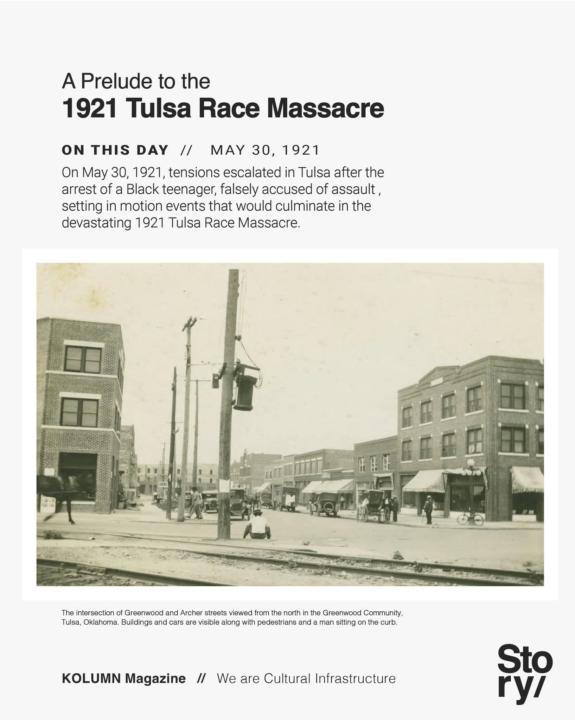
ON THIS DAY // MAY 30, 1921 The events of May 30, 1921, marked the beginning of the crisis that would lead to the Tulsa Race Massacre, one of the deadliest episodes of racial violence in American history. The immediate catalyst was the arrest of Dick Rowland, a 19-year-old Black shoeshiner, who was accused of assaulting a white elevator operator, Sarah Page, in downtown Tulsa, Oklahoma. While the exact circumstances remain disputed, contemporary evidence suggests the incident may have been accidental. News of Rowland's arrest spread quickly through Tulsa. That afternoon and evening, local newspapers reported the allegation in sensational terms. One article inflamed public sentiment and fueled rumors that a lynching might occur. Such fears were well-founded, as lynchings remained a common tool of racial terror across the United States during this period. As word spread through Tulsa's Black community, particularly in the prosperous Greenwood District—often called "Black Wall Street"—many residents became concerned for Rowland's safety. Black veterans of World War I and other community members gathered to monitor developments at the courthouse where Rowland was being held. Simultaneously, white crowds assembled nearby, increasing tensions throughout the city. The confrontation that began on May 30 escalated dramatically the following day, leading to widespread violence, arson, looting, and the destruction of Greenwood. The prelude of May 30 demonstrates how rumor, racial hostility, and the threat of mob violence created the conditions for a catastrophe that would leave lasting scars on Tulsa and the nation.
2
0

10d •
Beah Richards: A Black Woman Speaks of White Womanhood
Here’s a link to Beah Richards poem: http://www.drmomma.org/2015/02/beah-richards-black-woman-speaks-of.html?m=1
11d •
Black History of Memorial Day
African Americans literally created Memorial Day. Here's how it went down.
25d •
Tradwives and the pressures of modern motherhood
Motherhood in the U.S. is revered. Actual mothers? Not so much. So where's a bedraggled mom to turn when she feels overworked, overwhelmed, and underappreciated? Turns out, momfluencers are stepping in to fill that void, including a particular category of momfluencer: the tradwife. We dive into that world to understand how it might intersect with the Trump administration, what it has to do with white supremacy, and where moms of color fit in.
1-26 of 26
powered by
skool.com/deconstructing-theater-1925
We're deconstructing white supremacy, antiblackness, race, and racism in theater and our daily lives.
Suggested communities
Powered by