
Write something
Pinned
Aug 1 •
South Sound Town Hall Replay
Here you can find the replays of the first South Sound Town Hall we hosted yesterday! I just wanted to say thank you to all those who showed up and had the conversation. We welcome you to share your noticing's, questions, comments and feedback from last night as well. Feel free to make a post or comment below. Here’s Mickie's outline of what community discussions and conversations took place: 6:50pm-7:10pm: Introduction of panelist. Each panelist shared their background and skills they possess. We also shared what made us fall in love with theatre and asked for audience participation and heard from 3 peoples who shared their love for theatre. 7:10pm-7:43pm: We posed the questions “What does representation look/feel like?” and “What does safety look/feel like in theatre?” Followed by break for Town Hall 7:58pm-8:37pm: The second video Aleeza presents her PowerPoint presentation on White Supremacy in theatre, biases in theatre and the cast process, data showing what work still needs to be done in our community at Tacoma Little Theatre, Lakewood Playhouse, Tacoma Musical Playhouse, and Evergreen Playhouse, and deconstructing racism in the artistic atmosphere. Half way through this presentation, a conversation is started about putting Black actors in roles that are traditionally white and stories that are typically centered around whiteness and how that changes the story, the work that goes into that process, minstreling Black actors verses empowering Black actors, and how conversations are vital in the artistic and rehearsal process to set your POC up for success instead of fitting them into a box. 8:37pm-8:49pm: Community members were given time to share their joys, concerns, or speak freely on what they want to see in theatre, how they feel in theatre spaces, and to give thanks. 8:49pm-9:07pm: Action items were created. Now that we’ve had community discussions, shared what our thoughts and feelings are, how do we enact the change? What are our action items? Which, we came to the conclusion there needs to be more Town Halls, in fact, a Town Hall dedicated to the Artistic Directors and Board Members showing up and being asked questions and hearing community voices in person, Town Halls for designers, neurodivergent artists, free community workshops, and alliance of theatre’s being shown and taking action and making change together. People strongly wanted more community conversations. Town Halls was the biggest feedback we got for making change happen. More conversations.
4
0

Pinned
Feb 22 •
🎬 Take the Stage: Introduce Yourself!
Welcome to Deconstructing Race, Racism & Theatre! Drop: 🎭 Your name & pronouns 📍 Where you’re joining from 🖤 One reason you joined 📸 A photo of your workspace, rehearsal room, or favorite creative corner Bonus: If your life were a play right now, what would this chapter be called?

Pinned
Mar 30 •
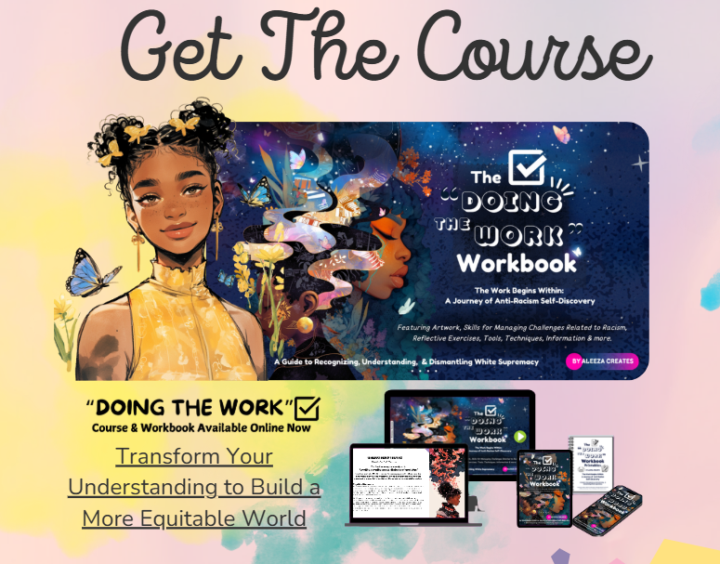
Doing the Work is available in the Classroom tab!
The foundational course designed to help you build real understanding of how race and racism actually function, beyond surface-level conversations, good intentions, or personal anecdotes. This course breaks down key concepts like systemic racism, power, racialization, and harm, while challenging common myths and misunderstandings that keep people stuck. You’ll learn how racism operates not just through individual actions, but through systems, structures, and everyday participation, and how to recognize your role within that without collapsing into defensiveness or avoidance. This course centers impact over intent, and gives you the language, frameworks, and self-awareness needed to engage responsibly in conversations about race. 👉 Doing the Work is the recommended starting point before taking more applied courses like the Allyship Toolbox. Want to learn more about Deconstructing Race, Racism and Theater? Take the course. This isn’t about perfection or being seen as “good.” It’s about building the clarity and capacity to show up differently, consistently, and with accountability. Sliding Scale: Making Learning Accessible for Everyone 💛 Education should be accessible. In this economy, groceries are expensive. Rent is still due. Existing is expensive. We can all use a break. I never want cost or financial barriers to be the reason someone can't access this work. That's why I offer flexible options for my courses: ✨ Pay what you can if that's what works for your budget. ✨ Can't pay right now? That's okay. Reach out and let me know you plan to pay later. ✨ Need a payment plan? Let's work something out together. I'd rather find a solution than turn someone away. ✨ Scholarships are available for those who need them. At the same time, I want to honor that labor has value. Creating courses, research, resources, graphics, and community spaces takes time, energy, and care. If you're able to contribute financially, your support helps make this work sustainable and helps me continue offering scholarships and flexible pricing to others.
1d •
WHITE PRIVILEGE ASSESSMENT
Answer this 45 question assessment by Valarie of Culturally fluent families. Share your results below. https://claude.ai/artifact/WQcykiSrKEdfTFP1bp14pR
0
0

1-30 of 371
powered by
skool.com/deconstructing-theater-1925
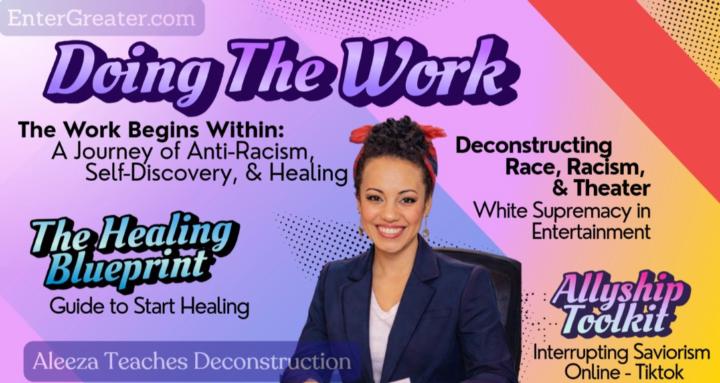
We're deconstructing white supremacy, antiblackness, race, and racism in theater and our daily lives.
Suggested communities
Powered by