

1d •
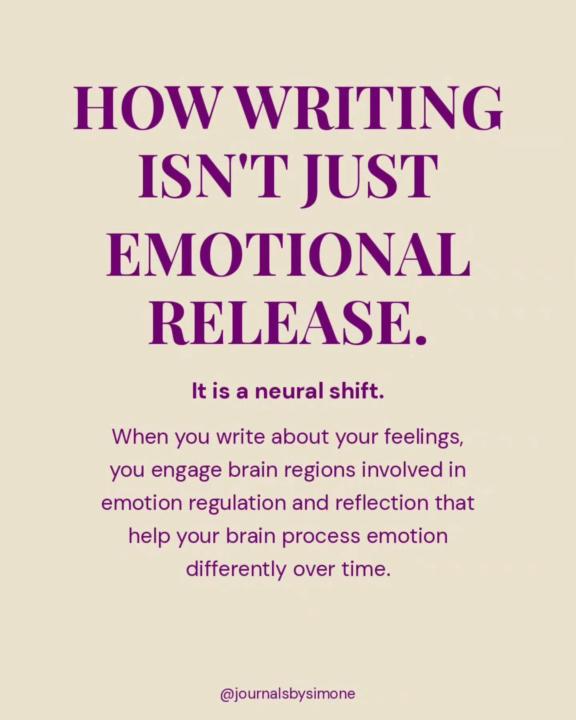
Journaling is more than you think.
I know it's hard for me to journal, and a lot of us have journalling trauma or writing trauma. But it can help to know why it's actually good to journal. If writing words is hard, doodle your thoughts, scribble, write symbols over and over till you fill up a page. Rip it up. Burn it. Junk collage. There are no rules, just process.
0
0
1d •
Learning to Feeling Safe
Most of us were never taught how to feel safe inside our own bodies. We learned to ignore hunger, push through exhaustion, disconnect from emotions, prioritize productivity over well-being, and live in our heads instead. Many of these patterns are reinforced by the culture around us: urgency, perfectionism, individualism, "powering through," and treating rest as something that must be earned. Over time, calm can feel unfamiliar. Rest can feel uncomfortable. Listening to ourselves can feel unsafe. And it affects everything—our sleep, relationships, intuition, boundaries, and ability to be present. Feeling safe in your body is a skill. It's also an act of resistance against systems and cultures that teach us to disconnect from ourselves. This guide explores nervous system safety, embodiment, and the small practices that help us rebuild trust with our bodies—one moment at a time. 💜
2d •
Sexual Orientation and Gender Diversity
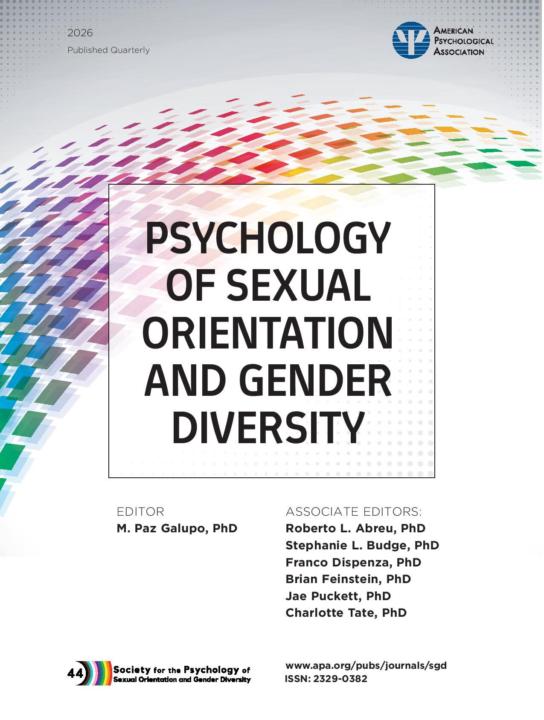
Understanding gender and sexuality is part of our identity. Like race, gender is a social construct we can examine and unpack. June is #PrideMonth 🏳️🌈 Research in Psychology of Sexual Orientation and Gender Diversity finds that medical affirmation is associated with better well-being among transgender and gender-diverse adults, and general social support was an especially strong predictor of well-being. These findings highlight the importance of a holistic approach to gender-affirming care that supports access to medical affirmation and social connectedness. Explore the open access article: https://bit.ly/4dVpV8a This journal is a publication of Division 44 APA: Psychology of Sexual Orientation and Gender Diversity
0
0
16d •
Need to decompress?
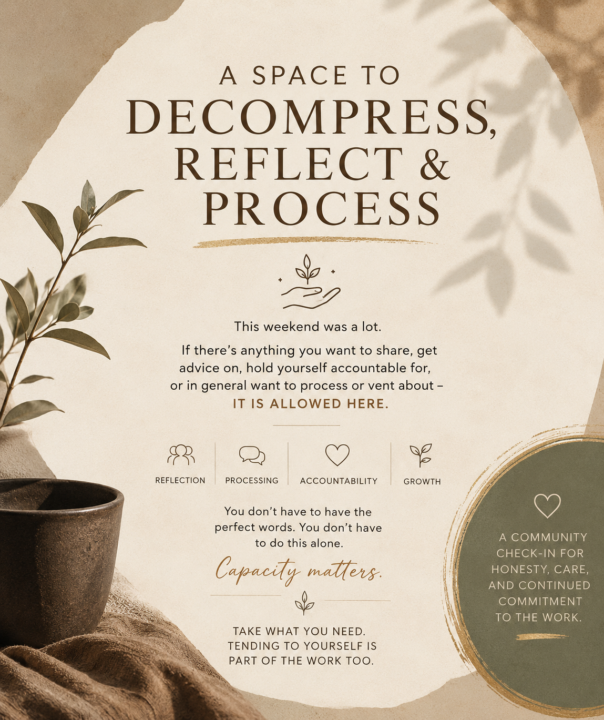
Hi everyone, I wanted to open space for decompression after this weekend. A lot happened. There were difficult conversations, accountability moments, harm, reflection, defensiveness, grief, frustration, mirrors being held up, and a lot of learning happening in real time. For some people, this weekend may have brought up: Shame Guilt Defensiveness Confusion Fear of getting it wrong Anger Exhaustion Grief Disappointment Feeling unseen Feeling activated Or realizing there may still be places that need reflection and growth And that is okay. Deconstruction is not just learning information. Sometimes it is sitting with what the information reveals. Sometimes it is noticing our patterns. Sometimes it is recognizing where performance showed up. Sometimes it is realizing we caused harm. Sometimes it is realizing we tolerated harm. Sometimes it is realizing we still have work to do. And sometimes it is simply being overwhelmed. So I want to make something very clear: You are allowed to process here. If you need support, reflection, feedback, accountability, advice, or just somewhere to put your thoughts, this space is open. If you want to say: “I think I got defensive.” “I realized something uncomfortable.” “I wish I had spoken up.” “I think I caused harm.” “I don’t understand what happened.” “I feel ashamed.” “I feel angry.” “I’m confused.” “I need help unpacking this.” You can. This is not a space for shame spirals, performance, proving goodness, or seeking absolution. It is a space for honesty, reflection, accountability, growth, and capacity building. A few reflection questions if they help: • What is staying with me after this weekend? • What emotions am I carrying? • What felt activating and why? • Did I notice shame, guilt, defensiveness, collapse, urgency, withdrawal, fixing, explaining, or proving? • What might need more reflection? • What support do I need? Capacity matters. You do not have to process alone. – Aleeza
14d •
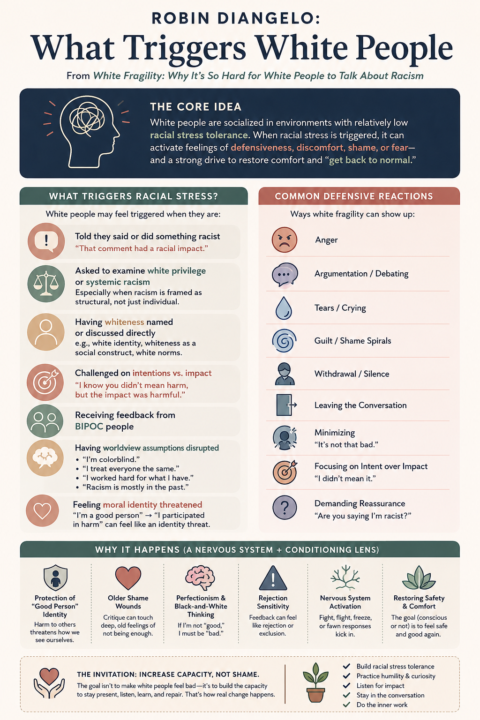
What triggers defensiveness in conversations about race?
Robin DiAngelo argues that many white people are socialized with low racial stress tolerance, meaning conversations about racism can activate discomfort, shame, fear, identity threats, or the urge to restore comfort quickly. This graphic breaks down some of the common triggers and defensive responses discussed in White Fragility. As you look through it, reflect: • Which ones surprised you? • Which ones feel familiar? • How might shame, perfectionism, old wounds, or “good person” identity show up here? • What would building capacity instead of seeking comfort look like? The goal is not shame. The goal is staying present long enough to learn. Discussion welcome below 👇 Note: Robin diAngelo has totally understandable criticisms about her. Opinions about her being white and profiting off racism as one example, is totally valid. I do think there is value in looking at things through different lenses too.
1-28 of 28
powered by
skool.com/deconstructing-theater-1925
We're deconstructing white supremacy, antiblackness, race, and racism in theater and our daily lives.
Suggested communities
Powered by