
Write something
Pinned
Pinned

⭐
🔥
1d •
Yeasted vs Poolish vs Sourdough Baguettes. Which One Should You Bake?
There are three ways to make a baguette at home. Yeasted, poolish, and sourdough. They all end up looking like the same loaf, but the journeys are completely different. In this video I walk you through all three. Who each one is for, when it makes sense to pick which path, and the three things that matter more than the recipe itself. If you've ever stood in your kitchen wondering which baguette you should actually start with, this is the breakdown you've been looking for. Pick yours for this weekend's bake-along: 🥖 No starter? Start here. https://pantry.bakinggreatbread.com/recipes/french-bread-baguette?utm_source=skool&utm_medium=community&utm_campaign=recipe-share 🥖 Want bakery flavor without managing a starter? https://pantry.bakinggreatbread.com/recipes/classic-poolish-baguette?utm_source=skool&utm_medium=community&utm_campaign=recipe-share 🥖 Active starter ready to go? https://pantry.bakinggreatbread.com/recipes/sourdough-baguettes?utm_source=skool&utm_medium=community&utm_campaign=recipe-share We've been climbing this staircase for three weeks. Couche on the ciabatta. Poolish on the ciabatta. Now scoring and the roll-out shape on the baguettes. Nothing wasted. Watch the video. Pick your path. Drop questions before you bake. Easier to fix dough than crust. Perfection is not required. Progress is. Come bake with us. — Henry ⭐🔥
Pinned
⭐
🔥
2d •
This Weekend We're Baking Baguettes (Building on What We Just Learned)
This weekend we're going to baguettes. And there's a reason we're getting to them now. Look at what we've done the past two weeks. We learned the couche on ciabatta. We built a poolish for that same ciabatta and watched what an overnight pre-ferment does to flavor and extensibility. Both of those skills carry straight over to baguettes. We're not learning new things this weekend. We're putting the same tools to work in a new shape. That's the method. Each bake builds on the last one. Nothing wasted. Three recipes in the Recipe Pantry. Pick the one that matches where you are. 🥖 New to baguettes? Start here. Classic French Bread Baguette — four ingredients, overnight cold ferment, 72% hydration. Two loaves, cleanest entry point in the pantry. No pre-ferment, no starter. Just dough, time, and shape. https://pantry.bakinggreatbread.com/recipes/french-bread-baguette?utm_source=skool&utm_medium=community&utm_campaign=recipe-share 🥖 Liked the poolish ciabatta? Run it back. Classic Poolish Baguette — same poolish you just built, in a new shape. 12 to 16 hour pre-ferment, 75% hydration, three baguettes. If you nailed the ciabatta, you already know how this dough is going to feel. https://pantry.bakinggreatbread.com/recipes/classic-poolish-baguette?utm_source=skool&utm_medium=community&utm_campaign=recipe-share 🥖 Sourdough bakers, this one's yours. Sourdough Baguettes — overnight levain, 75% hydration, three baguettes at 265g. Same shaping rhythm we practiced on the ciabatta couche. https://pantry.bakinggreatbread.com/recipes/sourdough-baguettes?utm_source=skool&utm_medium=community&utm_campaign=recipe-share
⭐
🔥
4h •
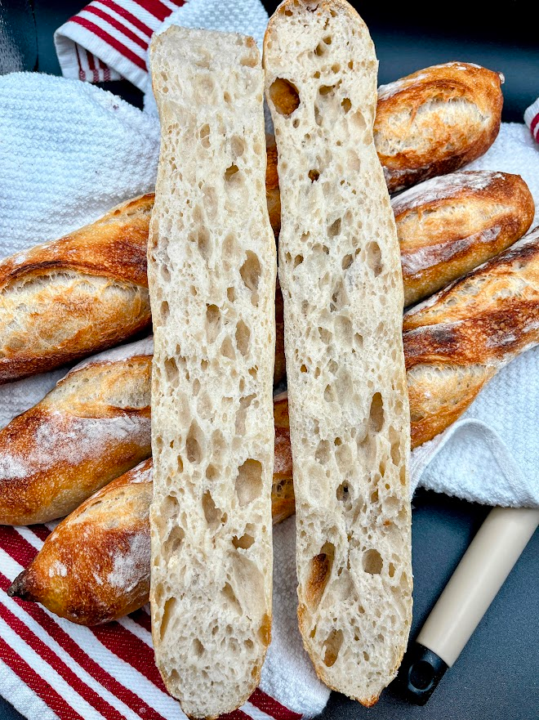
OK, I’m looking for a volunteer.
I need someone to bake this and tell me how it turns out. I’ve never seen anything like this in all my born days. I need to know.

⭐
🔥
2d •
The Baguette Staircase — Three Paths, One Shape (And Why We're Climbing It This Week)
I just dropped a new video walking through the three baguette paths. Yeasted. Poolish. Sourdough. Same shape. Three completely different stories. If you've been wondering which one to bake this weekend, watch this first. It'll save you from picking wrong. Here's the short version of what's in it. The baguette isn't really one bread. It's three breads sharing a shape. And the skills stack on top of each other. Yeasted teaches you the shape and the score. Poolish teaches you what time and pre-fermentation do to dough. Sourdough teaches you to read the wild yeast. You don't have to walk it in that order. But the climb's a whole lot easier when you take it one step at a time. Three things stay the same no matter which one you pick: 1. The shape. A 14 to 16-inch roll, tapered at the ends. 2. The score. Three or four overlapping cuts at a 30 to 45-degree angle. 3. The steam. The crust sets in the first 10 minutes. Without steam, your loaf can't expand. What changes is your relationship with time. That's really the choice you're making when you pick a recipe. Not a different bread. A different level of time and dough management. Pick yours for this weekend's bake-along: 🥖 No starter? Start here. https://pantry.bakinggreatbread.com/recipes/french-bread-baguette?utm_source=skool&utm_medium=community&utm_campaign=recipe-share 🥖 Want bakery-level flavor without managing a starter? https://pantry.bakinggreatbread.com/recipes/classic-poolish-baguette?utm_source=skool&utm_medium=community&utm_campaign=recipe-share 🥖 Active starter ready to go? https://pantry.bakinggreatbread.com/recipes/sourdough-baguettes?utm_source=skool&utm_medium=community&utm_campaign=recipe-share

1-30 of 1,464
powered by
skool.com/crust-crumb-academy-7621
#1 Rated Bread Community on Skool
Coaching, not judgment. Sourdough, yeasted, enriched & every bread in between.
✔ ProveWorth Certified ⭐⭐⭐⭐⭐
Suggested communities
Powered by